Microbial Biotechnology Laboratory, Life Sciences Division, Institute of Advanced Study in Science and Technology (IASST), Paschim Boragaon, Garchuk, Guwahati, Assam, 781035, India.
Molecular Biology and Microbial Biotechnology Laboratory, Life Sciences Division, Institute of Advanced Study in Science and Technology (IASST), Guwahati, Assam, India.
BMC Microbiol. 2018 Jul 11;18(1):71. doi: 10.1186/s12866-018-1215-7.
Actinobacteria are often known to be great producers of antibiotics. The rapid increase in the global burden of antibiotic-resistance with the concurrent decline in the discovery of new antimicrobial molecules necessitates the search for novel and effective antimicrobial metabolites from unexplored ecological niches. The present study investigated the antimicrobial producing actinobacterial strains isolated from the soils of two microbiologically unexplored forest ecosystems, viz. Nameri National Park (NNP) and Panidehing Wildlife Sanctuary (PWS), located in the Eastern Himalayan Biodiversity hotspot region.
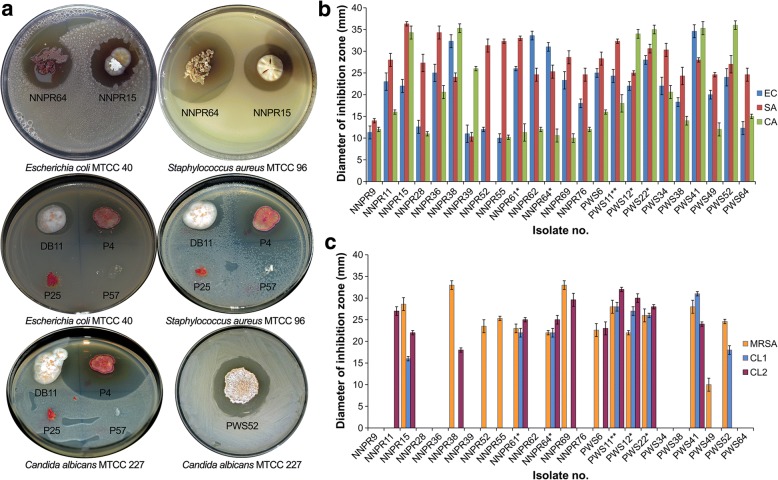
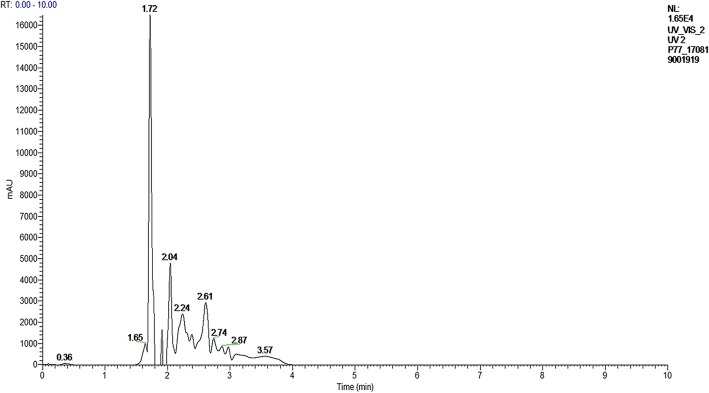
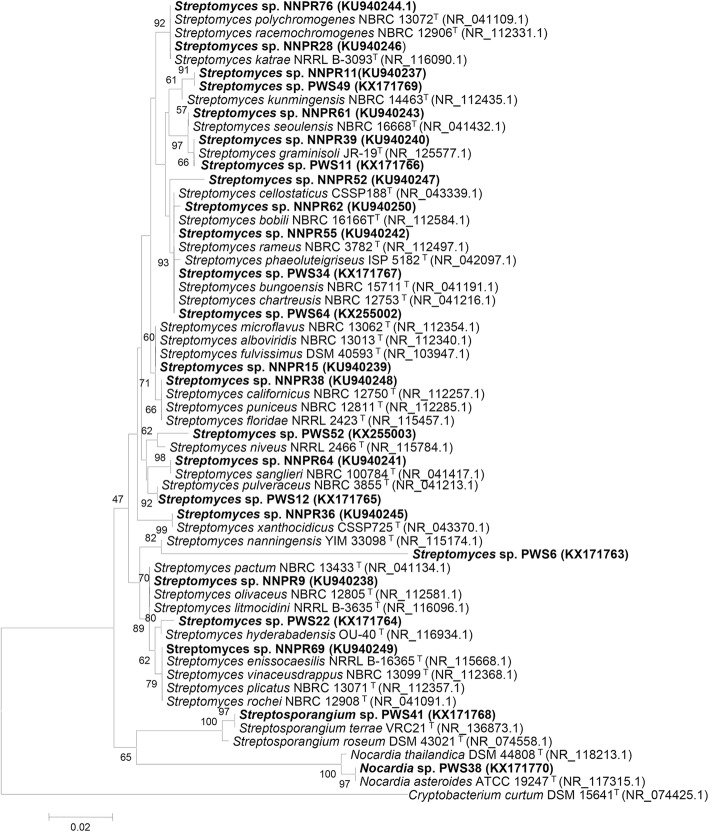
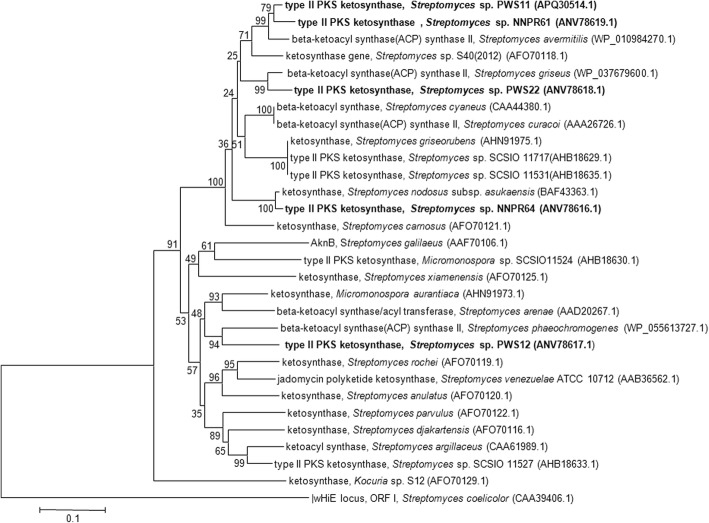
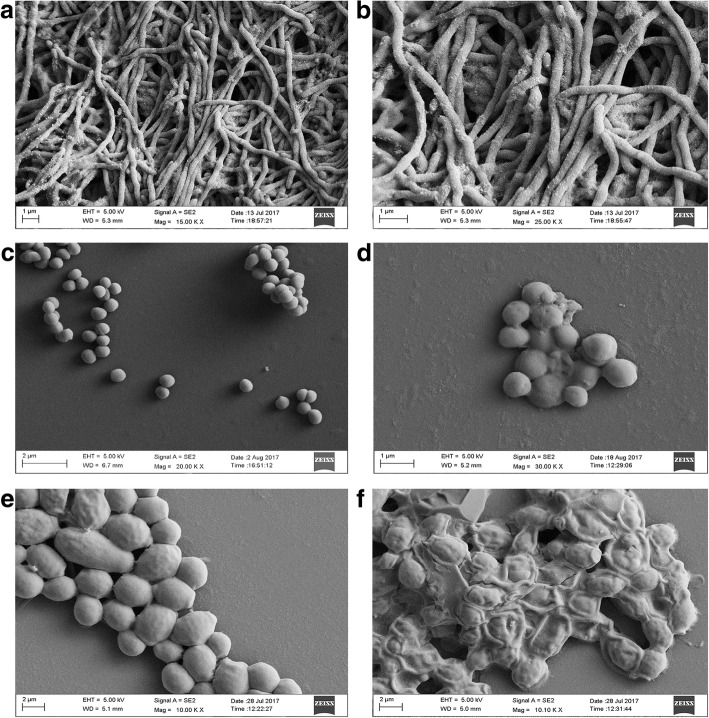
A total of 172 putative isolates of actinobacteria were isolated, of which 24 isolates showed strong antimicrobial bioactivity. Evaluation of the ethyl acetate extracts of culture supernatants against test microbial strains revealed that isolates PWS22, PWS41, PWS12, PWS52, PWS11, NNPR15, NNPR38, and NNPR69 were the potent producers of antimicrobial metabolites. The antimicrobial isolates dominantly belonged to Streptomyces, followed by Nocardia and Streptosporangium. Some of these isolates could be putative novel taxa. Analysis of the antimicrobial biosynthetic genes (type II polyketide synthase and nonribosomal peptide synthetase genes) showed that the antimicrobial metabolites were associated with pigment production and belonged to known families of bioactive secondary metabolites. Characterization of the antimicrobial metabolites of Streptomyces sp. PWS52, which showed lowest taxonomic identity among the studied potent antimicrobial metabolite producers, and their interaction with the test strains using GC-MS, UHPLC-MS, and scanning electron microscopy revealed that the potential bioactivity of PWS52 was due to the production of active antifungal and antibacterial metabolites like 2,5-bis(1,1-dimethylethyl) phenol, benzeneacetic acid and nalidixic acid.
Our findings suggest that the unexplored soil habitats of NNP and PWS forest ecosystems of Northeast India harbor previously undescribed actinobacteria with the capability to produce diverse antimicrobial metabolites that may be explored to overcome the rapidly rising global concern about antibiotic-resistance.
放线菌通常是抗生素的重要生产者。随着抗生素耐药性在全球范围内的迅速增加,以及新的抗菌分子的发现同时减少,因此需要从未开发的生态位中寻找新型有效的抗菌代谢产物。本研究调查了从位于东喜马拉雅生物多样性热点地区的两个微生物未开发的森林生态系统,即纳梅里国家公园(NNP)和帕尼德兴野生动物保护区(PWS)的土壤中分离出的产生抗菌物质的放线菌菌株。
共分离出 172 株放线菌假定株,其中 24 株显示出较强的抗菌生物活性。对培养上清液的乙酸乙酯提取物进行测试微生物菌株的评估表明,PWS22、PWS41、PWS12、PWS52、PWS11、NNPR15、NNPR38 和 NNPR69 是抗菌代谢产物的有力生产者。抗菌分离株主要属于链霉菌属,其次是诺卡氏菌属和链孢囊菌属。其中一些分离株可能是新的假定分类群。分析抗菌生物合成基因(II 型聚酮合酶和非核糖体肽合酶基因)表明,抗菌代谢产物与色素产生有关,属于已知的生物活性次生代谢物家族。对表现出研究中最强抗菌代谢产物生产者中最低分类学同一性的链霉菌属 PWS52 的抗菌代谢产物进行表征,以及使用 GC-MS、UHPLC-MS 和扫描电子显微镜对其与测试菌株的相互作用进行分析表明,PWS52 的潜在生物活性是由于产生了具有活性的抗真菌和抗菌代谢产物,如 2,5-双(1,1-二甲基乙基)苯酚、苯乙酸和萘啶酸。
我们的研究结果表明,印度东北部 NNP 和 PWS 森林生态系统的未开发土壤生境中蕴藏着以前未知的放线菌,它们具有产生多种抗菌代谢产物的能力,这些代谢产物可能被用来克服抗生素耐药性迅速上升这一全球关注问题。