Chair and Department of Food and Nutrition, Medical University of Lublin, 4a Chodźki Str., 20-093 Lublin, Poland.
Chair and Department of Pharmacognosy with Medical Plant Unit, Medical University of Lublin, 1 Chodźki Str., 20-093 Lublin, Poland.
Molecules. 2018 Jul 11;23(7):1689. doi: 10.3390/molecules23071689.
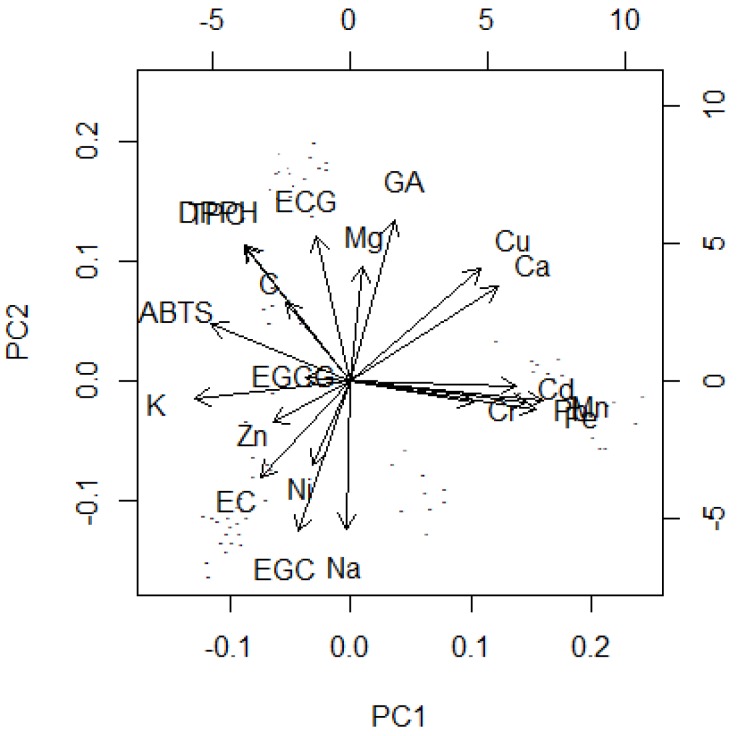
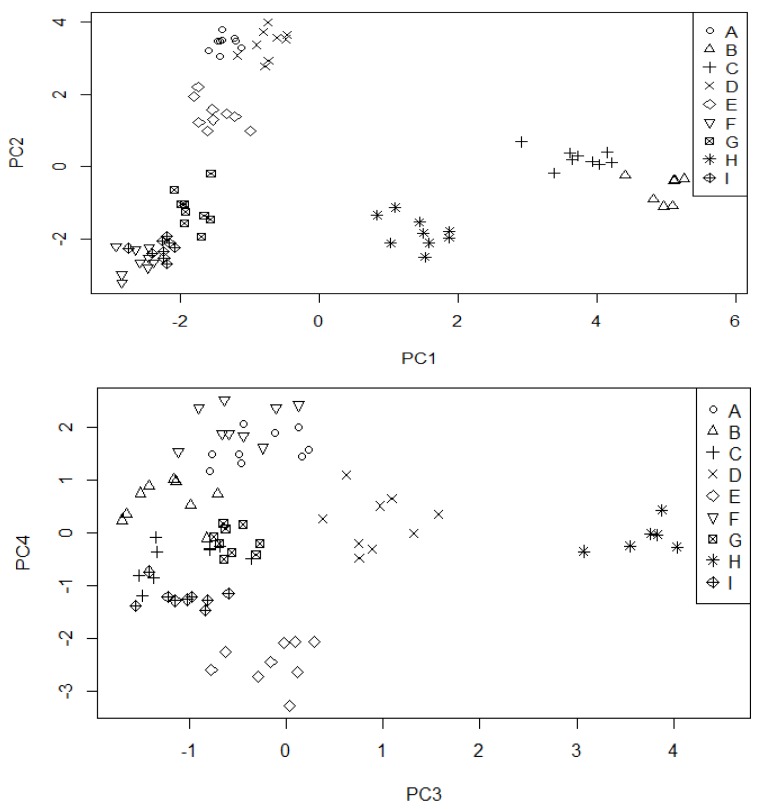
Green tea infusions are one of the most popular beverages consumed across the world, especially is Asian countries. Green tea quality is primarily based on catechin content, however, the concentration of elements could also significantly influence its biological properties and thus quality and safety. The main purpose of the present study was the evaluation of catechin, antioxidant activity and metal content (K, Na, Ca, Mg, Fe, Mn, Cu, Zn, Cr, Pb, Cd and Ni) in different green tea types cultivated in Japan, Sri Lanka, South Korea, India, China and Japan. The chemical analysis of samples was performed using LC-ESI-Q-TOF-MS for organic constituents and atomic absorption spectrometry (flame and electrothermal) method for inorganic ones. The obtained results were subjected to chemometric elaboration. EGC (213 mg/100 mL of the tea infusion in South Korean Jeoncha) and EGCG (124 mg/100 mL in Japanese Sencha) were the dominant catechins in all green tea samples. Chinese and Indian green tea samples contained the highest concentration of toxic heavy metals, however these values were far below appropriate limitations for green teas. PCA revealed significant similarities between Japanese samples and Korean Jeoncha. In general the latter one was evaluated to have the best quality based on the investigated parameters.
绿茶浸提液是全球范围内最受欢迎的饮品之一,尤其是在亚洲国家。绿茶的质量主要取决于儿茶素的含量,然而,元素的浓度也可能显著影响其生物特性,从而影响其质量和安全性。本研究的主要目的是评估在日本、斯里兰卡、韩国、印度、中国和日本种植的不同类型绿茶中的儿茶素、抗氧化活性和金属含量(K、Na、Ca、Mg、Fe、Mn、Cu、Zn、Cr、Pb、Cd 和 Ni)。使用 LC-ESI-Q-TOF-MS 对样品进行有机成分分析,使用原子吸收光谱法(火焰和电热)对无机成分进行分析。对获得的结果进行化学计量学分析。所有绿茶样品中,EGC(韩国珍茶中的 213mg/100mL 茶浸提液)和 EGCG(日本煎茶中的 124mg/100mL)是主要的儿茶素。中国和印度的绿茶样品含有最高浓度的有毒重金属,但这些值远低于绿茶的适当限量。PCA 显示日本样品与韩国珍茶之间存在显著相似性。总的来说,根据所研究的参数,后者被评估为质量最好。