Martín-Vázquez Gonzalo, Asabuki Toshitake, Isomura Yoshikazu, Fukai Tomoki
Department of Systems Neuroscience, Cajal Institute-CSIC, Madrid, Spain.
Lab for Neural Coding and Brain Computing, RIKEN Center for Brain Science, Wako, Japan.
Front Neurosci. 2018 Jun 26;12:429. doi: 10.3389/fnins.2018.00429. eCollection 2018.
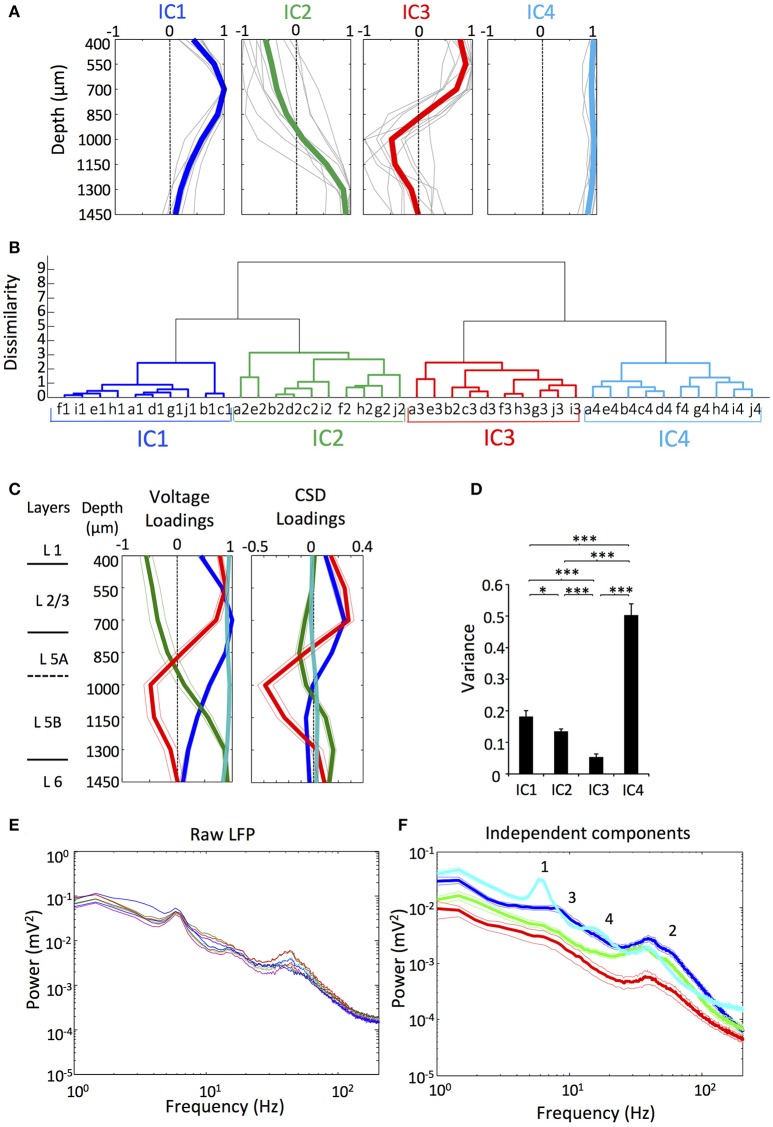
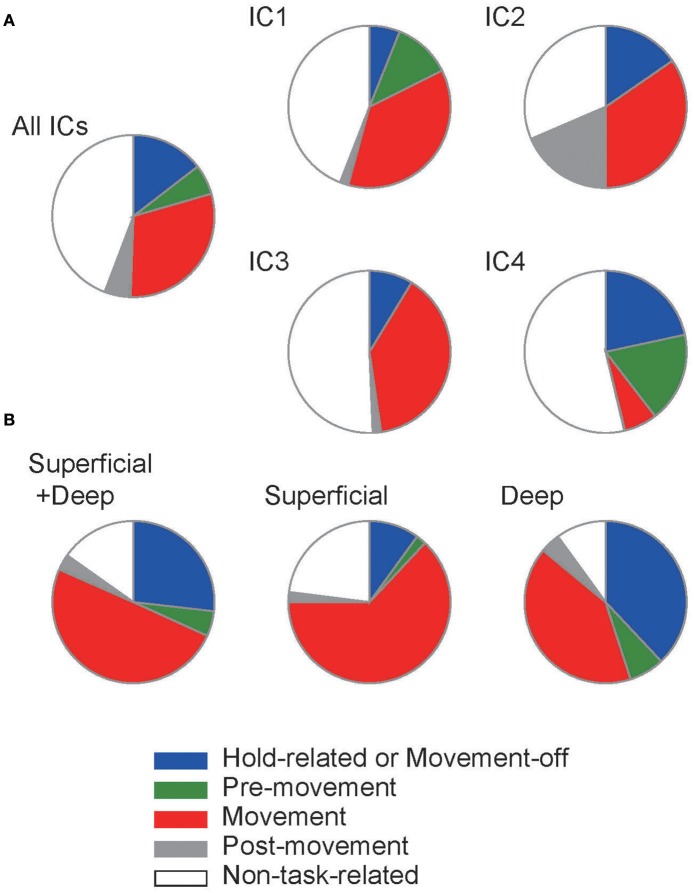
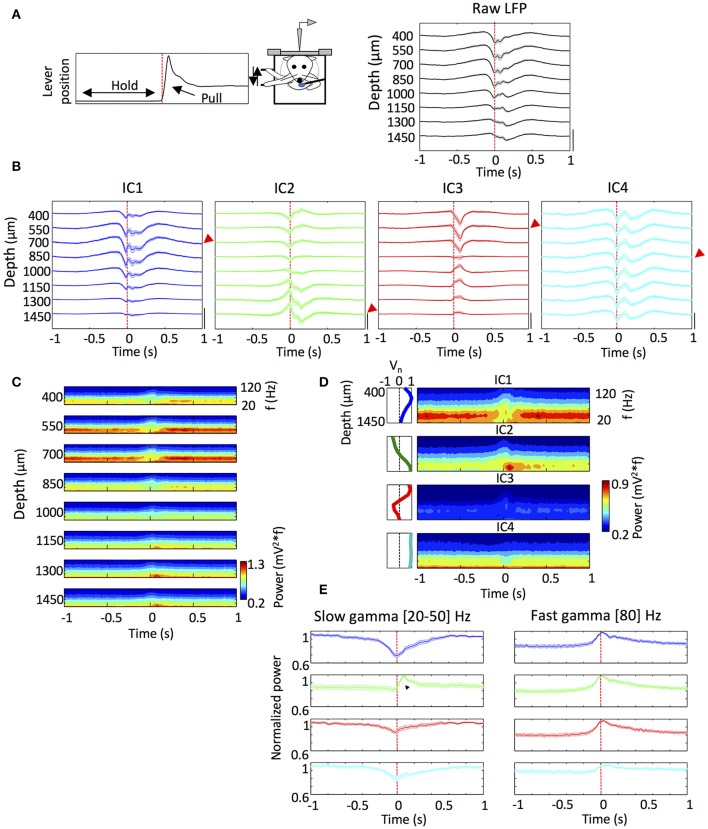
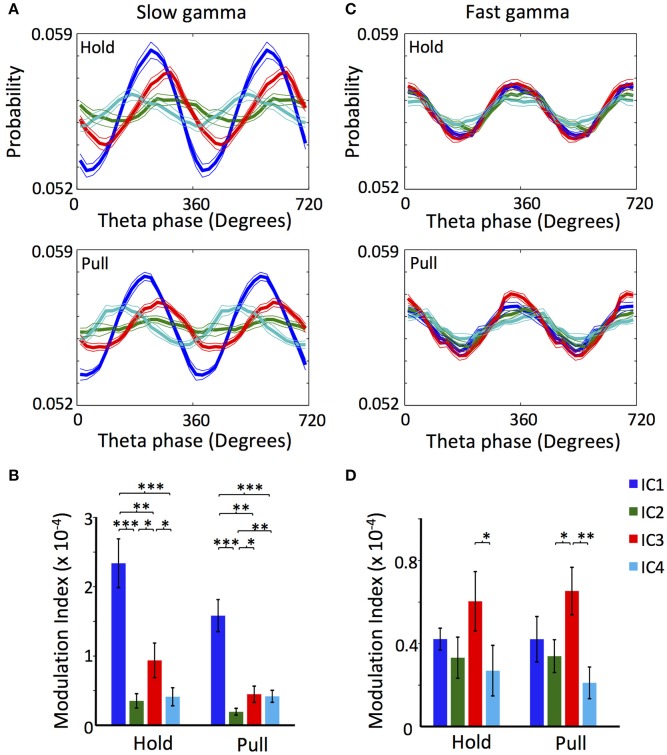
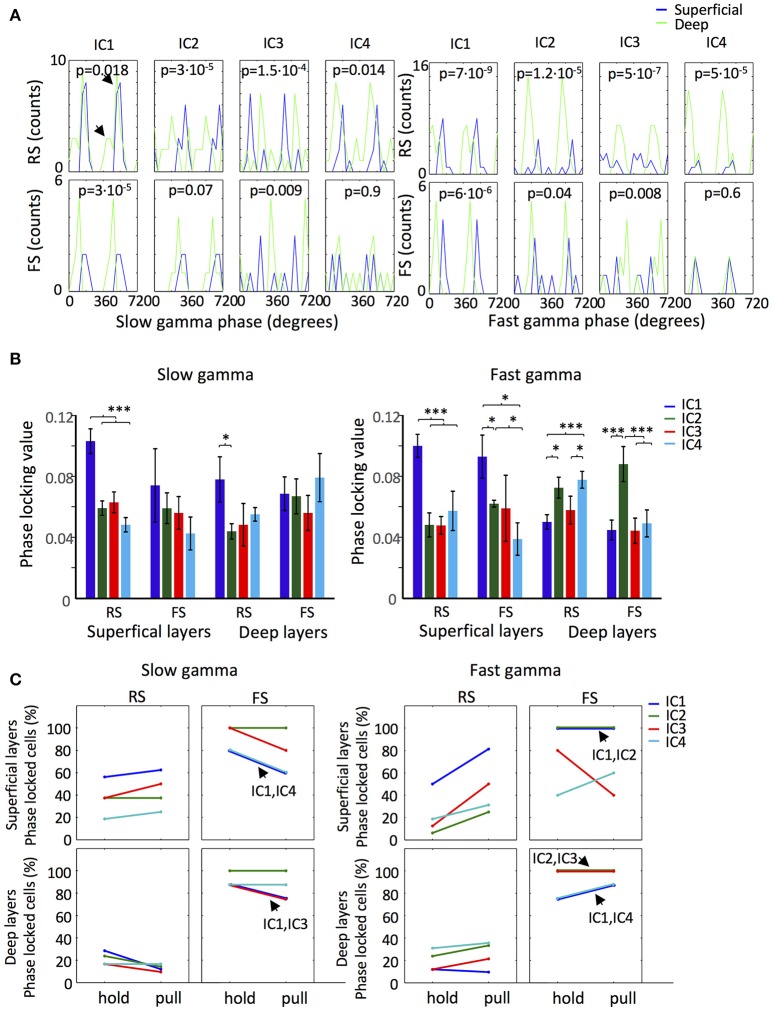
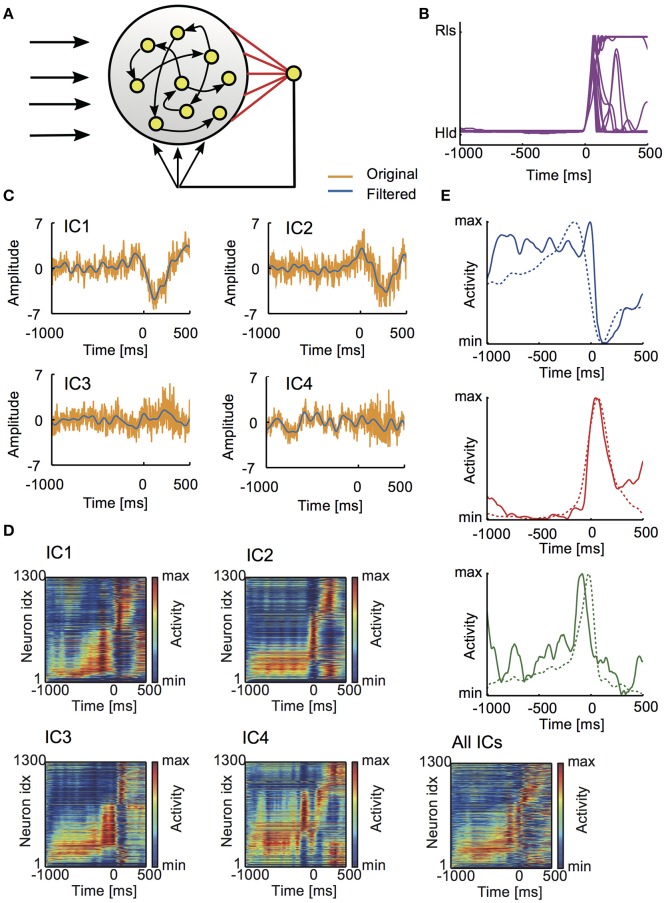
Motor cortical microcircuits receive inputs from dispersed cortical and subcortical regions in behaving animals. However, how these inputs contribute to learning and execution of voluntary sequential motor behaviors remains elusive. Here, we analyzed the independent components extracted from the local field potential (LFP) activity recorded at multiple depths of rat motor cortex during reward-motivated movement to study their roles in motor learning. Because slow gamma (30-50 Hz), fast gamma (60-120 Hz), and theta (4-10 Hz) oscillations temporally coordinate task-relevant motor cortical activities, we first explored the behavioral state- and layer-dependent coordination of motor behavior in these frequency ranges. Consistent with previous findings, oscillations in the slow and fast gamma bands dominated during distinct movement states, i.e., preparation and execution states, respectively. However, we identified a novel independent component that dominantly appeared in deep cortical layers and exhibited enhanced slow gamma activity during the execution state. Then, we used the four major independent components to train a recurrent network model for the same lever movements as the rats performed. We show that the independent components differently contribute to the formation of various task-related activities, but they also play overlapping roles in motor learning.
在行为动物中,运动皮层微回路接收来自分散的皮层和皮层下区域的输入。然而,这些输入如何促进自愿性顺序运动行为的学习和执行仍然不清楚。在这里,我们分析了在奖励驱动的运动过程中,从大鼠运动皮层多个深度记录的局部场电位(LFP)活动中提取的独立成分,以研究它们在运动学习中的作用。由于慢γ波(30 - 50赫兹)、快γ波(60 - 120赫兹)和θ波(4 - 10赫兹)振荡在时间上协调与任务相关的运动皮层活动,我们首先探讨了这些频率范围内运动行为的行为状态和层依赖性协调。与先前的研究结果一致,慢γ波和快γ波段的振荡分别在不同的运动状态,即准备和执行状态中占主导地位。然而,我们发现了一个新的独立成分,它主要出现在皮层深层,并且在执行状态期间表现出增强的慢γ波活动。然后,我们使用四个主要的独立成分来训练一个循环网络模型,用于模拟大鼠执行的相同杠杆运动。我们表明,这些独立成分对各种与任务相关活动的形成有不同的贡献,但它们在运动学习中也发挥着重叠的作用。