Yu Guocan, Wu Dan, Li Yang, Zhang Zhihua, Shao Li, Zhou Jiong, Hu Qinglian, Tang Guping, Huang Feihe
State Key Laboratory of Chemical Engineering , Center for Chemistry of High-Performance & Novel Materials , Department of Chemistry , Zhejiang University , Hangzhou 310027 , P. R. China . Email:
Department of Chemistry , Institute of Chemical Biology and Pharmaceutical Chemistry , Zhejiang University , Hangzhou 310027 , P. R. China.
Chem Sci. 2016 May 1;7(5):3017-3024. doi: 10.1039/c6sc00036c. Epub 2016 Jan 21.
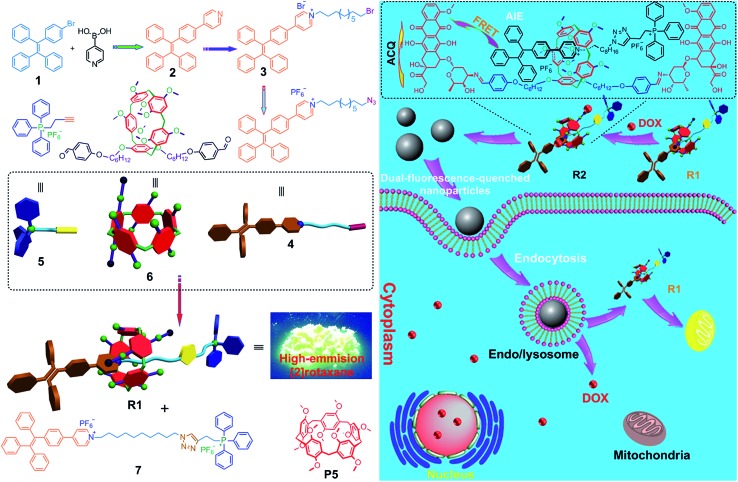
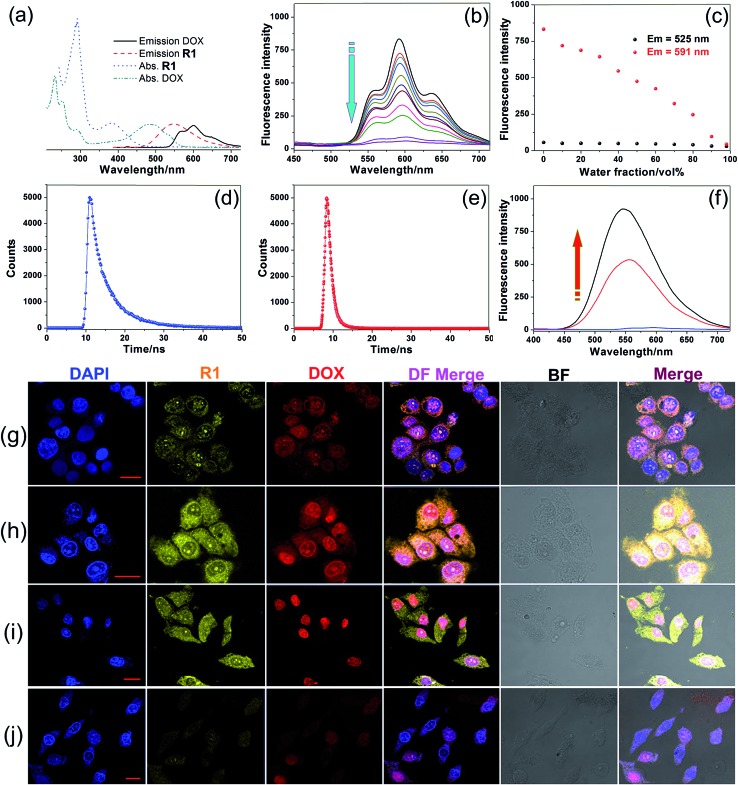
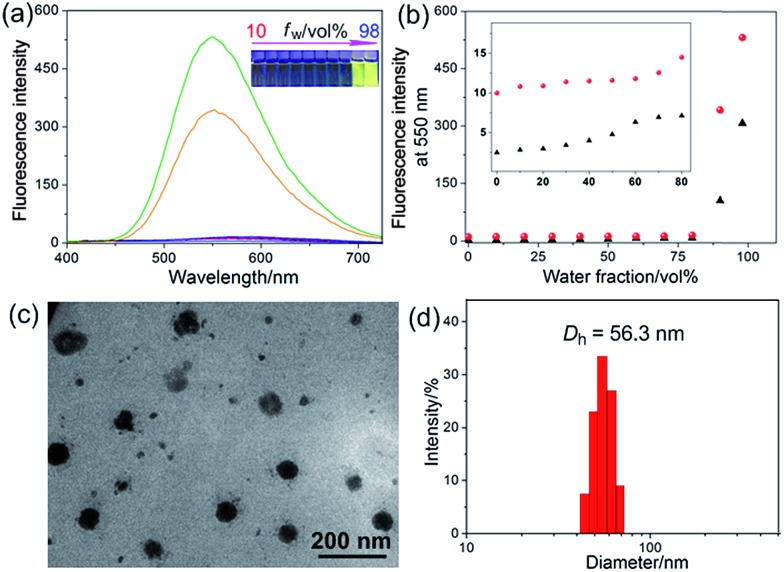
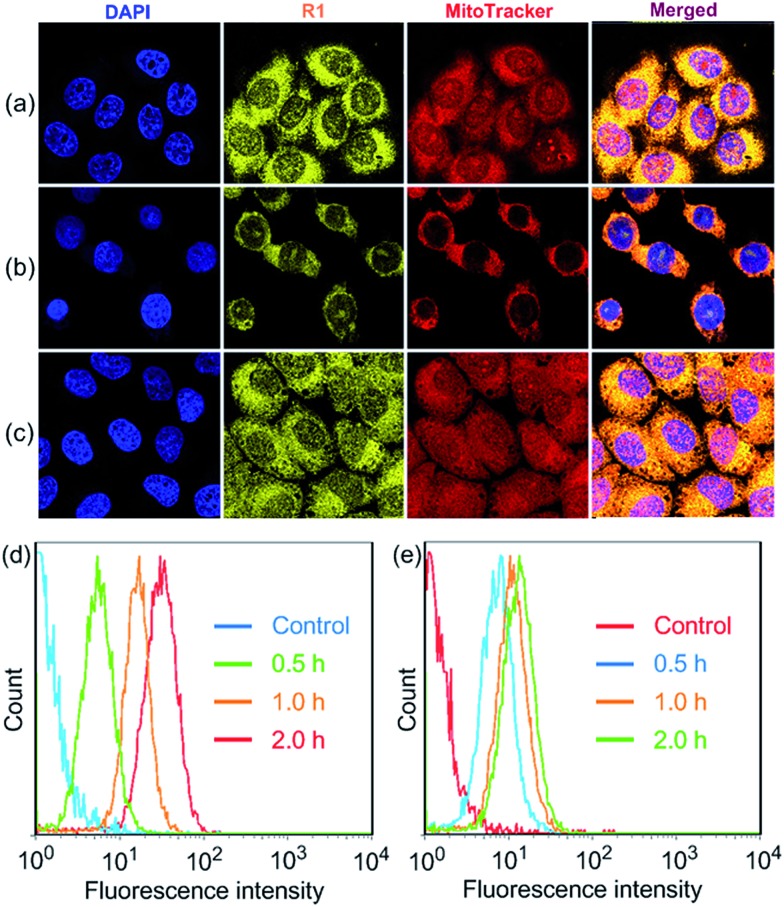
Subcellular organelle-specific reagents for simultaneous targeting, imaging and treatment are highly desirable for cancer therapy. However, it remains a challenge to fabricate a single molecular platform containing a targeting group, imaging and therapeutic agents through traditional synthesis. Due to their superior sensitivity and photostability, fluorescent probes with aggregation-induced emission (AIE) characteristics have attracted more and more attention in studying the process of translocation, drug release, and excretion of nanomedicines or . We construct a pillar[5]arene-based [2]rotaxane () by employing tetraphenylethene (TPE) and triphenylphosphonium (TPP) moieties as stoppers; the TPE unit retains the aggregation-induced emission (AIE) attribute and the TPP group is used as a mitochondria-targeting agent. exhibits enhanced AIE, high specificity to mitochondria, and superior photostability. By introducing doxorubicin (DOX) into , prodrug is constructed as a dual-fluorescence-quenched Förster resonance energy transfer (FRET) system, in which the TPE-based axle acts as a donor fluorophore and the DOX unit acts as the acceptor. Upon hydrolysis of in endo/lysosomes, the fluorescences of the carrier and the drug recover. is further utilized as a drug delivery platform to conjugate other anticancer drugs containing amine groups through imine formation to prepare prodrugs. The anticancer drugs are released from these prodrugs in the cells upon hydrolysis of the pH-responsive imine bonds.
用于同时靶向、成像和治疗的亚细胞器特异性试剂在癌症治疗中具有很高的需求。然而,通过传统合成方法构建一个包含靶向基团、成像和治疗剂的单一分子平台仍然是一项挑战。由于具有聚集诱导发光(AIE)特性的荧光探针具有优异的灵敏度和光稳定性,它们在研究纳米药物的转运、药物释放和排泄过程中越来越受到关注。我们通过使用四苯乙烯(TPE)和三苯基膦(TPP)部分作为封端剂构建了一种基于柱[5]芳烃的[2]轮烷();TPE单元保留了聚集诱导发光(AIE)特性,TPP基团用作线粒体靶向剂。表现出增强的AIE、对线粒体的高特异性和优异的光稳定性。通过将阿霉素(DOX)引入,构建了前药作为双荧光猝灭的Förster共振能量转移(FRET)系统,其中基于TPE的轴作为供体荧光团,DOX单元作为受体。在内吞体/溶酶体中水解后,载体和药物的荧光恢复。进一步用作药物递送平台,通过形成亚胺来共轭其他含胺基的抗癌药物以制备前药。在pH响应性亚胺键水解后,抗癌药物在细胞中从这些前药中释放出来。