Bioengineering Research Centre, Guangzhou Institute of Advanced Technology, Chinese Academy of Sciences, Guangzhou 511458, China.
Guangdong Provincial Key Laboratory of New Drug Screening, School of Pharmaceutical Sciences, Southern Medical University, Guangzhou 510515, China.
Int J Mol Sci. 2018 Jul 12;19(7):2027. doi: 10.3390/ijms19072027.
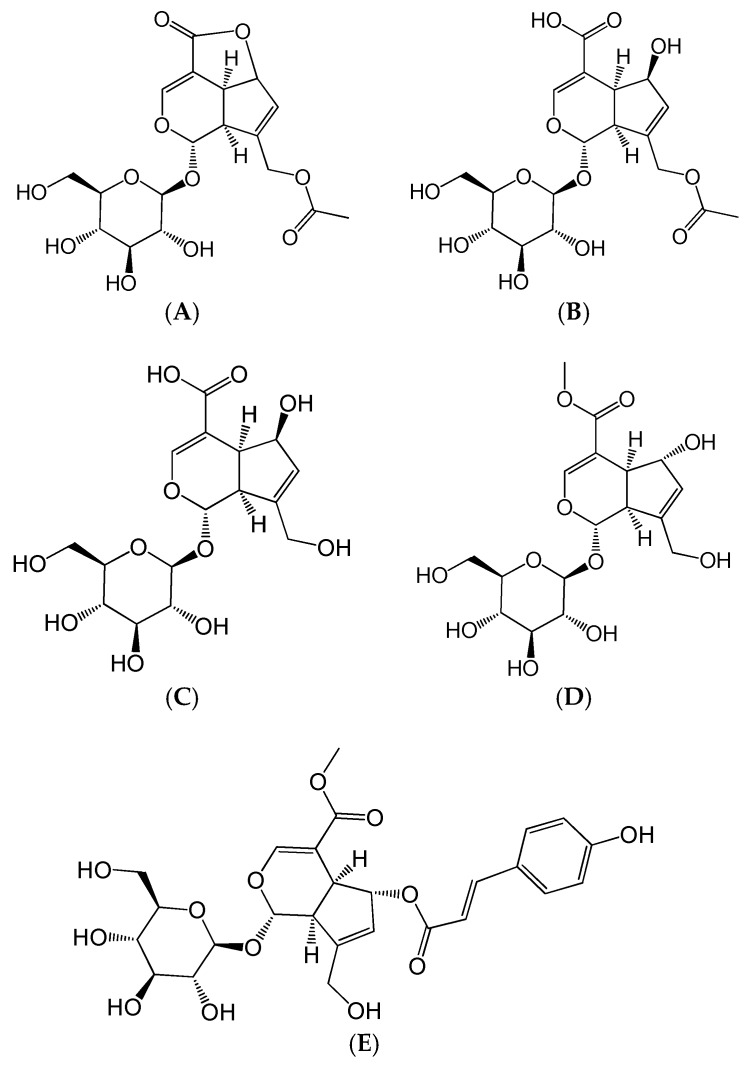
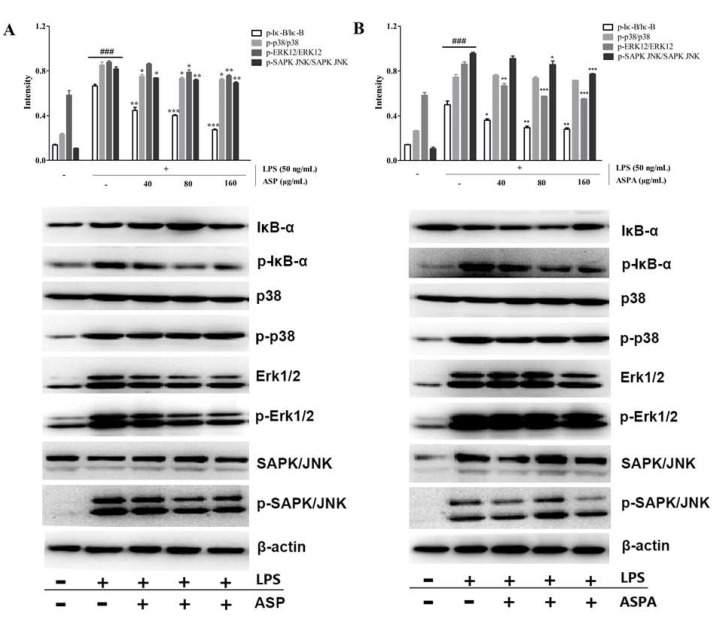
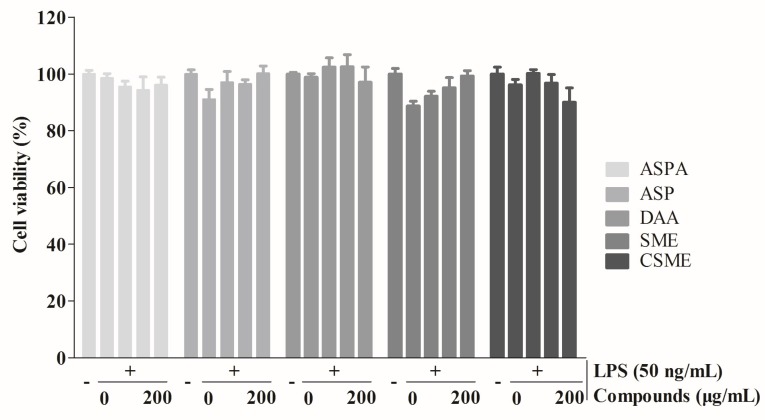
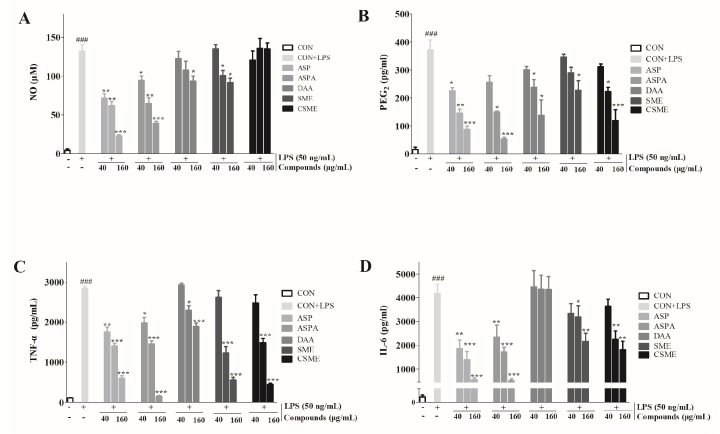
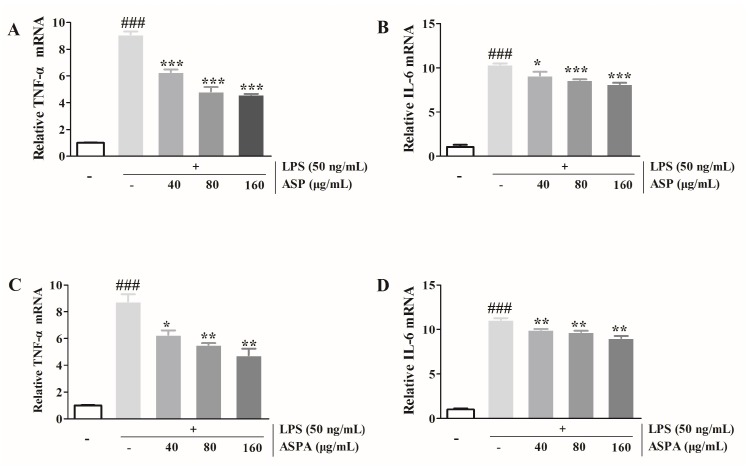
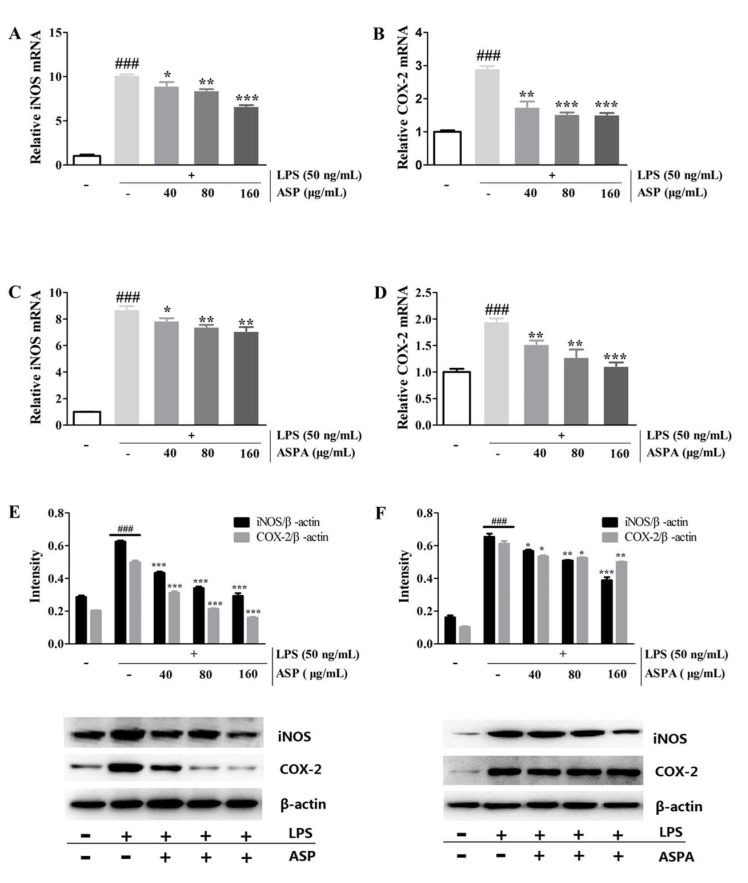
is a folk herb that is used for treating inflammation-related diseases in Asia. Previous studies have found that iridoids in play an important role in its anti-inflammatory activity. This study aimed to investigate the anti-inflammatory effect and potential mechanism of five iridoids (asperuloside (ASP), asperulosidic acid (ASPA), desacetyl asperulosidic acid (DAA), scandoside methyl ester (SME), and -6---coumaroyl scandoside methyl ester (CSME)) that are presented in using lipopolysaccharide (LPS)-induced RAW 264.7 cells. ASP and ASPA significantly decreased the production of nitric oxide (NO), prostaglandin E₂ (PGE₂), tumor necrosis factor-α (TNF-α), and interleukin-6 (IL-6) in parallel with the inhibition of inducible nitric oxide synthase (iNOS), cyclooxygenase-2 (COX-2), TNF-α, and IL-6 mRNA expression in LPS-induced RAW 264.7 cells. ASP treatment suppressed the phosphorylation of the inhibitors of nuclear factor-kappaB alpha (IκB-α), p38, extracellular signal-regulated kinase (ERK), and c-Jun N-terminal kinase (JNK). The inhibitory effect of ASPA was similar to that of ASP, except for p38 phosphorylation. In summary, the anti-inflammatory effects of ASP and ASPA are related to the inhibition of inflammatory cytokines and mediators via suppression of the NF-κB and mitogen-activated protein kinase (MAPK) signaling pathways, which provides scientific evidence for the potential application of .
是一种民间草药,在亚洲被用于治疗与炎症相关的疾病。先前的研究发现, 中的环烯醚萜苷类化合物在其抗炎活性中发挥着重要作用。本研究旨在探讨 中存在的五种环烯醚萜苷类化合物(獐牙菜苦苷(ASP)、獐牙菜苦苷酸(ASPA)、去乙酰基獐牙菜苦苷(DAA)、獐牙菜苷甲酯(SME)和-6---咖啡酰獐牙菜苷甲酯(CSME))的抗炎作用及其潜在机制,采用脂多糖(LPS)诱导的 RAW264.7 细胞进行研究。ASP 和 ASPA 显著降低了 LPS 诱导的 RAW264.7 细胞中一氧化氮(NO)、前列腺素 E₂(PGE₂)、肿瘤坏死因子-α(TNF-α)和白细胞介素-6(IL-6)的产生,同时抑制了诱导型一氧化氮合酶(iNOS)、环氧化酶-2(COX-2)、TNF-α和 IL-6mRNA 的表达。ASP 处理抑制了核因子-κB 抑制蛋白-α(IκB-α)、p38、细胞外信号调节激酶(ERK)和 c-Jun N 端激酶(JNK)的磷酸化。ASP 的抑制作用与 ASP 相似,除了 p38 的磷酸化。综上所述,ASP 和 ASPA 的抗炎作用与其通过抑制 NF-κB 和丝裂原活化蛋白激酶(MAPK)信号通路抑制炎症细胞因子和介质有关,这为 的潜在应用提供了科学依据。