Zińczuk Justyna, Zaręba Konrad, Guzińska-Ustymowicz Katarzyna, Kędra Bogusław, Kemona Andrzej, Pryczynicz Anna
Department of General Pathomorphology, Medical University of Bialystok, Bialystok, Poland.
2 Clinical Department of General and Gastroenterological Surgery, Medical University of Bialystok, Bialystok, Poland.
Prz Gastroenterol. 2018;13(2):118-126. doi: 10.5114/pg.2018.75824. Epub 2018 May 16.
Pancreatic ductal adenocarcinoma is one of the most aggressive tumours that develops from precursor lesions, most frequently including pancreatic intraepithelial neoplasia (PanIN). Deregulation of the cell cycle, responsible for uncontrolled cell proliferation, is an important phenomenon in the development of this cancer.
To evaluate the cell cycle and the expression of proliferation markers, namely Ki67, PCNA, and cyclin D1 in pancreatic intraepithelial neoplasia at its different stages of progression.
The study group consisted of 70 patients with different pancreatic diseases (pancreatic ductal adenocarcinoma, pancreatitis, and pancreatic cysts), who also had pancreatic intraepithelial neoplasia. Expression of Ki67, PCNA, and Cyclin D1 was analysed immunohistochemically using appropriate antibodies.
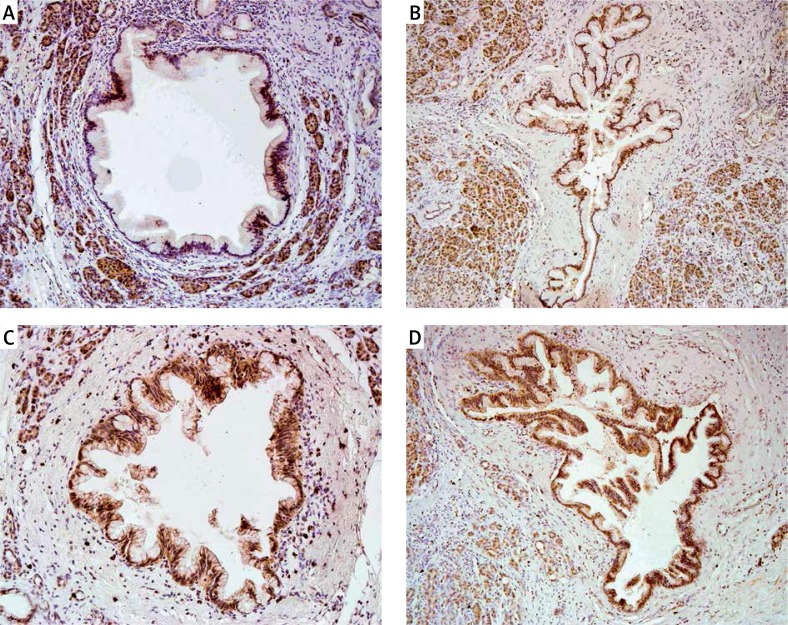
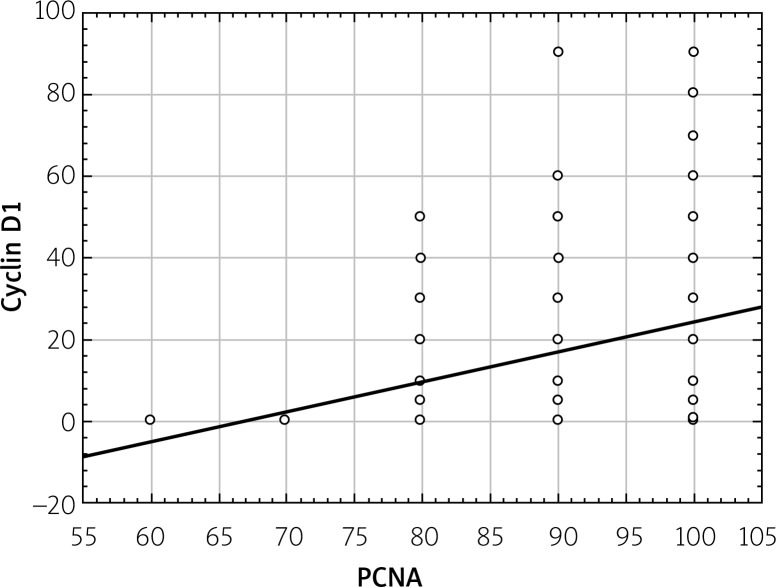
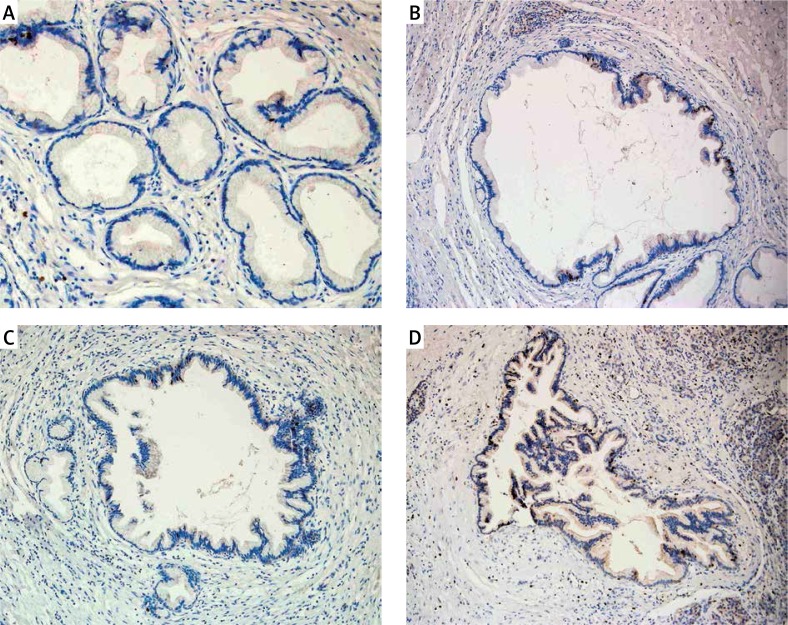
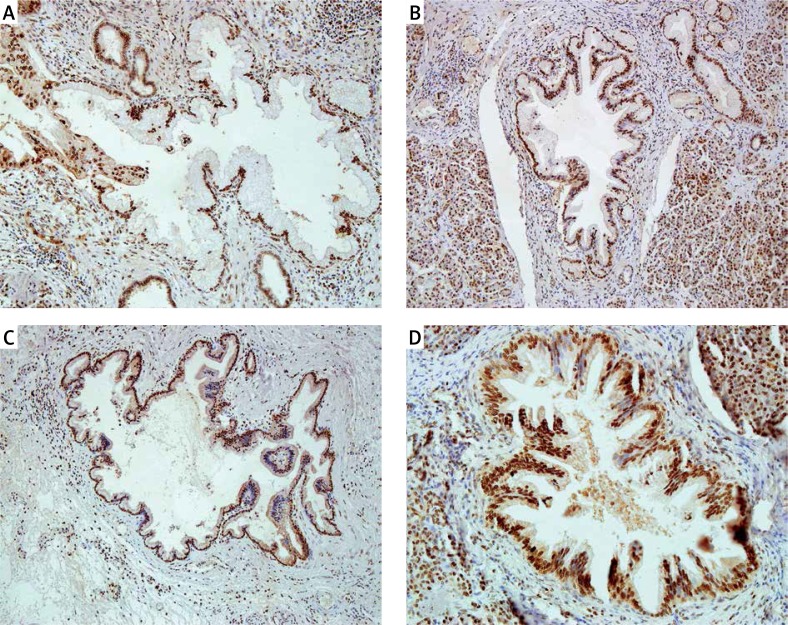
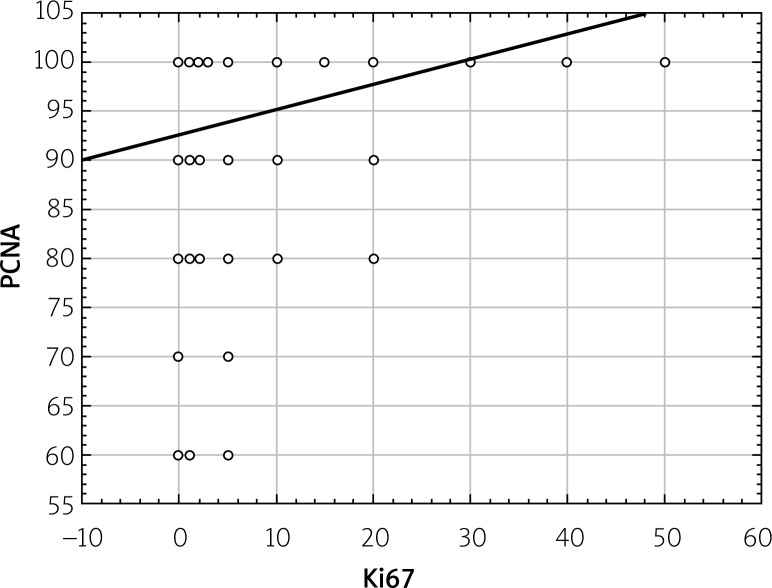
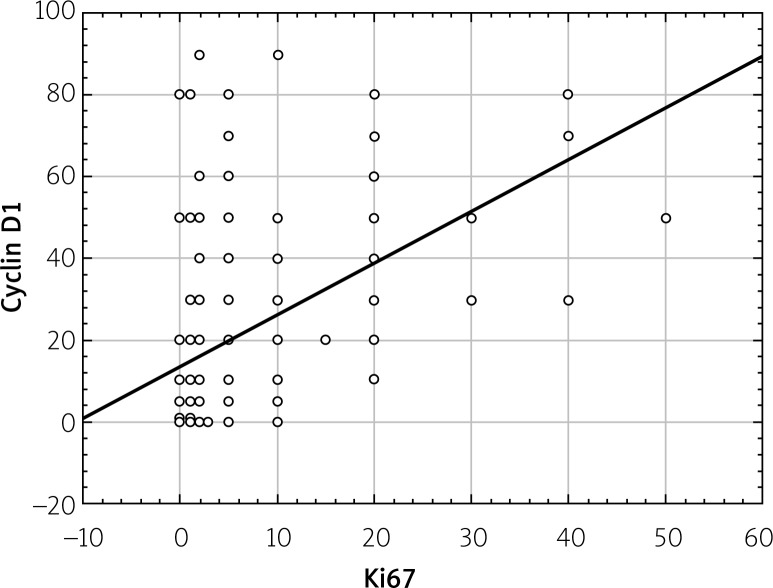
Statistically significant differences were demonstrated in Ki67, PCNA, and Cyclin D1 expression between normal pancreatic ducts and various stages of PanIN ( < 0.001). Expression of these proteins increased from normal pancreas to PanIN 1, 2, and 3. Expression of these proteins was higher in stages PanIN 1, 2, and 3 compared to normal pancreas. The expression of Ki67, PCNA, and cyclin D1 was associated with age ( < 0.001), Ki67 and PCNA with sex ( < 0.001), and PCNA with the type of primary disease ( = 0.031). Simultaneously, a directly proportional relationship was established between the expression of all proteins examined ( < 0.001).
An increase in the expression of Ki67, PCNA, and cyclin D1 suggests that these proteins may enhance epithelial cell proliferation and may influence the development of pancreatic intraepithelial neoplasia. Moreover, immunohistochemical assessment of Ki67, PCNA, and cyclin D1 expression may be helpful in the differential diagnosis of PanIN.
胰腺导管腺癌是最具侵袭性的肿瘤之一,它由前驱病变发展而来,最常见的前驱病变包括胰腺上皮内瘤变(PanIN)。细胞周期失调导致细胞不受控制地增殖,这是该癌症发生发展过程中的一个重要现象。
评估细胞周期以及增殖标志物Ki67、增殖细胞核抗原(PCNA)和细胞周期蛋白D1在胰腺上皮内瘤变不同进展阶段的表达情况。
研究组由70例患有不同胰腺疾病(胰腺导管腺癌、胰腺炎和胰腺囊肿)且伴有胰腺上皮内瘤变的患者组成。使用合适的抗体通过免疫组织化学方法分析Ki67、PCNA和细胞周期蛋白D1的表达情况。
正常胰腺导管与PanIN各阶段之间,Ki67、PCNA和细胞周期蛋白D1的表达存在统计学显著差异(<0.001)。这些蛋白的表达从正常胰腺到PanIN 1、2和3呈增加趋势。与正常胰腺相比,PanIN 1、2和3阶段这些蛋白的表达更高。Ki67、PCNA和细胞周期蛋白D1的表达与年龄相关(<0.001),Ki67和PCNA与性别相关(<0.001),PCNA与原发性疾病类型相关(=0.031)。同时,所检测的所有蛋白的表达之间建立了正比关系(<0.001)。
Ki67、PCNA和细胞周期蛋白D1表达增加表明这些蛋白可能增强上皮细胞增殖,并可能影响胰腺上皮内瘤变的发展。此外,对Ki67、PCNA和细胞周期蛋白D1表达进行免疫组织化学评估可能有助于PanIN的鉴别诊断。