Tian Bo, Xiao Yuhang, Ma Junliang, Ou Wei, Wang Hui, Wu Jie, Tang Jinming, Zhang Baihua, Liao Xiaojuan, Yang Desong, Wu Zhining, Li Xu, Zhou Yong, Su Min, Wang Wenxiang
Department of the 2nd Thoracic Surgery, Hunan Cancer Hospital and the Affiliated Cancer Hospital of Xiangya School of Medicine, Central South University, Changsha, People's Republic of China.
Hunan Key Laboratory of Translational Radiation Oncology, Hunan Cancer Hospital and the Affiliated Cancer Hospital of Xiangya School of Medicine, Central South University, Changsha, People's Republic of China.
Onco Targets Ther. 2020 Jul 29;13:7447-7458. doi: 10.2147/OTT.S256291. eCollection 2020.
Parthenolide (PT), the effective active ingredient of the medicinal plant, feverfew (), has been used as an anti-inflammatory drug due to its involvement in the inhibition of the NF-кB pathway. Moreover, recent studies have demonstrated the anti-tumor effect of PT in several cancers. However, the effect of PT on esophageal carcinoma remains unclear to date. In this study, we examined the inhibitory effects of PT and its underlying mechanism of action in human esophageal squamous cell carcinoma (ESCC) cells - Eca109 and KYSE-510.
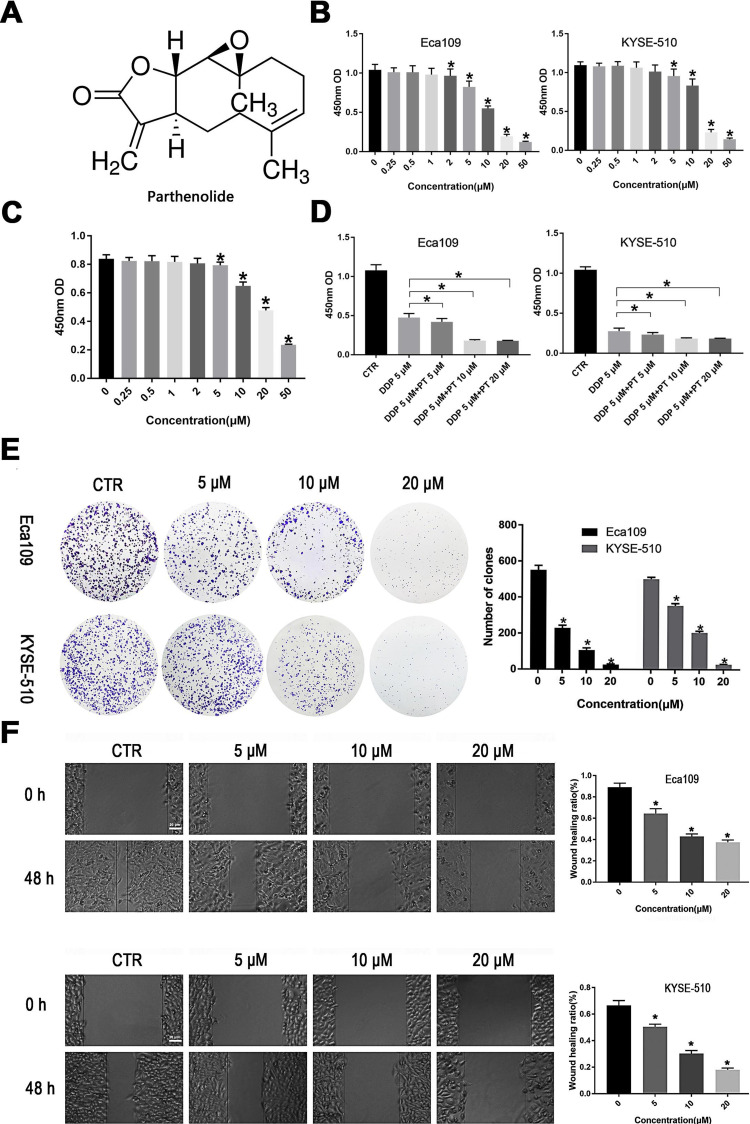
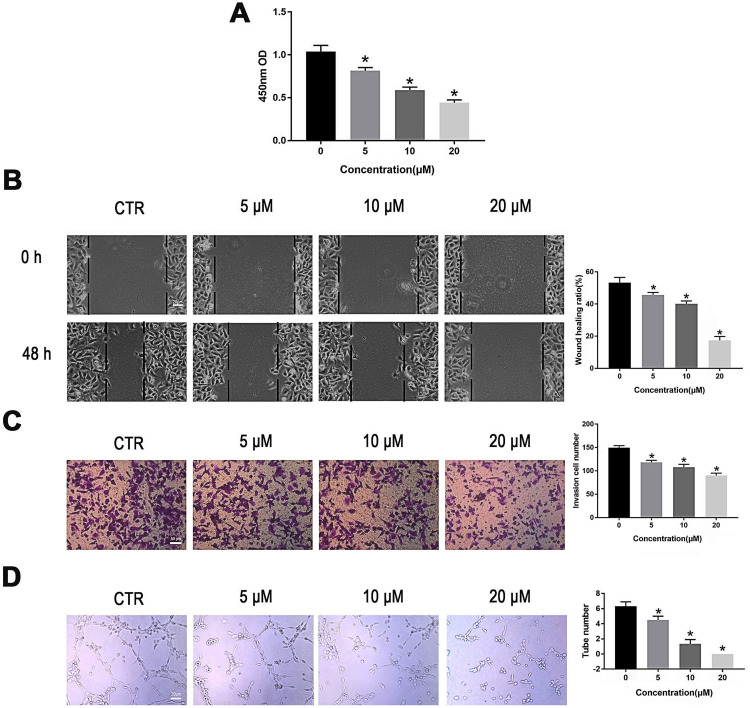
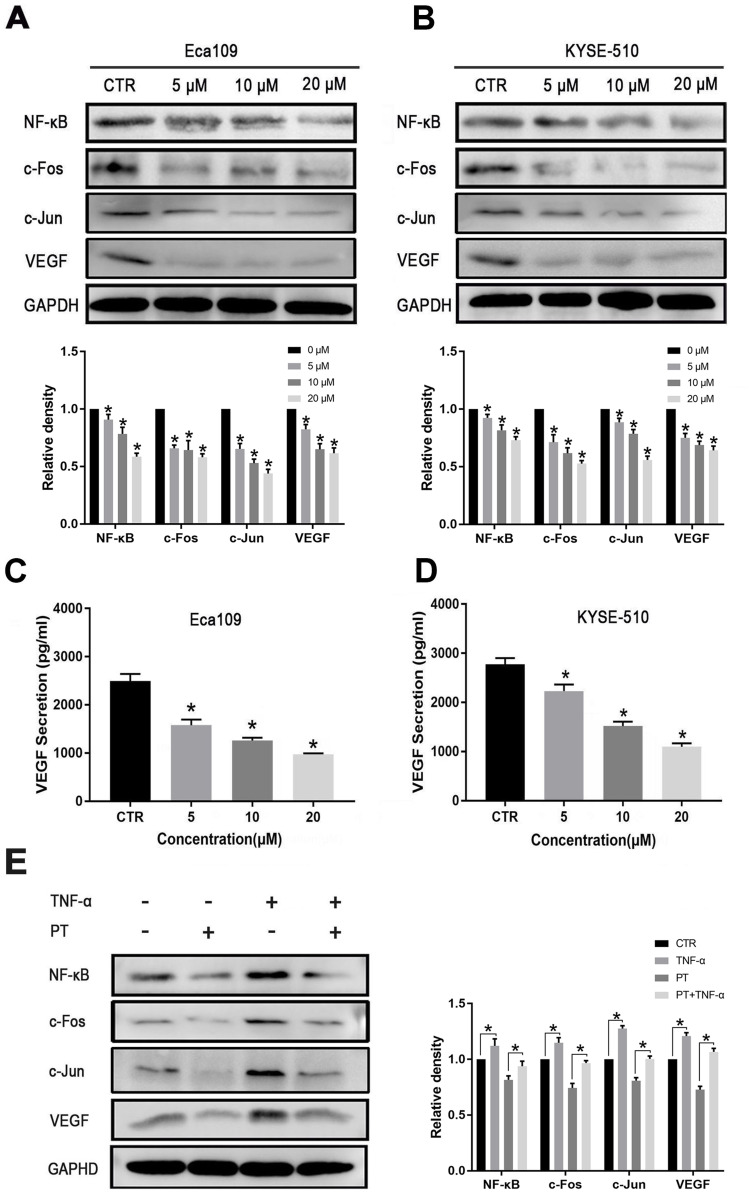
The proliferation ability of Eca109 and KYSE-510 treated with PT was detected using the Cell Counting Kit-8 and colony forming assay. The Transwell assay and the wound healing assay were used to analyze the cell invasion and migration ability, respectively. The tube formation assay was used to investigate the effect of PT on tube formation of endothelial cells. The expression level of NF-кB, AP-1 and VEGF was analyzed by Western blot.
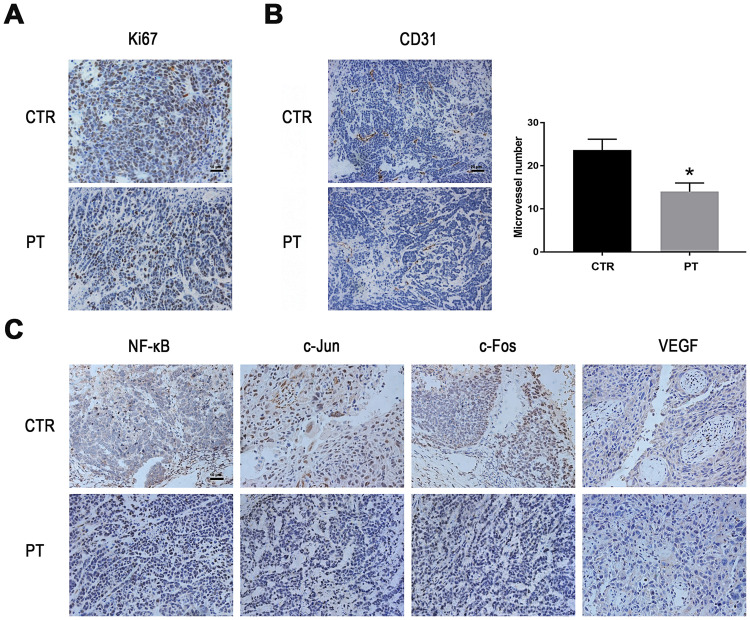
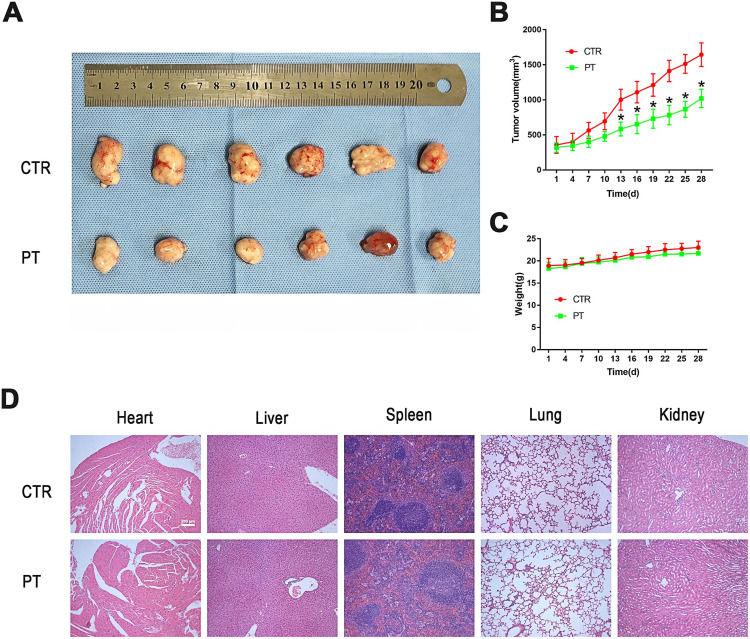
We demonstrated that PT attenuates the proliferation and migration ability of ESCC cells in vitro and also inhibits tumor growth in the mouse xenograft model. In addition, PT exhibited anti-angiogenesis activity by weakening the proliferation, invasion and tube formation of endothelial cells in vitro and reduced microvessel density in the xenograft tumors. Further studies revealed that PT reduced the expression level of NF-кB, AP-1 and VEGF in ESCC cells.
Collectively, the results of our study demonstrated that PT exerts anti-tumor and anti-angiogenesis effects possibly by inhibiting the NF-кB/AP-1/VEGF signaling pathway on esophageal carcinoma and might serve as a promising therapeutic agent for ESCC.
小白菊内酯(PT)是药用植物小白菊的有效活性成分,因其参与抑制核因子-κB(NF-κB)通路而被用作抗炎药物。此外,最近的研究表明PT在几种癌症中具有抗肿瘤作用。然而,PT对食管癌的影响迄今为止仍不清楚。在本研究中,我们检测了PT对人食管鳞状细胞癌(ESCC)细胞Eca109和KYSE-510的抑制作用及其潜在作用机制。
使用细胞计数试剂盒-8和集落形成试验检测PT处理的Eca109和KYSE-510的增殖能力。分别采用Transwell试验和伤口愈合试验分析细胞侵袭和迁移能力。采用管腔形成试验研究PT对内皮细胞管腔形成的影响。通过蛋白质免疫印迹法分析NF-κB、活化蛋白-1(AP-1)和血管内皮生长因子(VEGF)的表达水平。
我们证明PT在体外减弱了ESCC细胞的增殖和迁移能力,并且在小鼠异种移植模型中也抑制肿瘤生长。此外,PT通过在体外减弱内皮细胞的增殖、侵袭和管腔形成而表现出抗血管生成活性,并降低了异种移植肿瘤中的微血管密度。进一步研究表明,PT降低了ESCC细胞中NF-κB、AP-1和VEGF的表达水平。
总体而言,我们的研究结果表明PT可能通过抑制食管癌中的NF-κB/AP-1/VEGF信号通路发挥抗肿瘤和抗血管生成作用,并且可能成为ESCC的一种有前景的治疗药物。