• 文献检索
  • 文档翻译
  • 深度研究
  • 学术资讯
  • Suppr Zotero 插件Zotero 插件
  • 邀请有礼
  • 套餐&价格
  • 历史记录
应用&插件
Suppr Zotero 插件Zotero 插件浏览器插件Mac 客户端Windows 客户端微信小程序
定价
高级版会员购买积分包购买API积分包
服务
文献检索文档翻译深度研究API 文档MCP 服务
关于我们
关于 Suppr公司介绍联系我们用户协议隐私条款
关注我们

Suppr 超能文献

核心技术专利:CN118964589B侵权必究
粤ICP备2023148730 号-1Suppr @ 2026

文献检索

告别复杂PubMed语法,用中文像聊天一样搜索,搜遍4000万医学文献。AI智能推荐,让科研检索更轻松。

立即免费搜索

文件翻译

保留排版,准确专业,支持PDF/Word/PPT等文件格式,支持 12+语言互译。

免费翻译文档

深度研究

AI帮你快速写综述,25分钟生成高质量综述,智能提取关键信息,辅助科研写作。

立即免费体验

第2条:纵向研究评估监督绩效评估与认可策略(SPARS)对改善乌干达医疗机构药品管理的一年期效果。

Article 2: Longitudinal study assessing the one-year effects of supervision performance assessment and recognition strategy (SPARS) to improve medicines management in Uganda health facilities.

作者信息

Trap Birna, Musoke Richard, Kirunda Anthony, Oteba Martin Olowo, Embrey Martha, Ross-Degnan Dennis

机构信息

USAID/Uganda Health Supply Chain Program, Management Sciences for Health, Plot 15, Princess Anne Drive, Bugolobi, P.O. Box 71419, Kampala Uganda.

Management Sciences for Health, Plot 15, Princess Anne Drive, Bugolobi, P.O. Box 71419, Kampala Uganda.

出版信息

J Pharm Policy Pract. 2018 Jul 5;11:15. doi: 10.1186/s40545-018-0142-1. eCollection 2018.

DOI:10.1186/s40545-018-0142-1
PMID:30002854
原文链接:https://pmc.ncbi.nlm.nih.gov/articles/PMC6033200/
Abstract

BACKGROUND

In late 2010, Uganda introduced a supervision, performance assessment, and recognition strategy (SPARS) to improve staff capacity in medicines management in government and private not-for-profit health facilities. This paper assesses the impact of SPARS in health facilities during their first year of supervision.

METHODS

SPARS uses health workers trained as Medicines Management Supervisors (MMS) to supervise health facilities and address issues identified through indicatorbased performance assessment in five domains: stock management, storage management, ordering and reporting, prescribing quality, and dispensing quality. We used routine data generated during SPARS visits to 1222 health facilities to evaluate performance changes during the first year of supervision as well as the time until achieving an adequate score in this period. We also explored variables related to facilities, MMS, and intensity of implementation as predictors of performance improvement and time until achieving an adequate score.

RESULTS

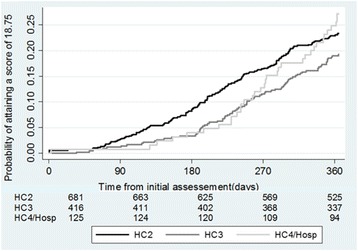
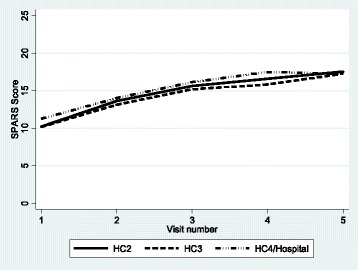
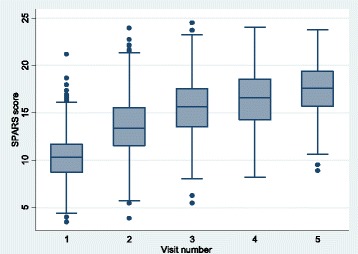
Health facilities received an average of 3.4 MMS visits during the first year of supervision, with an average of 88 days between visits; each MMS implemented a median of 28 visits per year. Overall SPARS scores (maximum of 25) improved by 2.3 points (22.3%) per visit from a mean baseline score of 10.3. The adjusted improvement in overall SPARS score was significantly higher in primary health care facilities (2.36) versus higher-level health facilities and hospitals (2.15) ( = 0.001). The incremental improvement was highest at visit 2, with decreasing but continuing positive gains in subsequent visits. The adjusted mean incremental improvement per visit was highest in the prescribing quality domain, followed by dispensing quality, ordering and reporting, stock management, and storage management. Adjusted improvement in SPARS scores varied by region, year of implementation, and facility ownership. After one year of SPARS, 22% of facilities achieved an adequate score of 18.75 (75% of maximum score).

CONCLUSIONS

SPARS was effective in building health facility capacity in medicines management, with a median overall improvement of almost 70% during the first year. The greatest improvements occurred in prescribing quality and at lower levels of care, although the highest level of performance was achieved in storage management. We recommend broad dissemination of the SPARS approach in all Ugandan health facilities as well as in other countries seeking a practical strategy to improve medicines management performance.

摘要

背景

2010年末,乌干达引入了一项监督、绩效评估和认可战略(SPARS),以提高政府及私立非营利性医疗机构药品管理方面的工作人员能力。本文评估了SPARS在实施监督的第一年对医疗机构的影响。

方法

SPARS利用接受过培训的医务人员作为药品管理监督员(MMS)来监督医疗机构,并解决通过基于指标的绩效评估在五个领域发现的问题:库存管理、储存管理、订购与报告、处方质量和配药质量。我们使用在对1222家医疗机构进行SPARS访问期间生成的常规数据,来评估监督第一年期间的绩效变化以及在此期间达到合格分数所需的时间。我们还探讨了与医疗机构、MMS以及实施强度相关的变量,作为绩效改善和达到合格分数所需时间的预测因素。

结果

在监督的第一年,医疗机构平均接受3.4次MMS访问,访问间隔平均为88天;每位MMS每年实施的访问中位数为28次。总体SPARS分数(满分25分)从平均基线分数10.3分开始,每次访问提高2.3分(22.3%)。初级卫生保健机构的总体SPARS分数调整后改善幅度(2.36)显著高于高级卫生机构和医院(2.15)(P = 0.001)。在第二次访问时增量改善最高,随后的访问中虽有下降但仍持续有正向增长。每次访问的调整后平均增量改善在处方质量领域最高,其次是配药质量、订购与报告、库存管理和储存管理。SPARS分数的调整后改善因地区、实施年份和机构所有权而异。经过一年的SPARS实施,22%的机构达到了18.75分的合格分数(满分的75%)。

结论

SPARS在建设医疗机构药品管理能力方面是有效的,第一年总体改善中位数近70%。最大的改善发生在处方质量和较低级别的医疗服务中,尽管储存管理方面取得了最高的绩效水平。我们建议在所有乌干达医疗机构以及其他寻求实用战略以改善药品管理绩效的国家广泛推广SPARS方法。
https://cdn.ncbi.nlm.nih.gov/pmc/blobs/484f/6033200/296d708db4c3/40545_2018_142_Fig4_HTML.jpg
https://cdn.ncbi.nlm.nih.gov/pmc/blobs/484f/6033200/592d3aecd9b6/40545_2018_142_Fig1_HTML.jpg
https://cdn.ncbi.nlm.nih.gov/pmc/blobs/484f/6033200/21513e373512/40545_2018_142_Fig2_HTML.jpg
https://cdn.ncbi.nlm.nih.gov/pmc/blobs/484f/6033200/296d708db4c3/40545_2018_142_Fig4_HTML.jpg
https://cdn.ncbi.nlm.nih.gov/pmc/blobs/484f/6033200/592d3aecd9b6/40545_2018_142_Fig1_HTML.jpg
https://cdn.ncbi.nlm.nih.gov/pmc/blobs/484f/6033200/21513e373512/40545_2018_142_Fig2_HTML.jpg
https://cdn.ncbi.nlm.nih.gov/pmc/blobs/484f/6033200/296d708db4c3/40545_2018_142_Fig4_HTML.jpg

相似文献

1
Article 2: Longitudinal study assessing the one-year effects of supervision performance assessment and recognition strategy (SPARS) to improve medicines management in Uganda health facilities.第2条:纵向研究评估监督绩效评估与认可策略(SPARS)对改善乌干达医疗机构药品管理的一年期效果。
J Pharm Policy Pract. 2018 Jul 5;11:15. doi: 10.1186/s40545-018-0142-1. eCollection 2018.
2
Article 3: 1-year impact of supervision, performance assessment, and recognition strategy (SPARS) on prescribing and dispensing quality in Ugandan health facilities.第3条:监督、绩效评估和认可策略(SPARS)对乌干达医疗机构处方开具和配药质量的1年影响。
J Pharm Policy Pract. 2020 Sep 1;13:48. doi: 10.1186/s40545-020-00248-w. eCollection 2020.
3
Article 4: Impact assessment of supervision performance assessment and recognition strategy (SPARS) to improve supply chain management in health facilities in Uganda: a national pre and post study.第4条:监督绩效评估与认可策略(SPARS)对改善乌干达医疗机构供应链管理的影响评估:一项全国性前后对照研究。
J Pharm Policy Pract. 2021 Feb 4;14(1):14. doi: 10.1186/s40545-020-00290-8.
4
Article 1: Supervision, Performance Assessment, and Recognition Strategy (SPARS) - a multipronged intervention strategy for strengthening medicines management in Uganda: method presentation and facility performance at baseline.第1条:监督、绩效评估与认可策略(SPARS)——乌干达加强药品管理的多管齐下干预策略:方法介绍及基线时的机构绩效
J Pharm Policy Pract. 2016 May 31;9:21. doi: 10.1186/s40545-016-0070-x. eCollection 2016.
5
Competency in supportive supervision: a study of public sector medicines management supervisors in Uganda.支持性监督能力:乌干达公共部门药品管理监督员研究
J Pharm Policy Pract. 2017 Oct 11;10:33. doi: 10.1186/s40545-017-0121-y. eCollection 2017.
6
Evaluating inter-rater reliability of indicators to assess performance of medicines management in health facilities in Uganda.评估乌干达医疗机构药品管理绩效评估指标的评分者间信度。
J Pharm Policy Pract. 2018 May 3;11:11. doi: 10.1186/s40545-018-0137-y. eCollection 2018.
7
First regulatory inspections measuring adherence to Good Pharmacy Practices in the public sector in Uganda: a cross-sectional comparison of performance between supervised and unsupervised facilities.乌干达首次对公共部门遵守《药品经营质量管理规范》情况进行的监管检查:对有监管和无监管设施的绩效进行横断面比较。
J Pharm Policy Pract. 2016 May 4;9:18. doi: 10.1186/s40545-016-0068-4. eCollection 2016.
8
The impact of a human resource management intervention on the capacity of supervisors to support and supervise their staff at health facility level.人力资源管理干预对主管在卫生机构层面支持和监督其员工能力的影响。
Hum Resour Health. 2017 Aug 30;15(1):57. doi: 10.1186/s12960-017-0225-0.
9
Strengthening health facilities for maternal and newborn care: experiences from rural eastern Uganda.加强孕产妇和新生儿护理的卫生设施:乌干达东部农村地区的经验
Glob Health Action. 2015 Mar 31;8:24271. doi: 10.3402/gha.v8.24271. eCollection 2015.
10
The procurement and supply chain strengthening project: improving public health supply chains for better access to HIV medicines, Uganda 2011-2016.加强采购与供应链项目:改善公共卫生供应链以更好地获取艾滋病毒药物,乌干达,2011 - 2016年
J Pharm Policy Pract. 2022 Oct 27;15(1):72. doi: 10.1186/s40545-022-00467-3.

引用本文的文献

1
Cyclical medication management interventions in health care settings: A systematic review.医疗保健机构中的周期性药物管理干预措施:一项系统综述。
Learn Health Syst. 2025 Feb 26;9(3):e70005. doi: 10.1002/lrh2.70005. eCollection 2025 Jul.
2
Supervision, performance assessment, and recognition strategy - a quasi-experimental pre-post study of the multipronged interventions to and strengthen medicines management in Nepal.监督、绩效评估与认可策略——尼泊尔药品管理多管齐下干预措施及强化的一项前后对照准实验研究。
J Pharm Policy Pract. 2025 Jun 19;18(1):2512180. doi: 10.1080/20523211.2025.2512180. eCollection 2025.
3

本文引用的文献

1
Evaluating inter-rater reliability of indicators to assess performance of medicines management in health facilities in Uganda.评估乌干达医疗机构药品管理绩效评估指标的评分者间信度。
J Pharm Policy Pract. 2018 May 3;11:11. doi: 10.1186/s40545-018-0137-y. eCollection 2018.
2
Competency in supportive supervision: a study of public sector medicines management supervisors in Uganda.支持性监督能力:乌干达公共部门药品管理监督员研究
J Pharm Policy Pract. 2017 Oct 11;10:33. doi: 10.1186/s40545-017-0121-y. eCollection 2017.
3
Article 1: Supervision, Performance Assessment, and Recognition Strategy (SPARS) - a multipronged intervention strategy for strengthening medicines management in Uganda: method presentation and facility performance at baseline.
Supervision, performance assessment, and recognition strategy (SPARS) - a multipronged strategy to strengthen medicines management in Nepal: pilot study methods and baseline results.
监督、绩效评估与认可策略(SPARS)——尼泊尔加强药品管理的多管齐下策略:试点研究方法与基线结果
J Pharm Policy Pract. 2025 Jan 20;18(1):2449043. doi: 10.1080/20523211.2024.2449043. eCollection 2025.
4
Costs of the Supervision, Performance Assessment and Recognition Strategy (SPARS) for improving medicines management in Nepal.尼泊尔用于改善药品管理的监督、绩效评估与认可战略(SPARS)的成本。
J Pharm Policy Pract. 2024 Nov 18;17(1):2421258. doi: 10.1080/20523211.2024.2421258. eCollection 2024.
5
Compliance of public health facilities with essential medicines and health supplies redistribution guidelines in Mbale district, Eastern Uganda: a mixed-methods study.乌干达东部姆巴莱区公共卫生设施对基本药物和卫生用品再分配指南的遵守情况:一项混合方法研究
J Pharm Policy Pract. 2023 Feb 28;16(1):32. doi: 10.1186/s40545-023-00545-0.
6
Health supply chain system in Uganda: current issues, structure, performance, and implications for systems strengthening.乌干达的卫生供应链系统:当前问题、结构、绩效及对系统强化的影响
J Pharm Policy Pract. 2022 Mar 1;15(1):14. doi: 10.1186/s40545-022-00412-4.
7
Article 4: Impact assessment of supervision performance assessment and recognition strategy (SPARS) to improve supply chain management in health facilities in Uganda: a national pre and post study.第4条:监督绩效评估与认可策略(SPARS)对改善乌干达医疗机构供应链管理的影响评估:一项全国性前后对照研究。
J Pharm Policy Pract. 2021 Feb 4;14(1):14. doi: 10.1186/s40545-020-00290-8.
8
Article 3: 1-year impact of supervision, performance assessment, and recognition strategy (SPARS) on prescribing and dispensing quality in Ugandan health facilities.第3条:监督、绩效评估和认可策略(SPARS)对乌干达医疗机构处方开具和配药质量的1年影响。
J Pharm Policy Pract. 2020 Sep 1;13:48. doi: 10.1186/s40545-020-00248-w. eCollection 2020.
9
To start or to complete? - Challenges in implementing tuberculosis preventive therapy among people living with HIV: a mixed-methods study from Karnataka, India.启动还是完成?——在印度卡纳塔克邦开展艾滋病毒感染者结核病预防治疗所面临的挑战:一项混合方法研究。
Glob Health Action. 2020;13(1):1704540. doi: 10.1080/16549716.2019.1704540.
10
Costs and effectiveness of the supervision, performance assessment and recognition (SPARS) strategy for medicines management in Uganda.乌干达药品管理的监督、绩效评估与认可(SPARS)策略的成本与效果
J Pharm Policy Pract. 2019 Dec 3;12:36. doi: 10.1186/s40545-019-0196-8. eCollection 2019.
第1条:监督、绩效评估与认可策略(SPARS)——乌干达加强药品管理的多管齐下干预策略:方法介绍及基线时的机构绩效
J Pharm Policy Pract. 2016 May 31;9:21. doi: 10.1186/s40545-016-0070-x. eCollection 2016.
4
Programme level implementation of malaria rapid diagnostic tests (RDTs) use: outcomes and cost of training health workers at lower level health care facilities in Uganda.疟疾快速诊断检测(RDT)在项目层面的实施:乌干达较低级别医疗保健机构培训卫生工作者的结果和成本。
BMC Public Health. 2012 Apr 20;12:291. doi: 10.1186/1471-2458-12-291.
5
Primary health care supervision in developing countries.发展中国家的初级卫生保健监督
Trop Med Int Health. 2008 Mar;13(3):369-83. doi: 10.1111/j.1365-3156.2008.02012.x.
6
Improving quality of reproductive health care in Senegal through formative supervision: results from four districts.通过形成性监督提高塞内加尔生殖健康护理质量:来自四个地区的结果。
Hum Resour Health. 2007 Nov 29;5:26. doi: 10.1186/1478-4491-5-26.
7
Much ado about nothing: A comparison of missing data methods and software to fit incomplete data regression models.无事生非:缺失数据方法与拟合不完全数据回归模型软件的比较
Am Stat. 2007 Feb;61(1):79-90. doi: 10.1198/000313007X172556.
8
Health sector reforms and human resources for health in Uganda and Bangladesh: mechanisms of effect.乌干达和孟加拉国的卫生部门改革与卫生人力资源:影响机制
Hum Resour Health. 2007 Feb 1;5:3. doi: 10.1186/1478-4491-5-3.
9
How can we achieve and maintain high-quality performance of health workers in low-resource settings?在资源匮乏的环境中,我们如何实现并维持卫生工作者的高质量绩效?
Lancet. 2005;366(9490):1026-35. doi: 10.1016/S0140-6736(05)67028-6.
10
Coping with paediatric referral--Ugandan parents' experience.应对儿科转诊——乌干达父母的经历
Lancet. 2004 Jun 12;363(9425):1955-6. doi: 10.1016/S0140-6736(04)16411-8.