Poudyal Mahesh, Jones Julia P G, Rakotonarivo O Sarobidy, Hockley Neal, Gibbons James M, Mandimbiniaina Rina, Rasoamanana Alexandra, Andrianantenaina Nilsen S, Ramamonjisoa Bruno S
School of Environment, Natural Resources and Geography, Bangor University, Bangor, UK.
Biological and Environmental Sciences, University of Stirling, Stirling, UK.
PeerJ. 2018 Jul 5;6:e5106. doi: 10.7717/peerj.5106. eCollection 2018.
While the importance of conserving ecosystems for sustainable development is widely recognized, it is increasingly evident that despite delivering global benefits, conservation often comes at local cost. Protected areas funded by multilateral lenders have explicit commitments to ensure that those negatively affected are adequately compensated. We make the first comparison of the magnitude and distribution of the local costs of a protected area with the magnitude and distribution of the compensation provided under the World Bank social safeguard policies (Performance Standard 5).
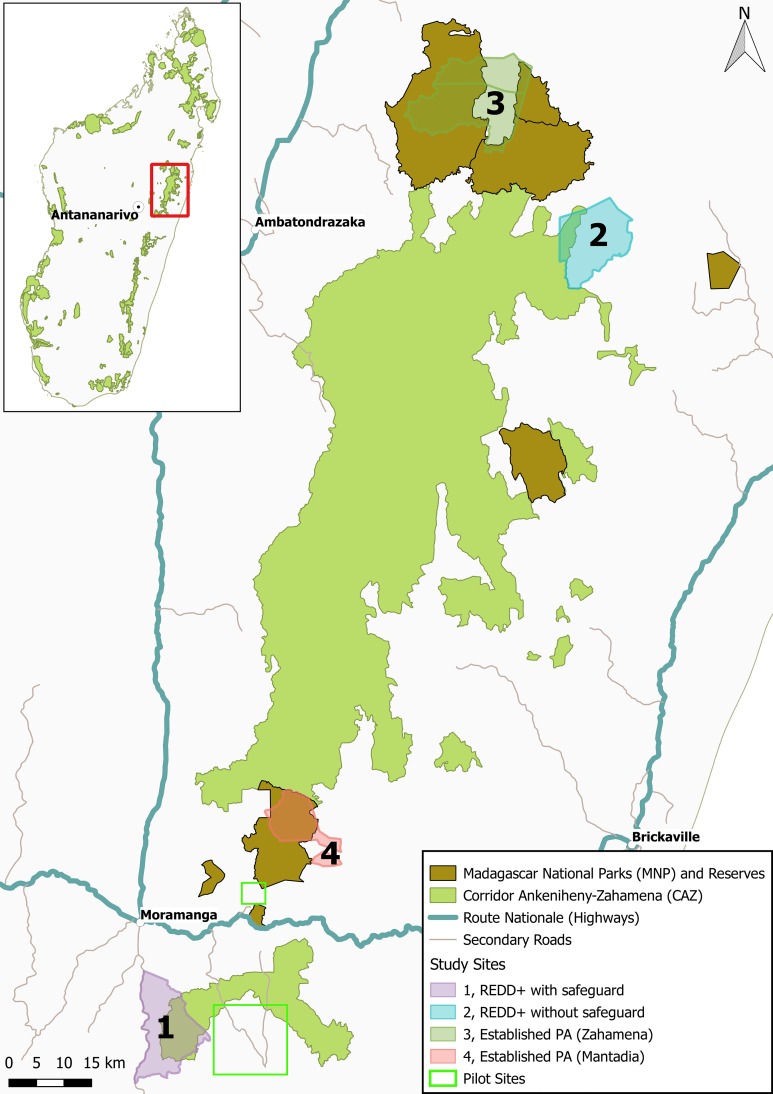
In the Ankeniheny-Zahamena Corridor (a new protected area and REDD+ pilot project in eastern Madagascar), we used choice experiments to estimate local opportunity costs ( = 453) which we annualized using a range of conservative assumptions concerning discount rates. Detailed surveys covering farm inputs and outputs as well as off-farm income ( = 102) allowed us to explore these opportunity costs as a proportion of local incomes. Intensive review of publically available documents provided estimates of the number of households that received safeguard compensation and the amount spent per household. We carried out a contingent valuation exercise with beneficiaries of this compensation two years after the micro-development projects were implemented ( = 62) to estimate their value as perceived by beneficiaries.
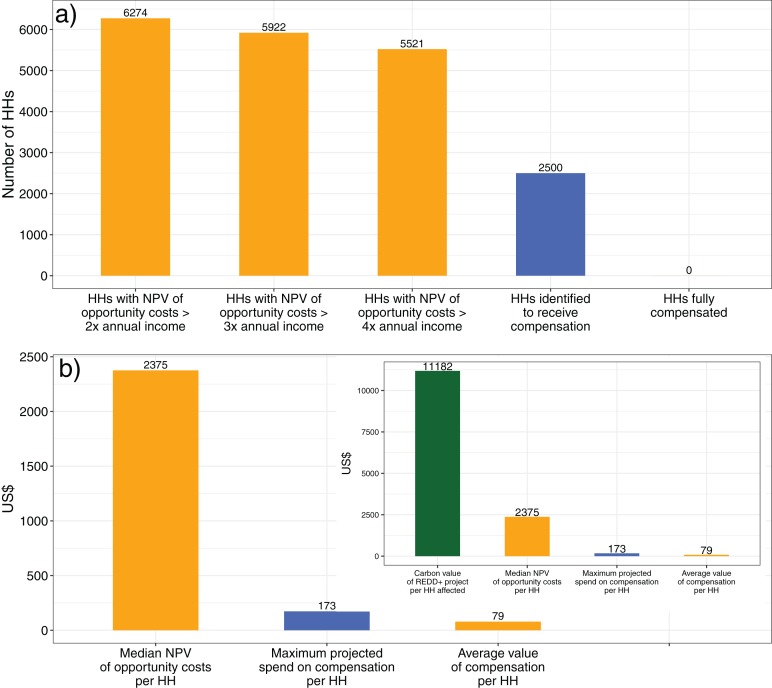
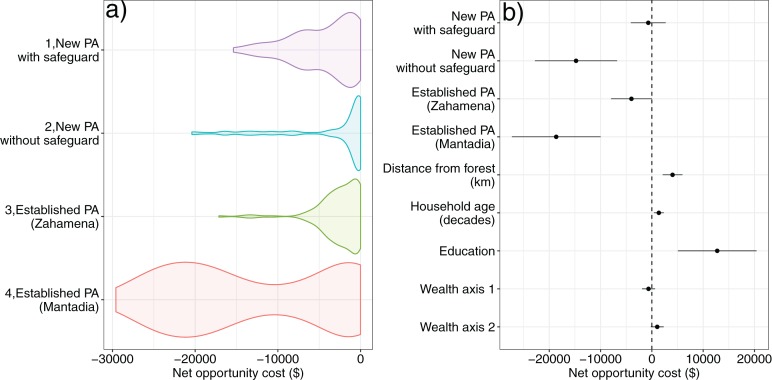
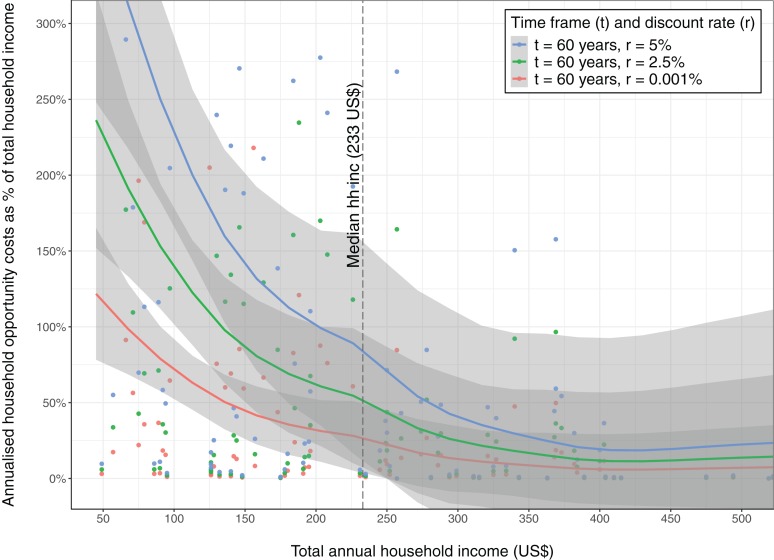
Conservation restrictions result in very significant costs to forest communities. The median net present value of the opportunity cost across households in all sites was US$2,375. When annualized, these costs represent 27-84% of total annual income for median-income households; significantly higher proportionally for poorer households. Although some households have received compensation, we conservatively estimate that more than 50% of eligible households (3,020 households) have not. Given the magnitude of compensation (based both on amount spent and valuation by recipients two years after the compensation was distributed) relative to costs, we argue that no one was fully compensated. Achieving full compensation will require an order of magnitude more than was spent but we suggest that this should be affordable given the global value of forest conservation.
By analyzing in unprecedented depth both the local costs of conservation, and the compensation distributed under donor policies, we demonstrate that despite well-intentioned policies, some of the poorest people on the planet are still bearing the cost of forest conservation. Unless significant extra funding is provided by the global beneficiaries of conservation, donors' social safeguarding requirements will not be met, and forest conservation in developing countries will jeopardize, rather than contribute to, sustainable development goals.
虽然保护生态系统对可持续发展的重要性已得到广泛认可,但越来越明显的是,尽管保护工作带来了全球效益,但其在当地往往要付出代价。由多边贷款机构资助的保护区有明确承诺,要确保对受负面影响的人给予充分补偿。我们首次比较了一个保护区的当地成本的规模和分布与世界银行社会保护政策(绩效标准5)规定的补偿的规模和分布。
在安克尼希尼 - 扎哈梅纳走廊(马达加斯加东部一个新的保护区和减少毁林和森林退化所致排放量+试点项目),我们利用选择实验来估算当地的机会成本(n = 453),并使用一系列关于贴现率的保守假设对其进行年度化处理。涵盖农场投入和产出以及非农业收入的详细调查(n = 102)使我们能够探究这些机会成本占当地收入的比例。对公开资料的深入审查得出了获得保护补偿的家庭数量以及每户的支出金额的估计值。在微型发展项目实施两年后,我们对该补偿的受益者进行了意愿调查(n = 62),以估算受益者所感知的补偿价值。
保护限制给森林社区带来了非常巨大的成本。所有地点家庭机会成本的中位净现值为2375美元。年度化后,这些成本占中等收入家庭年总收入的27 - 84%;对较贫困家庭而言,占比明显更高。虽然一些家庭已获得补偿,但我们保守估计,超过50%的符合条件家庭(3020户)并未得到补偿。鉴于补偿规模(基于支出金额以及补偿发放两年后受偿者的估值)与成本相比,我们认为没有人得到了全额补偿。要实现全额补偿所需的金额比已支出的金额高出一个数量级,但我们认为鉴于森林保护的全球价值,这应该是可以承受的。
通过以前所未有的深度分析保护的当地成本以及捐助政策下发放的补偿,我们表明,尽管政策意图良好,但地球上一些最贫困的人仍在承担森林保护的成本。除非保护的全球受益者提供大量额外资金,否则捐助者的社会保护要求将无法满足,发展中国家的森林保护将危及而非促进可持续发展目标。