Tabor Karyn, Jones Kelly W, Hewson Jennifer, Rasolohery Andriambolantsoa, Rambeloson Andoniaina, Andrianjohaninarivo Tokihenintsoa, Harvey Celia A
Betty & Gordon Moore Center for Science, Conservation International, Arlington, Virginia, United States of America.
Human Dimensions of Natural Resources, Colorado State University, Fort Collins, Colorado, United States of America.
PLoS One. 2017 Dec 21;12(12):e0190119. doi: 10.1371/journal.pone.0190119. eCollection 2017.
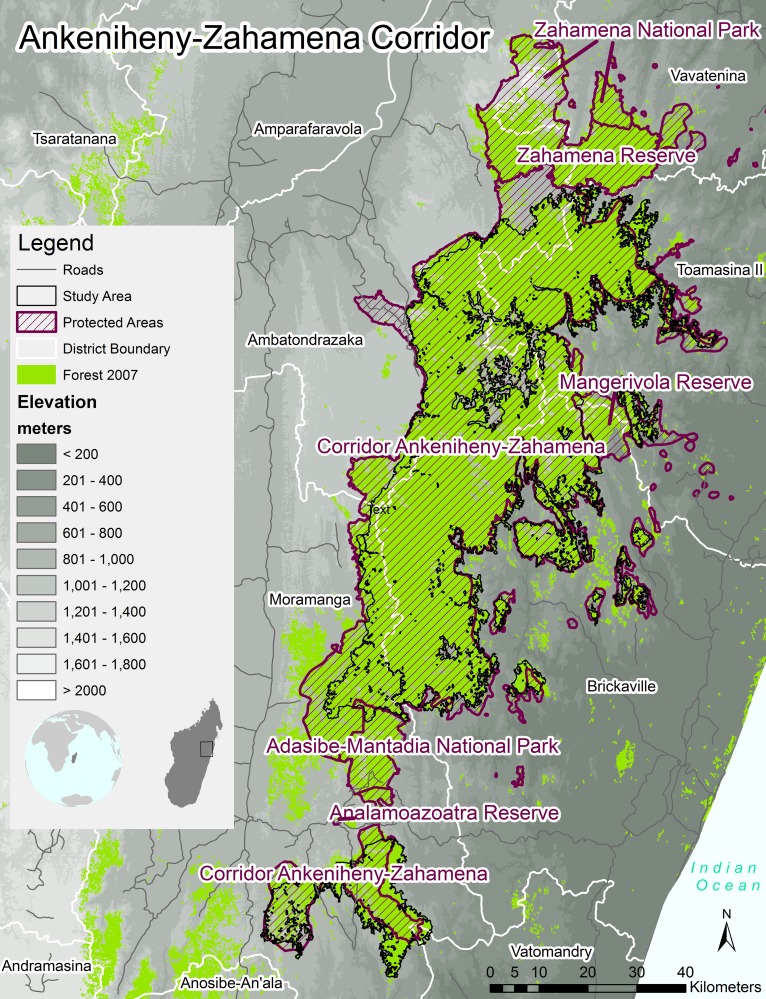
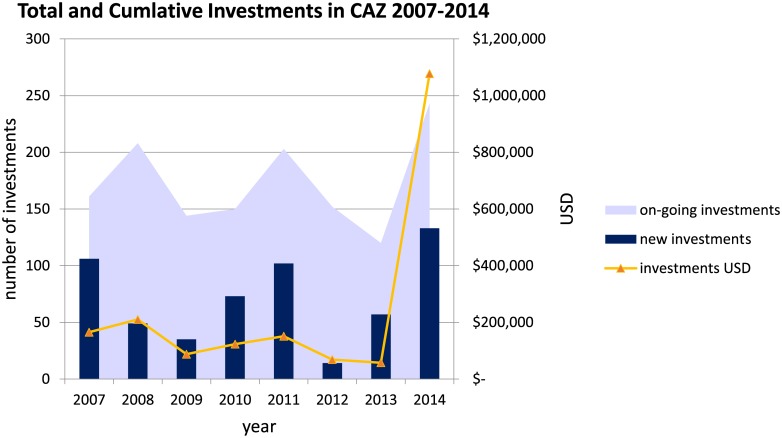
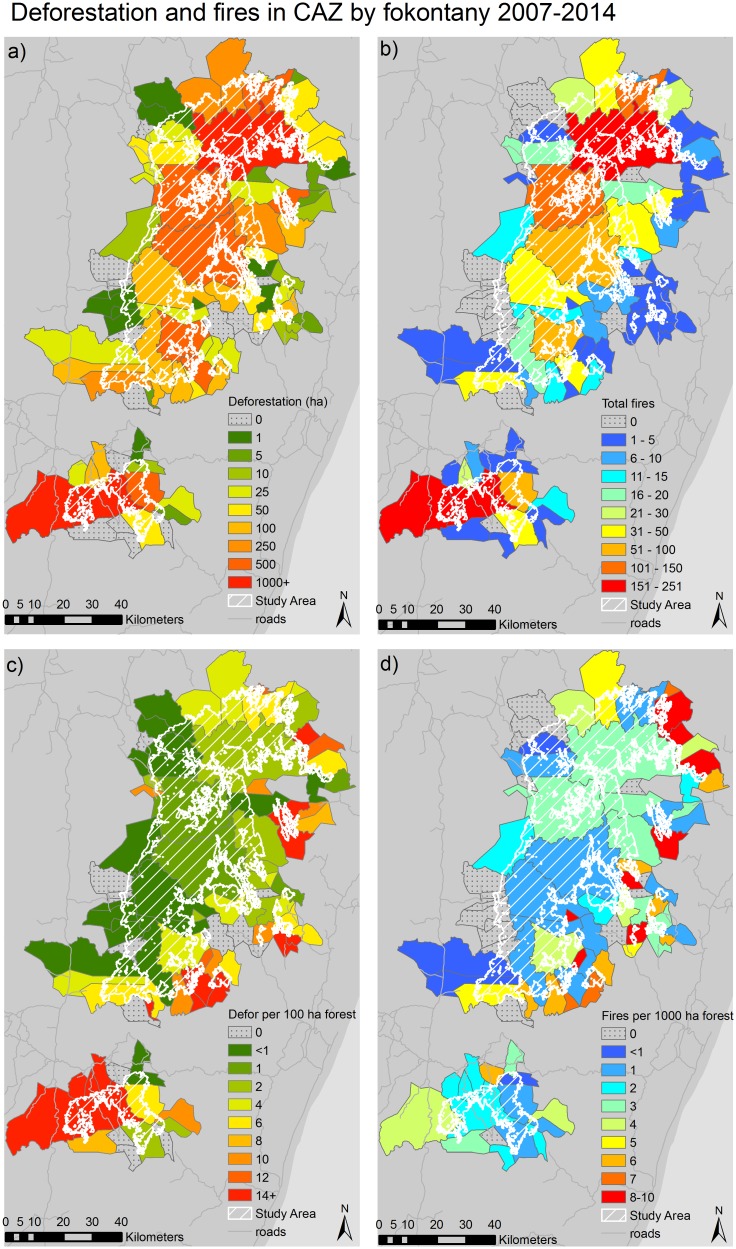
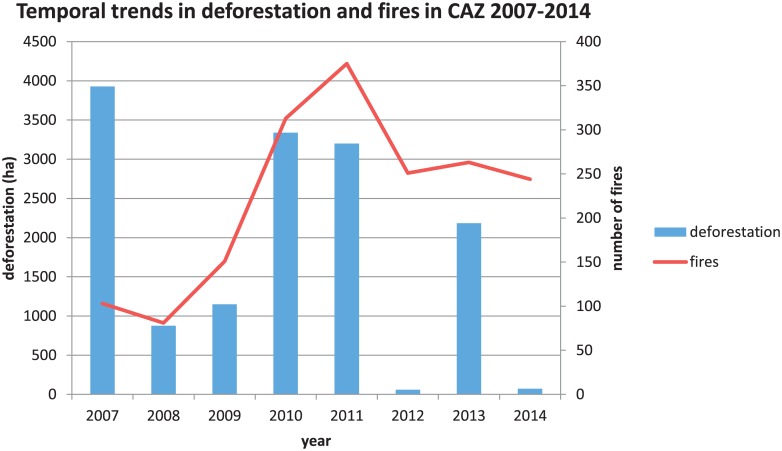
Forest conservation and REDD+ projects invest millions of dollars each year to reduce local communities' dependence on forests and prevent forest loss and degradation. However, to date, there is limited evidence on whether these investments are effective at delivering conservation outcomes. We explored the relationships between 600+ small-scale conservation and development investments that occurred from 2007 to 2014 and conservation outcomes (deforestation rates and fire detections) within Ankeniheny-Zahamena Corridor in Madagascar using linear fixed effects panel regressions. We derived annual changes in forest cover and fires from satellite remote sensing. We found a statistically significant correlation between presence of any investment and reduced deforestation rates in 2010 and 2011 -years with accelerated deforestation elsewhere in the study area. This result indicated investments abated deforestation rates during times of political instability and lack of governance following a 2009 coup in Madagascar. We also found a statistically significant relationship between presence of any investment and reduced fire detections in the study area, suggesting investments had an impact on reducing burning of forest for agriculture. For both outcomes (i.e., deforestation rates and fire detections), we found that more dollars invested led to greater conservation outcomes (i.e. fewer fires or less deforestation), particularly when funding was sustained for one to two years. Our findings suggest that conservation and development investments can reduce deforestation and fire incidence, but also highlight the many challenges and complexities in assessing relationships between investments and conservation outcomes in a dynamic landscape and a volatile political context.
森林保护和减少毁林及森林退化所致排放量(REDD+)项目每年投入数百万美元,以减少当地社区对森林的依赖,防止森林流失和退化。然而,迄今为止,关于这些投资在实现保护成果方面是否有效,证据有限。我们利用线性固定效应面板回归,探讨了2007年至2014年期间在马达加斯加的安克尼希尼 - 扎哈梅纳走廊发生的600多项小规模保护与发展投资与保护成果(森林砍伐率和火灾探测)之间的关系。我们从卫星遥感中得出森林覆盖和火灾的年度变化。我们发现,在2010年和2011年(研究区域其他地方森林砍伐加速的年份),任何投资的存在与森林砍伐率降低之间存在统计学上的显著相关性。这一结果表明,在2009年马达加斯加政变后政治不稳定和缺乏治理的时期,投资降低了森林砍伐率。我们还发现,任何投资的存在与研究区域内火灾探测减少之间存在统计学上的显著关系,这表明投资对减少毁林开荒烧林有影响。对于这两个结果(即森林砍伐率和火灾探测),我们发现投入的资金越多,保护成果就越大(即火灾越少或森林砍伐越少),特别是当资金持续一到两年时。我们的研究结果表明,保护与发展投资可以减少森林砍伐和火灾发生率,但也凸显了在动态景观和动荡政治背景下评估投资与保护成果之间关系时存在的诸多挑战和复杂性。