Institute of Basic Research in Clinical Medicine, China Academy of Chinese Medical Sciences, Beijing 100700, China.
Institute for Advancing Translational Medicine in Bone & Joint Diseases, School of Chinese Medicine, Hong Kong Baptist University, Kowloon Tong 00852, Hong Kong.
J Immunol Res. 2018 May 29;2018:8474867. doi: 10.1155/2018/8474867. eCollection 2018.
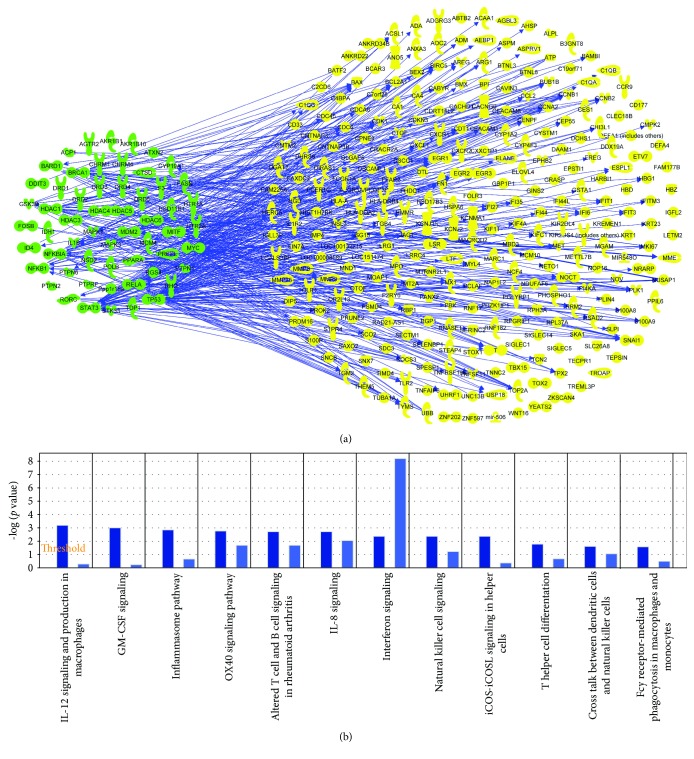
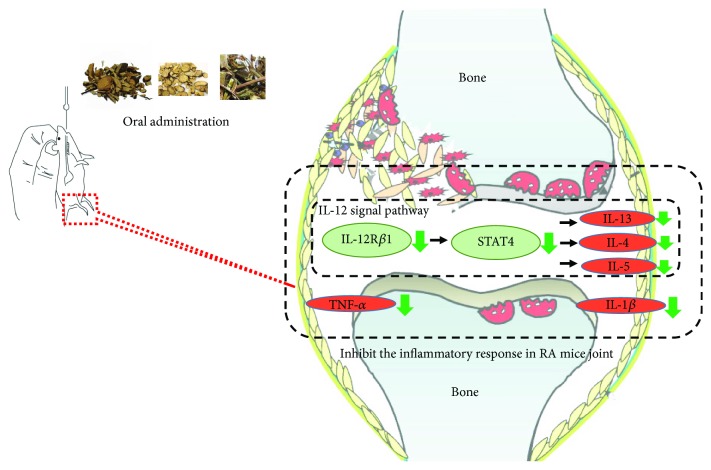
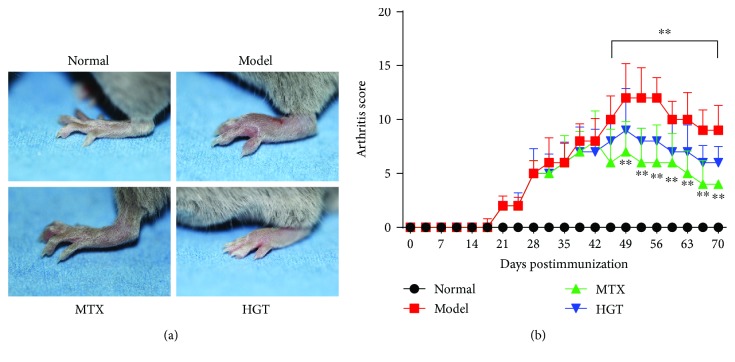
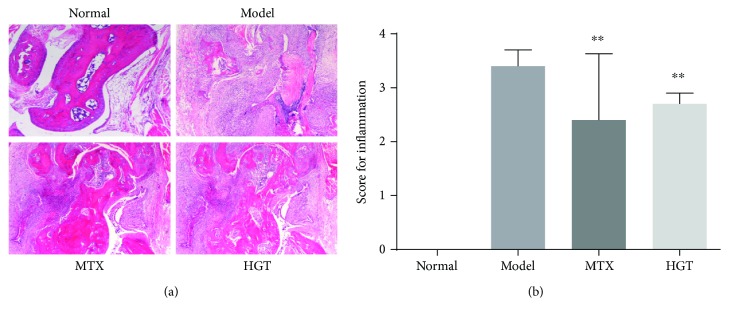
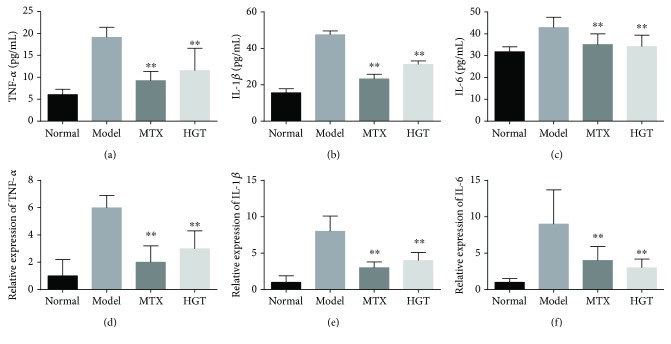
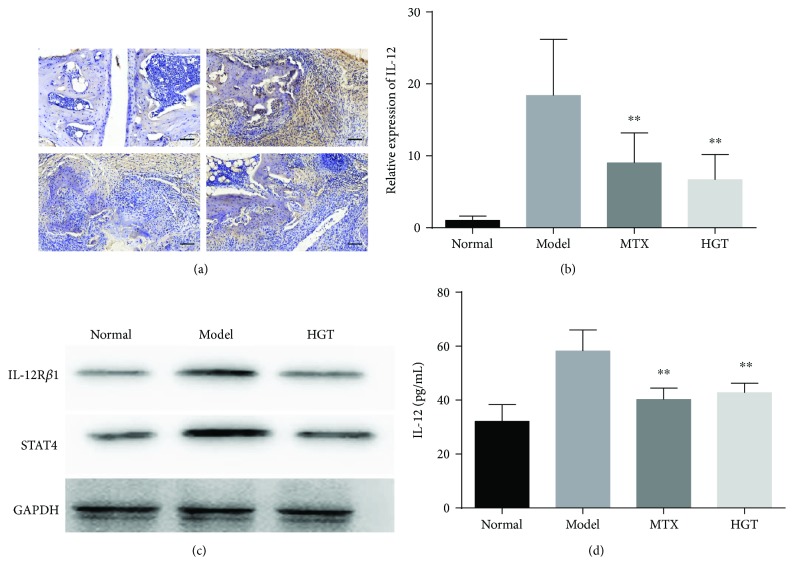
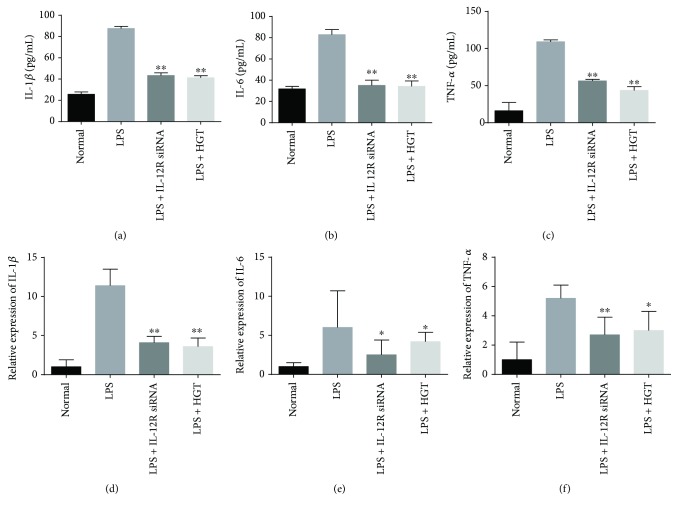
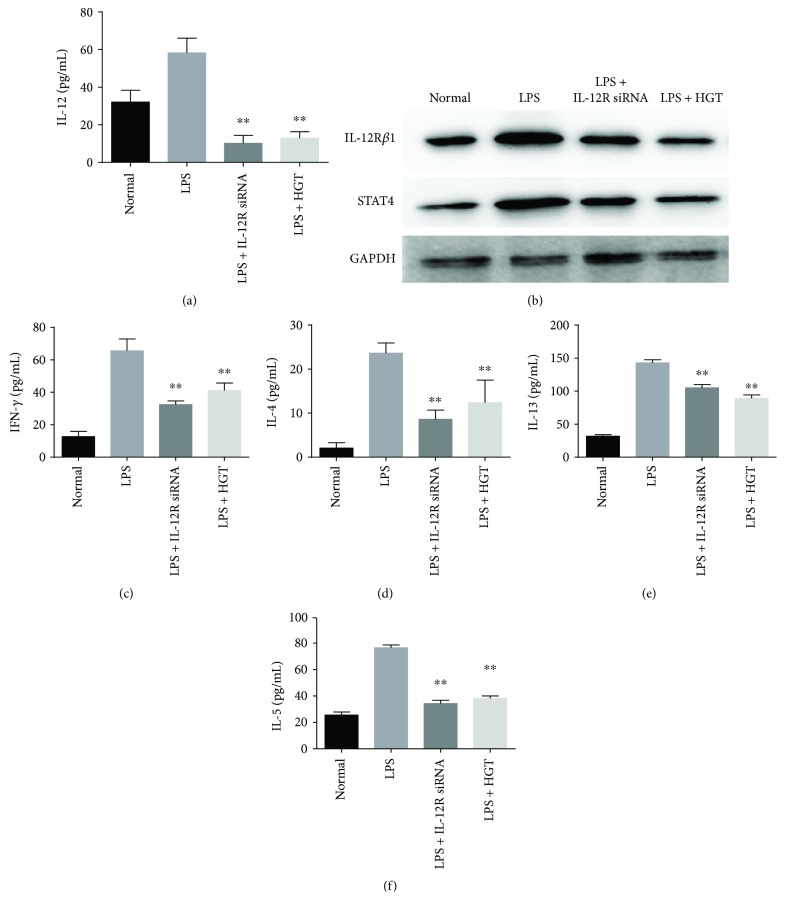
Rheumatoid arthritis (RA) is a type of chronic systemic inflammatory disease; it has a very complicated pathogenesis, and multiple pathological changes are implicated. Traditional Chinese medicine (TCM) like Hook. F. or (Thunb.) Rehd et Wils. has been extensively used for centuries in the treatment of arthritic diseases and been reported effective for relieving the severity of RA. Hei-Gu-Teng Zhuifenghuoluo granule (HGT) which contains , (Thunb.) Rehd et Wils., and Franch. var. Franch. was a representative natural rattan herb formula for the treatment of RA in China, but the mechanism has not been elucidated. This study aimed at exploring the mechanism of HGT on RA using the bioinformatics analysis with and experiment validation. The potential action mechanism was first investigated by bioinformatics analysis via Ingenuity Pathway Analysis (IPA) software. After that, we use experimental validation such as collagen-induced arthritis (CIA) mice model and U937 cell model The bioinformatics results suggested that HGT may have anti-inflammatory characteristic on RA and IL-12 signaling pathway could be the potential key trigger. experiments demonstrated that HGT ameliorated the symptoms in CIA mice and decreased the production of inflammatory cytokines in both mice ankle joints and serum. Furthermore, HGT effectively inhibited the activation of IL-12R and STAT4 on IL-12 signaling pathway. experiments showed that HGT inhibited the production of IL-12R and STAT4 induced by IL-12 in lipopolysaccharide- (LPS-) stimulated U937 cells. Moreover, IL-12R knockdown was able to interfere with the inhibition effects of HGT on the production of these cytokines. Our results confirmed the anti-inflammatory property of HGT, which was attributed to its inhibition on IL-12 signaling pathway.
类风湿性关节炎(RA)是一种慢性全身性炎症性疾病;其发病机制非常复杂,涉及多种病理变化。钩藤。F. 或 (Thunb。)Rehd et Wils. 等中药在治疗关节炎疾病方面已被广泛应用了几个世纪,并已被报道可有效缓解 RA 的严重程度。黑骨藤追风活络颗粒(HGT)含有 , (Thunb。)Rehd et Wils.,和 Franch. var. Franch. 是中国治疗 RA 的一种代表性天然藤本草药配方,但机制尚未阐明。本研究旨在利用生物信息学分析和 实验验证,探讨 HGT 对 RA 的作用机制。首先通过 Ingenuity Pathway Analysis(IPA)软件进行生物信息学分析,探讨潜在的作用机制。然后,我们使用实验验证,如胶原诱导性关节炎(CIA)小鼠模型 和 U937 细胞模型 生物信息学结果表明,HGT 可能对 RA 具有抗炎作用,IL-12 信号通路可能是潜在的关键触发因素。 实验表明,HGT 改善 CIA 小鼠的症状,并降低小鼠踝关节和血清中炎症细胞因子的产生。此外,HGT 能有效抑制 IL-12 信号通路中 IL-12R 和 STAT4 的激活。 实验表明,HGT 抑制了 LPS 刺激的 U937 细胞中 IL-12 诱导的 IL-12R 和 STAT4 的产生。此外,IL-12R 敲低能够干扰 HGT 对这些细胞因子产生的抑制作用。我们的研究结果证实了 HGT 的抗炎特性,这归因于其对 IL-12 信号通路的抑制作用。