University of Florida, College of Medicine, Emerging Pathogens Institute, Department of Molecular Genetics and Microbiology, Gainesville, FL, 32610, USA.
University of Florida, College of Veterinary Medicine, Emerging Pathogens Institute, Department of Infectious Diseases and Immunity, Gainesville, FL, 32610, USA.
Sci Rep. 2018 Jul 13;8(1):10652. doi: 10.1038/s41598-018-28843-7.
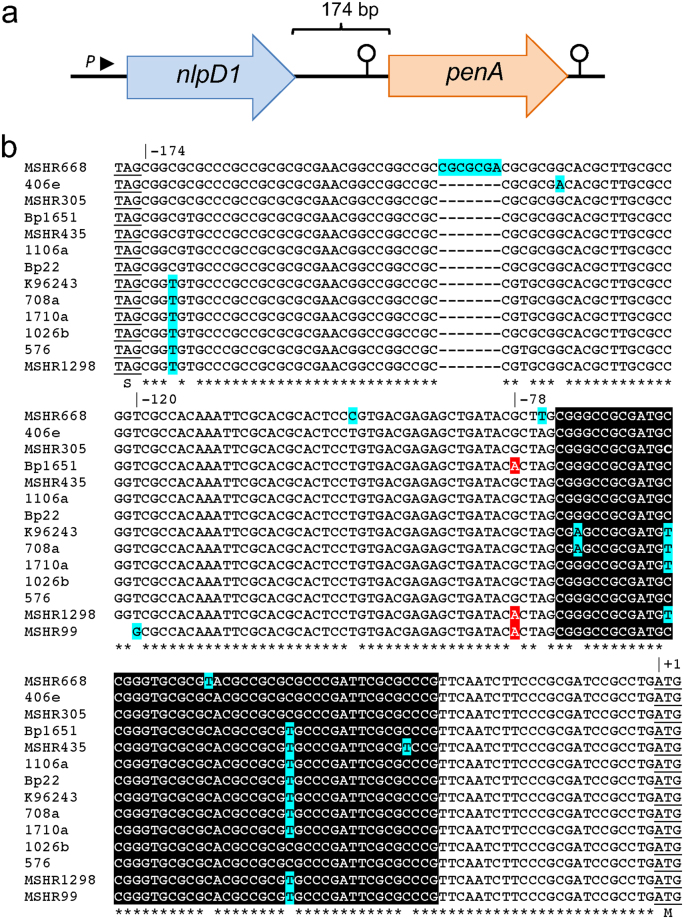
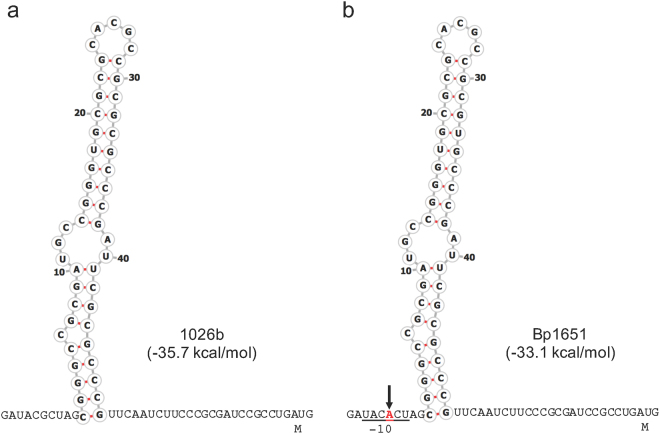
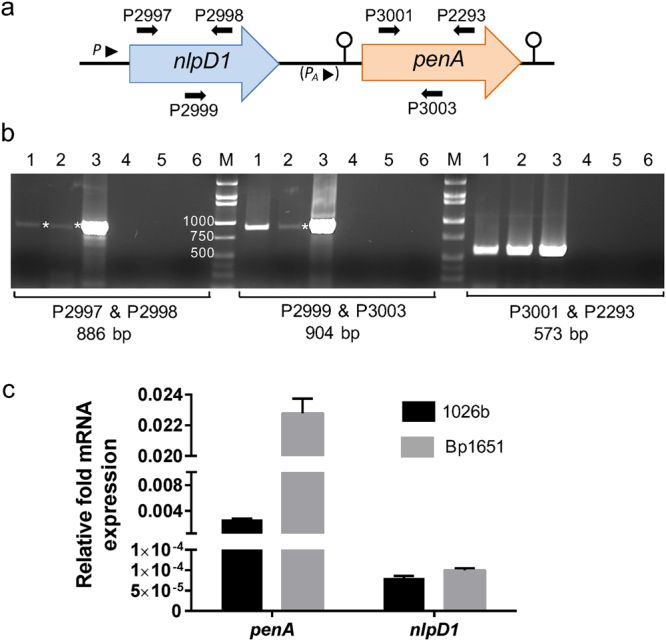
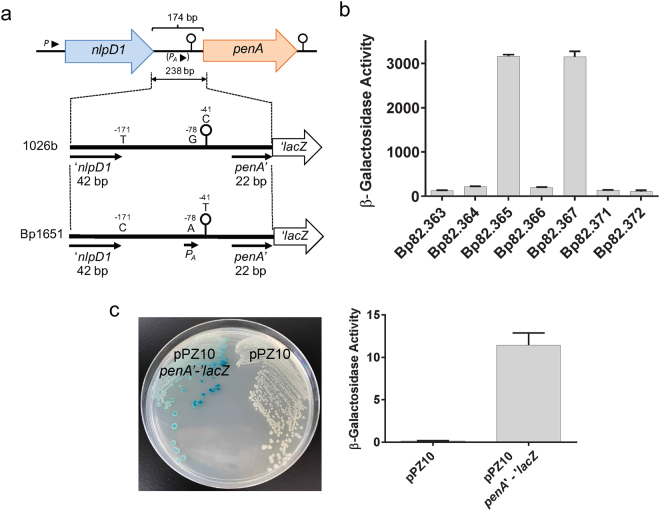
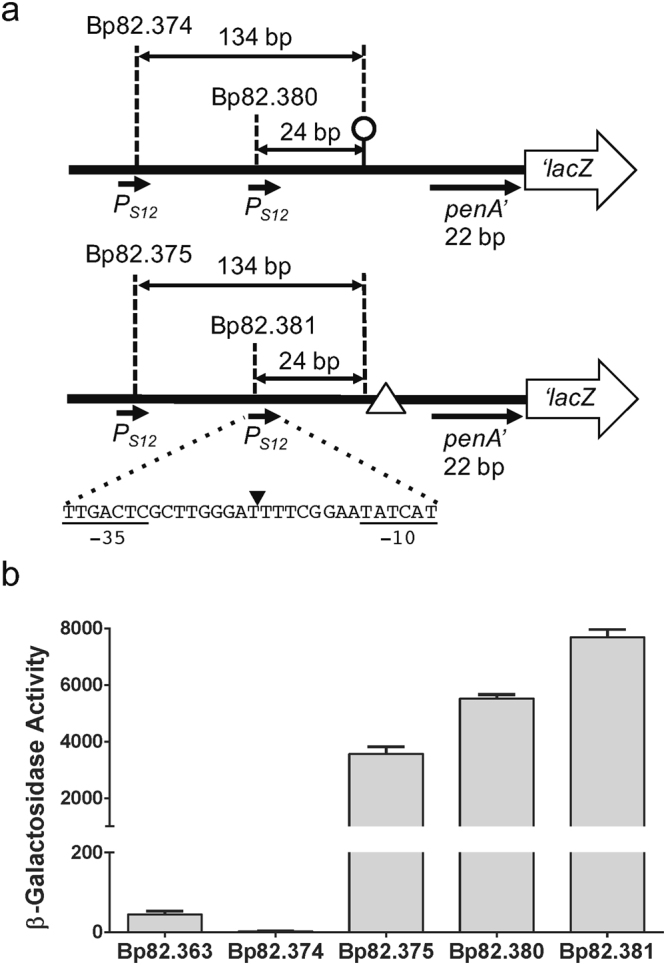
Therapy of Burkholderia pseudomallei acute infections is largely limited to a few β-lactam antibiotics such as ceftazidime or meropenem. Although relatively rare, resistance emergence during therapy leads to treatment failures with high mortality rates. In the absence of acquired external resistance determinants in B. pseudomallei emergence of β-lactam resistance is invariably caused by mutational modification of genomically encoded factors. These include the deletion of the ceftazidime target penicillin-binding protein 3 or amino acid changes in the Class A PenA β-lactamase that expand its substrate spectrum, as well as penA gene duplication and amplification or its overexpression via transcriptional up-regulation. Evidence is presented that penA is co-transcribed with the upstream nlpD1 gene, that the transcriptional terminator for nlpD1 serves as a penA attenuator and that generation of a new promoter immediately upstream of the terminator/attenuator by a conserved G to A transition leads to anti-termination and thus constitutive PenA expression and extended β-lactam resistance. Further evidence obtained with the extensively β-lactam resistant clinical isolate Bp1651 shows that in addition to PenA overexpression and structural mutations other adaptive mechanisms contribute to intrinsic and acquired B. pseudomallei β-lactam resistance.
治疗伯克霍尔德氏菌急性感染的方法在很大程度上仅限于少数几种β-内酰胺抗生素,如头孢他啶或美罗培南。尽管相对较少见,但治疗过程中出现的耐药性会导致治疗失败,死亡率很高。在缺乏获得性外部耐药决定因素的情况下,伯克霍尔德氏菌β-内酰胺耐药性的产生总是由基因组编码因子的突变修饰引起的。这些因素包括头孢他啶靶青霉素结合蛋白 3 的缺失或 A 类 PenAβ-内酰胺酶的氨基酸变化,从而扩大了其底物谱,以及 penA 基因的重复和扩增,或通过转录上调其过度表达。有证据表明 penA 与上游 nlpD1 基因共同转录,nlpD1 的转录终止子充当 penA 衰减子,并且通过保守的 G 到 A 转换在终止子/衰减子的上游产生一个新的启动子,导致抗终止,从而导致组成型 PenA 表达和扩展的β-内酰胺耐药性。使用广泛的β-内酰胺耐药性临床分离株 Bp1651 获得的进一步证据表明,除了 PenA 过表达和结构突变外,其他适应机制也有助于固有和获得性伯克霍尔德氏菌β-内酰胺耐药性。