Department of Psychology and Behavioural and Clinical Neuroscience Institute, University of Cambridge, Downing Street, Cambridge, CB2 3EB, UK.
School of Life, Health and Chemical Sciences, The Open University, Walton Hall, Milton Keynes, MK7 6AA, UK.
Psychopharmacology (Berl). 2018 Sep;235(9):2739-2753. doi: 10.1007/s00213-018-4969-6. Epub 2018 Jul 14.
Across species, effort-related motivation can be assessed by testing behaviour under a progressive ratio (PR) schedule of reinforcement. However, to date, PR tasks for rodents have been available using traditional operant response systems only.
Touchscreen operant response systems allow the assessment of behaviour in laboratory rodents, using tasks that share high face validity with the computerised assessments used in humans. Here, we sought to optimise a rat touchscreen variant of PR and validate it by assessing the effects of a number of manipulations known to affect PR performance in non-touchscreen paradigms.
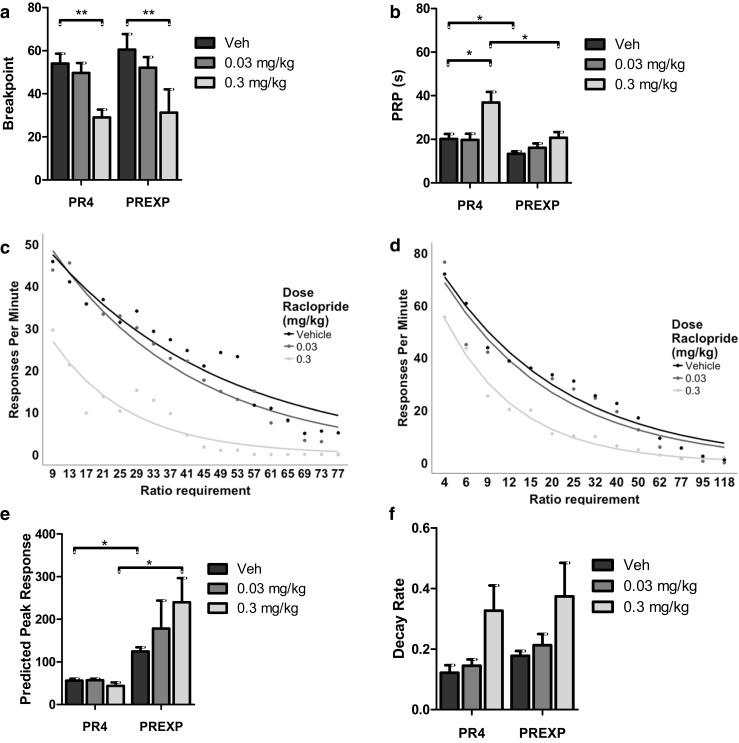
Separate groups of male Sprague-Dawley rats were trained on PR schedules with either linear (PR4) or exponential (PREXP) schedules of reinforcement. PR performance was assessed in response to manipulations in reward outcome. Animals were tested under conditions of increased reward magnitude and following reward devaluation through a prefeeding procedure. Subsequently, the effects of systemic administration of the dopamine D2/D3 receptor antagonist raclopride and the psychostimulant d-amphetamine were examined as traditional pharmacological methods for manipulating motivation.
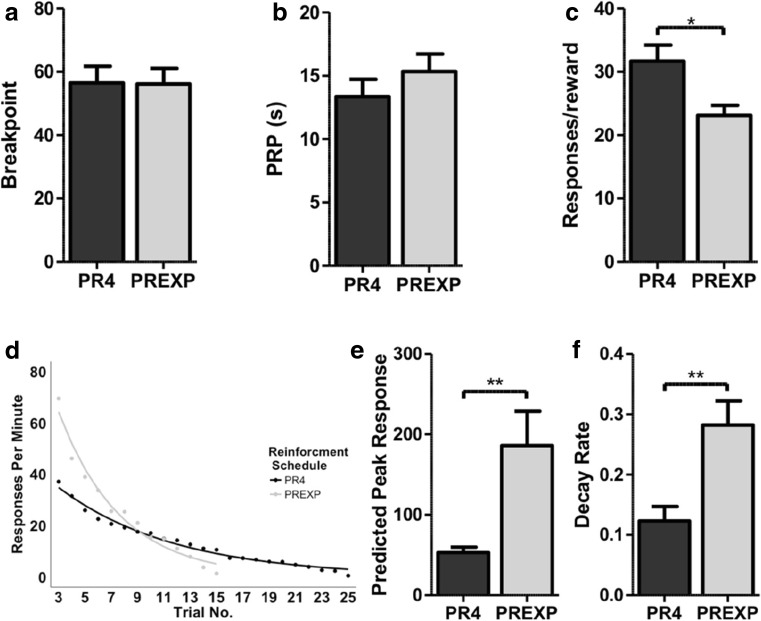
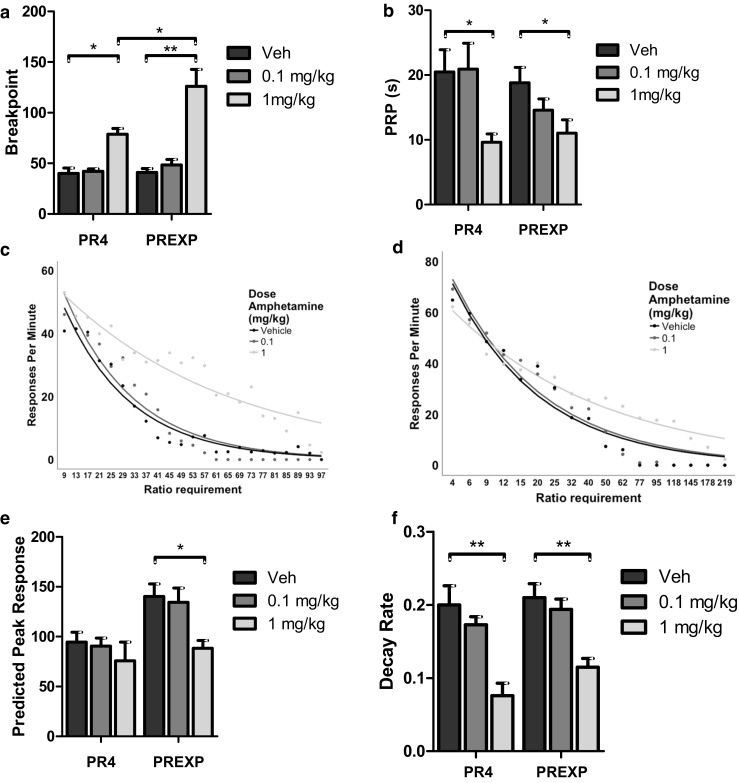
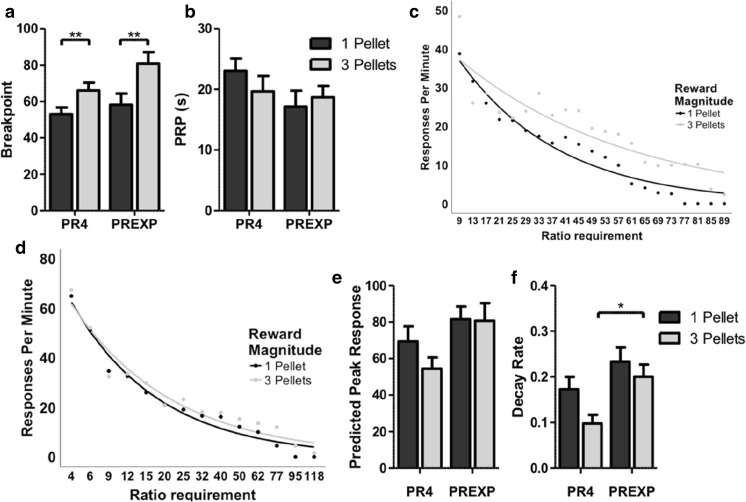
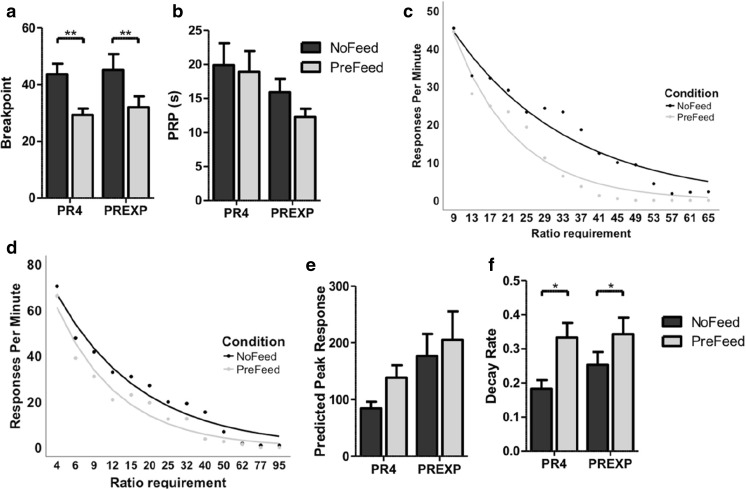
Rats reinforced under PR4 and PREXP schedules consistently showed differential patterns of response rates within sessions. Furthermore, both PR4 and PREXP schedules were sensitive to suppression by prefeeding or raclopride administration. Performance under both schedules was facilitated by increasing reward magnitude or d-amphetamine administration.
Taken together, these findings mirror those observed in lever-based PR paradigms in rats. This study therefore demonstrates the successful validation of the rat touchscreen PR task. This will allow for the assessment of motivation in rats, within the same touchscreen apparatus used for the assessment of complex cognitive processes in this species.
在不同物种中,可以通过测试递增比率 (PR) 强化时间表下的行为来评估与努力相关的动机。然而,迄今为止,啮齿动物的 PR 任务仅可通过传统操作性反应系统获得。
触摸屏操作性反应系统允许使用与人类使用的计算机化评估具有高度相似性的任务,对实验室啮齿动物的行为进行评估。在这里,我们试图优化大鼠触摸屏 PR 变体,并通过评估已知影响非触摸屏范式中 PR 性能的多种操作来验证其有效性。
分别训练几组雄性 Sprague-Dawley 大鼠进行 PR 程序训练,采用线性 (PR4) 或指数 (PREXP) 强化时间表。通过操纵奖励结果来评估 PR 性能。动物在增加奖励幅度的条件下以及通过预喂食程序进行奖励贬值后进行测试。随后,检查多巴胺 D2/D3 受体拮抗剂氯丙嗪和精神兴奋剂 d-安非他命的系统给药作为传统药理学方法对动机的影响。
在 PR4 和 PREXP 时间表下强化的大鼠在整个实验过程中始终表现出不同的反应率模式。此外,PR4 和 PREXP 时间表都对预喂食或氯丙嗪给药的抑制敏感。增加奖励幅度或给予 d-安非他命均可促进这两种时间表下的表现。
综上所述,这些发现与大鼠基于杠杆的 PR 范式中观察到的结果相似。因此,这项研究成功验证了大鼠触摸屏 PR 任务。这将允许在同一触摸屏设备中评估大鼠的动机,该设备用于评估该物种的复杂认知过程。