Kopp Tine Iskov, Outzen Malene, Olsen Anja, Vogel Ulla, Ravn-Haren Gitte
1National Food Institute, Technical University of Denmark, Kemitorvet, Building 202, 2800 Kgs Lyngby, Denmark.
2Danish Cancer Society Research Center, Strandboulevarden 49, 2100 Copenhagen Ø, Denmark.
Genes Nutr. 2018 Jul 13;13:20. doi: 10.1186/s12263-018-0608-4. eCollection 2018.
Selenium is an essential trace element and is suggested to play a role in the etiology of a number of chronic diseases. Genetic variation in genes encoding selenoproteins, such as selenoprotein P and the glutathione peroxidases, may affect selenium status and, thus, individual susceptibility to some chronic diseases. In the present study, we aimed to (1) investigate the effect of mussel and fish intake on glutathione peroxidase enzyme activity and (2) examine whether single nucleotide polymorphisms in the , , and genes modify the effect of mussel and fish intake for 26 weeks on whole blood selenium, plasma selenoprotein P concentrations, and erythrocyte GPX enzyme activity in a randomized intervention trial in Denmark.
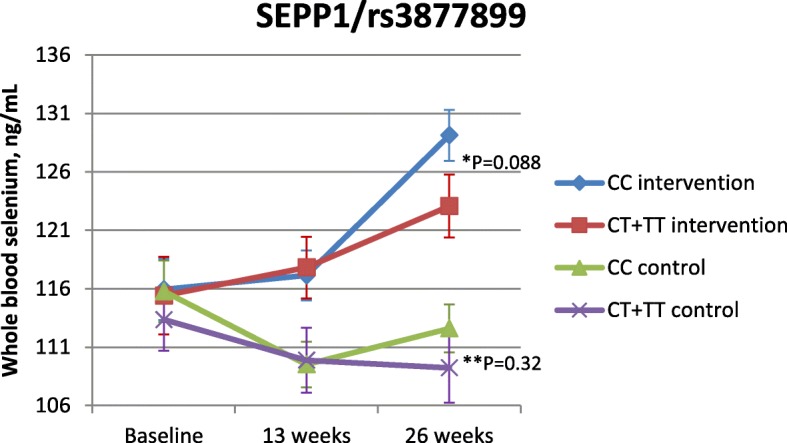
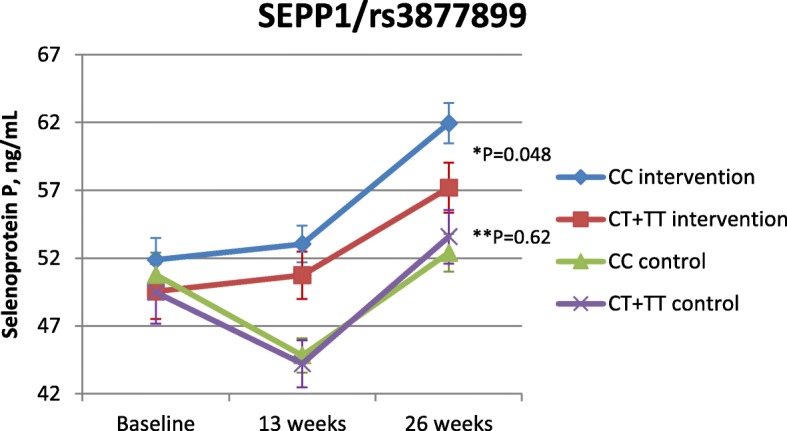
CC homozygotes of the /rs3877899 polymorphism who consumed 1000 g fish and mussels per week for 26 consecutive weeks had higher levels of both selenoprotein P (difference between means - 4.68 ng/mL (95% CI - 8.49, - 0.871)) and whole blood selenium (difference between means - 5.76 (95% CI - 12.5, 1.01)) compared to fish and mussel consuming T-allele carriers although the effect in whole blood selenium concentration was not statistically significant.
Our study indicates that genetically determined variation in leads to different responses in expression of selenoproteins following consumption of selenium-rich foods. This study also emphasizes the importance of taking individual aspects such as genotypes into consideration when assessing risk in public health recommendations.
硒是一种必需的微量元素,被认为在多种慢性疾病的病因中发挥作用。编码硒蛋白的基因(如硒蛋白P和谷胱甘肽过氧化物酶)的遗传变异可能会影响硒状态,进而影响个体对某些慢性疾病的易感性。在本研究中,我们旨在:(1)研究摄入贻贝和鱼类对谷胱甘肽过氧化物酶活性的影响;(2)在丹麦的一项随机干预试验中,检验 、 和 基因中的单核苷酸多态性是否会改变连续26周摄入贻贝和鱼类对全血硒、血浆硒蛋白P浓度和红细胞GPX酶活性的影响。
在连续26周每周食用1000克鱼类和贻贝的 /rs3877899多态性的CC纯合子中,与食用鱼类和贻贝的T等位基因携带者相比,硒蛋白P水平(均值差异为 -4.68 ng/mL(95%置信区间为 -8.49,-0.871))和全血硒水平(均值差异为 -5.76(95%置信区间为 -12.5,1.01))均较高,尽管全血硒浓度的影响无统计学意义。
我们的研究表明,基因决定的 的变异会导致食用富含硒的食物后硒蛋白表达的不同反应。本研究还强调了在公共卫生建议中评估风险时考虑基因型等个体因素的重要性。