Structural Biology Brussels, Vrije Universiteit Brussel, Pleinlaan 2, 1050 Brussels, Belgium; Structural and Molecular Microbiology, Structural Biology Research Center, VIB, Pleinlaan 2, 1050 Brussels, Belgium.
Structural Biology Brussels, Vrije Universiteit Brussel, Pleinlaan 2, 1050 Brussels, Belgium; Structural and Molecular Microbiology, Structural Biology Research Center, VIB, Pleinlaan 2, 1050 Brussels, Belgium.
J Mol Biol. 2018 Oct 12;430(20):3657-3684. doi: 10.1016/j.jmb.2018.07.010. Epub 2018 Jul 12.
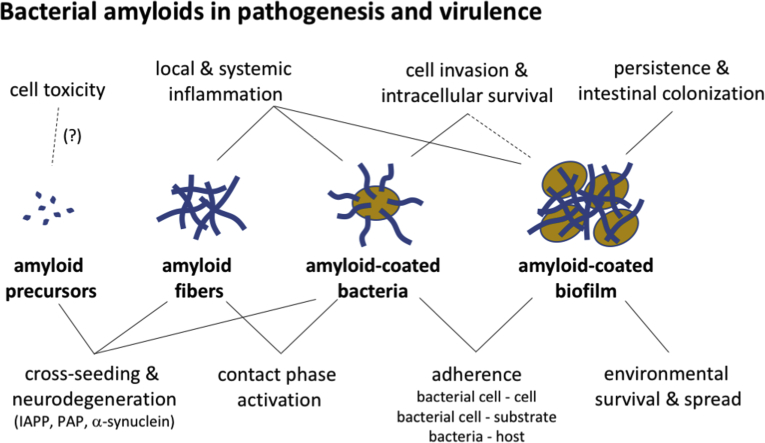
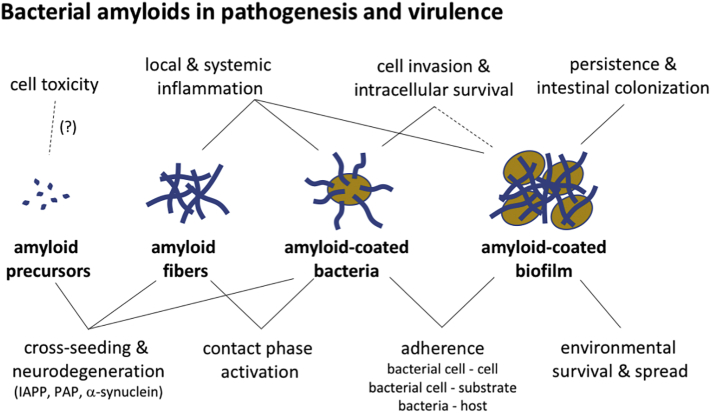
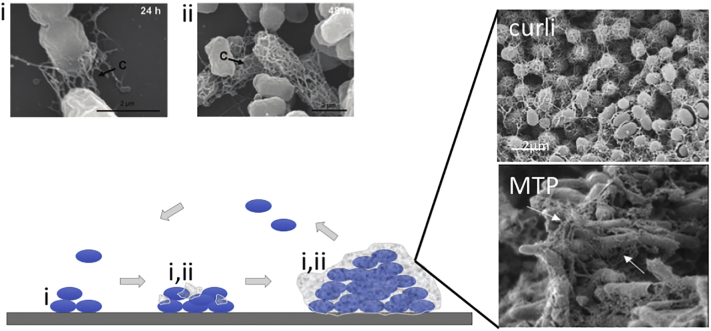
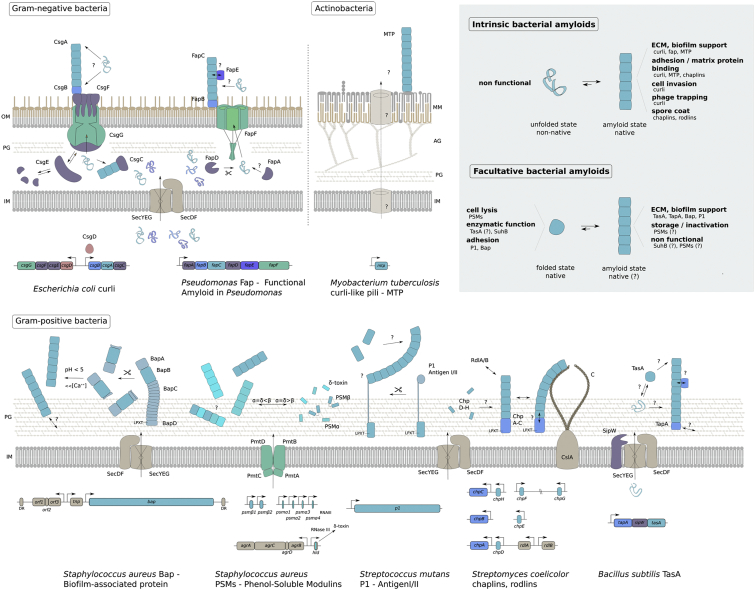
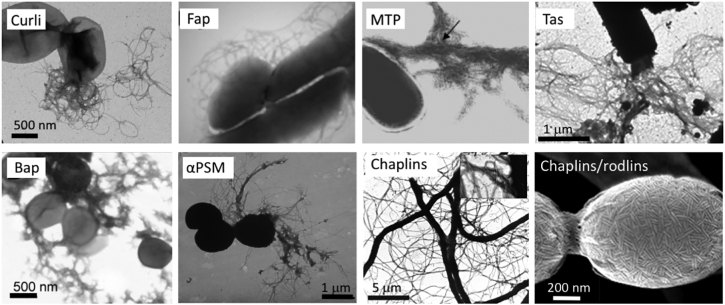
Amyloid fibrils are best known as a product of human and animal protein misfolding disorders, where amyloid formation is associated with cytotoxicity and disease. It is now evident that for some proteins, the amyloid state constitutes the native structure and serves a functional role. These functional amyloids are proving widespread in bacteria and fungi, fulfilling diverse functions as structural components in biofilms or spore coats, as toxins and surface-active fibers, as epigenetic material, peptide reservoirs or adhesins mediating binding to and internalization into host cells. In this review, we will focus on the role of functional amyloids in bacterial pathogenesis. The role of functional amyloids as virulence factor is diverse but mostly indirect. Nevertheless, functional amyloid pathways deserve consideration for the acute and long-term effects of the infectious disease process and may form valid antimicrobial targets.
淀粉样纤维最常被认为是人类和动物蛋白质错误折叠疾病的产物,在这些疾病中,淀粉样形成与细胞毒性和疾病有关。现在已经很明显,对于某些蛋白质来说,淀粉样状态构成了天然结构,并发挥了功能作用。这些功能性淀粉样蛋白在细菌和真菌中被广泛证明,它们作为生物膜或孢子壳的结构成分、毒素和表面活性纤维、表观遗传物质、肽库或黏附素发挥作用,介导与宿主细胞的结合和内化。在这篇综述中,我们将重点介绍功能性淀粉样蛋白在细菌发病机制中的作用。功能性淀粉样蛋白作为毒力因子的作用是多种多样的,但大多是间接的。然而,功能性淀粉样蛋白途径值得考虑传染病过程的急性和长期影响,并且可能成为有效的抗菌目标。