Danaher Brian G, Seeley John R, Stormshak Elizabeth A, Tyler Milagra S, Caruthers Allison S, Moore Kevin J, Cardenas Lucia
Prevention Science Institute, University of Oregon, Eugene, OR, United States.
JMIR Res Protoc. 2018 Jul 18;7(7):e11106. doi: 10.2196/11106.
Research has established that skillful family management during adolescence protects youth from a variety of mental health and behavioral problems. Interventions associated with this research have focused on parenting skills as the mediator that links early risk factors with a profile of later behavioral risk, including problem behavior, substance use, and school failure. Fortunately, positive changes in family management skills have been linked to meaningful improvements in adolescent behavior, and these improvements have been significant across a variety of cultural groups.
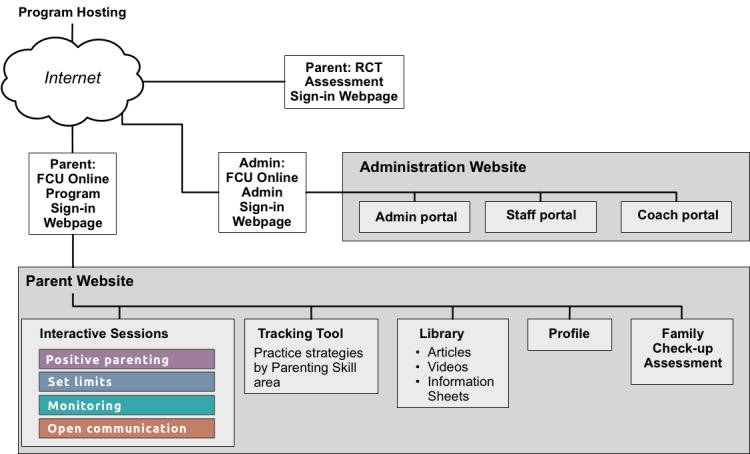
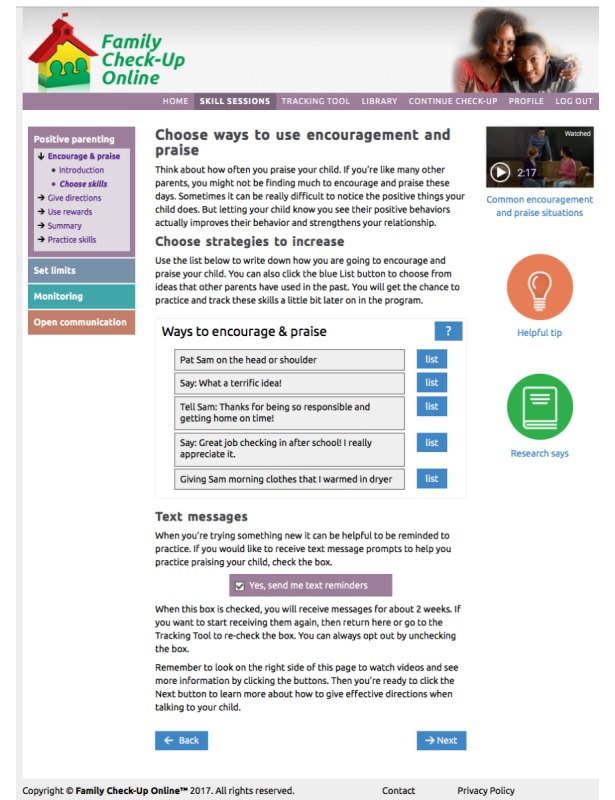
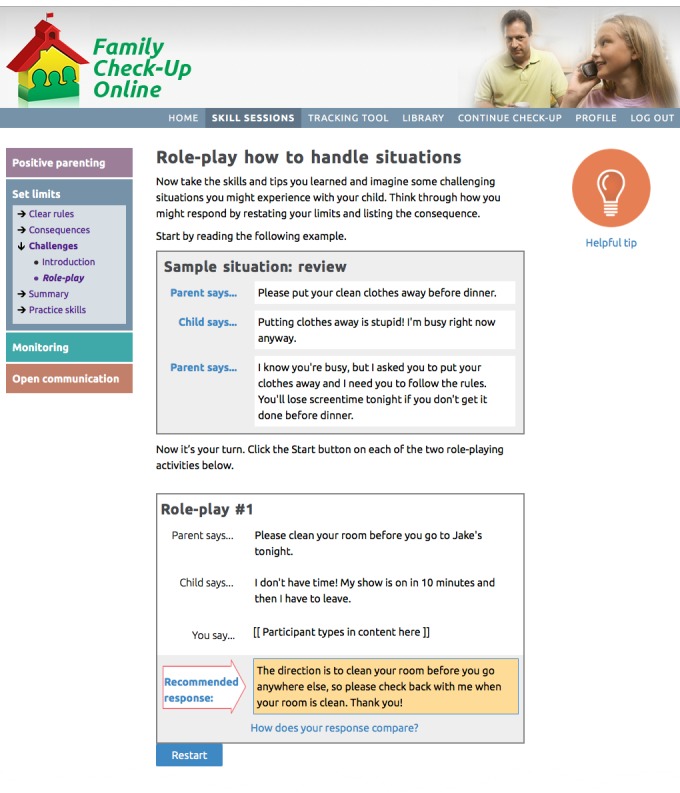
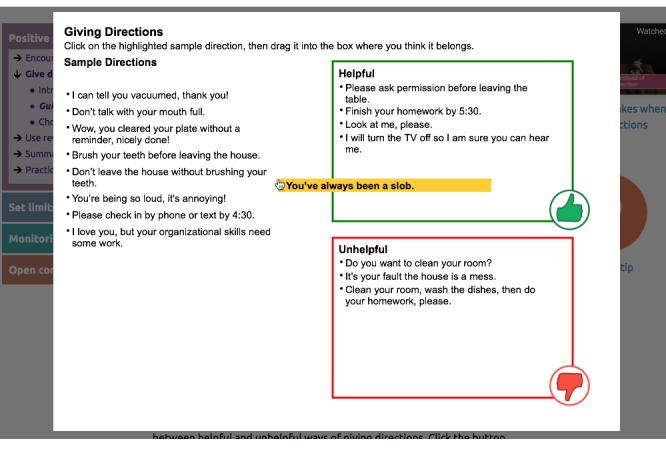
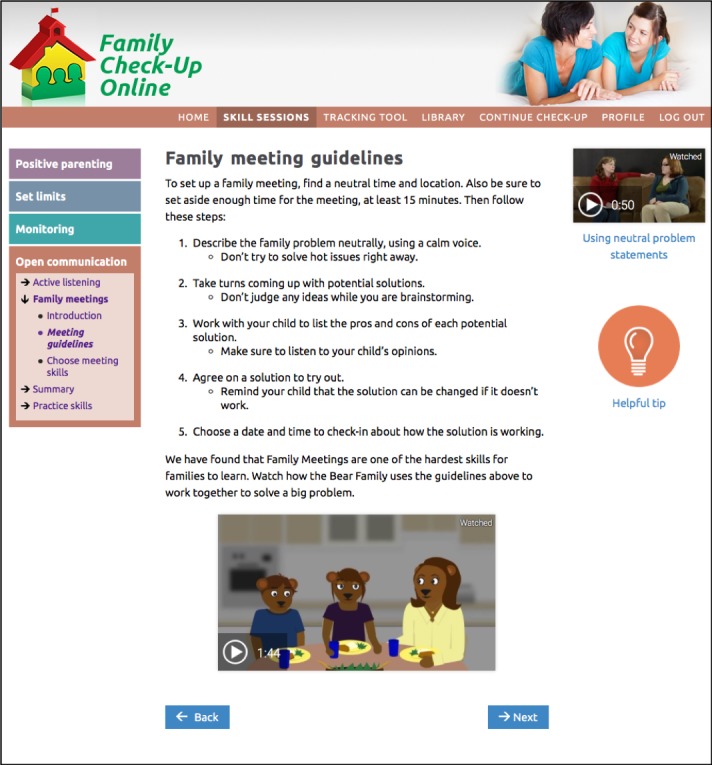
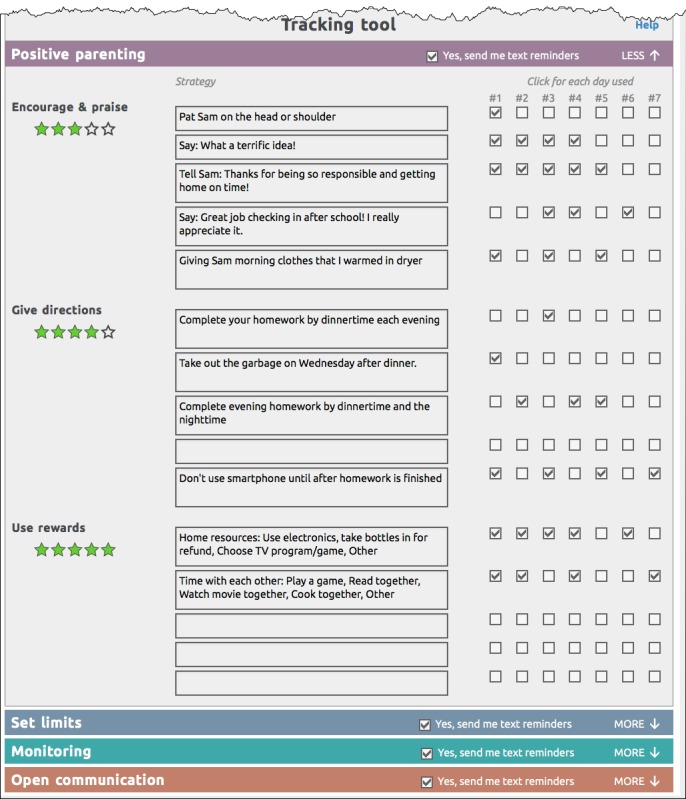
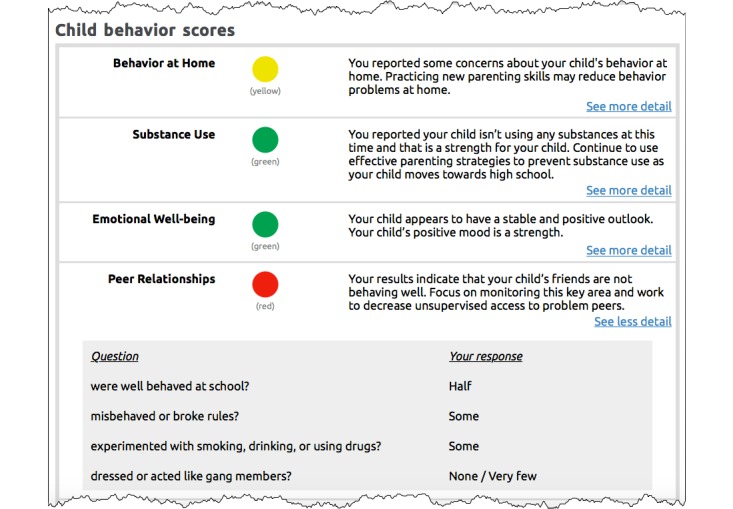
We describe the background, research design, and intervention components of an electronic health version of the Family Check-Up program that is targeting middle school children and is being evaluated in a randomized controlled trial for its usability, feasibility, and efficacy.
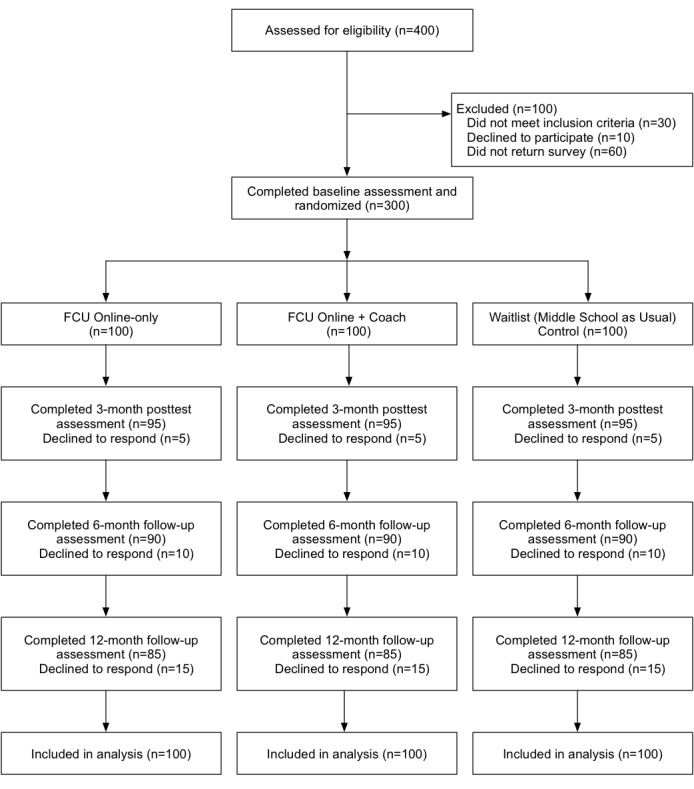
We used an iterative formative research process to develop an electronic health version of the Family Check-Up program. In our ongoing randomized controlled trial, eligible families are randomly assigned to 1 of 3 conditions: Family Check-Up Online-only (n≈100), Family Check-Up Online + Coach (n≈100), and a waitlist control condition (middle school as usual; n≈100). We are conducting assessments at baseline, 3 months following randomization (posttest), and at follow-ups scheduled for 6 months and 12 months.
This randomized controlled trial project was funded in 2015. Participant recruitment was completed in spring 2018 and enrollment is ongoing. Follow-up assessments will be completed in 2019.
The innovative Family Check-Up Online program has the potential to help address many of the barriers that more traditional school-based behavioral mental health implementation strategies have yet to solve, including staffing and resources to implement family-centered support within schools.
ClinicalTrials.gov NCT03060291; https://clinicaltrials.gov/ct2/show/NCT03060291 (Archived by WebCite at http://www.webcitation.org/70f8keeN4).
RR1-10.2196/11106.
研究表明,青春期期间熟练的家庭管理可保护青少年免受各种心理健康和行为问题的困扰。与此研究相关的干预措施将重点放在育儿技能上,认为育儿技能是将早期风险因素与一系列后期行为风险联系起来的中介因素,这些后期行为风险包括问题行为、物质使用和学业失败。幸运的是,家庭管理技能的积极变化与青少年行为的显著改善有关,而且这些改善在各种文化群体中都很明显。
我们描述了“家庭体检”项目电子健康版的背景、研究设计和干预组成部分,该版本针对初中学生,并正在一项随机对照试验中对其可用性、可行性和有效性进行评估。
我们采用了迭代式形成性研究过程来开发“家庭体检”项目的电子健康版。在我们正在进行的随机对照试验中,符合条件的家庭被随机分配到以下3种情况之一:仅在线家庭体检(n≈100)、在线家庭体检+指导(n≈100),以及候补对照情况(照常上初中;n≈100)。我们在基线、随机分组后3个月(后测)以及计划的6个月和12个月随访时进行评估。
这个随机对照试验项目于2015年获得资助。参与者招募于2018年春季完成,目前仍在进行入组。随访评估将于2019年完成。
创新的在线家庭体检项目有可能帮助解决许多传统的基于学校的行为心理健康实施策略尚未解决的障碍,包括在学校内实施以家庭为中心的支持所需的人员配备和资源。
ClinicalTrials.gov NCT03060291;https://clinicaltrials.gov/ct2/show/NCT03060291(由WebCite存档于http://www.webcitation.org/70f8keeN4)。
RR1 - 10.2196/11106。