da Silva Aruã C, Semeano Ana Teresa S, Dourado André H B, Ulrich Henning, Cordoba de Torresi Susana I
Department of Fundamental Chemistry, Institute of Chemistry, University of São Paulo, Av. Prof. Lineu Prestes, 748, 05508-000 São Paulo, São Paulo, Brazil.
Department of Biochemistry, Institute of Chemistry, University of São Paulo, 05508-000 São Paulo, Brazil.
ACS Omega. 2018 May 31;3(5):5593-5604. doi: 10.1021/acsomega.8b00510. Epub 2018 May 24.
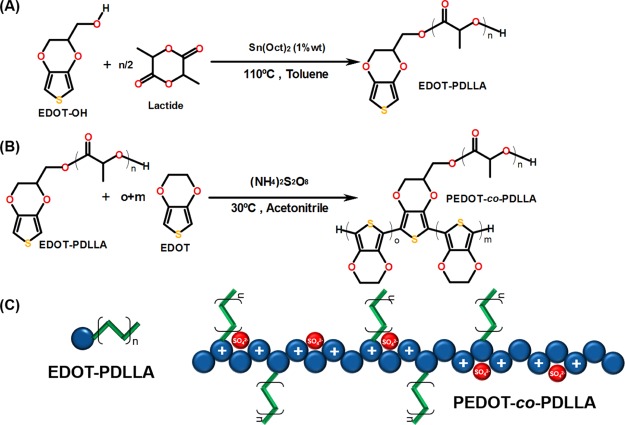
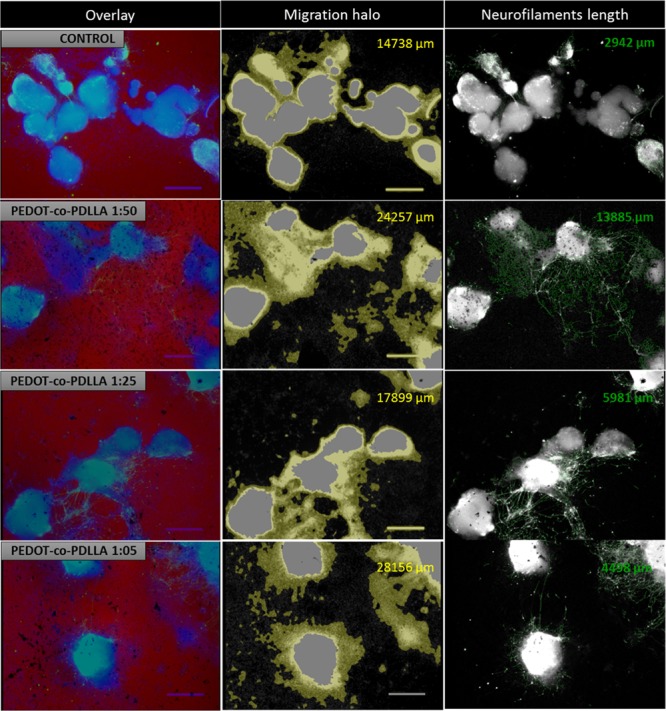
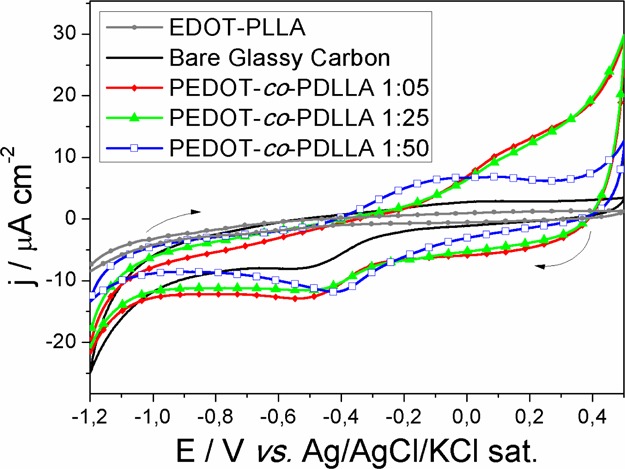
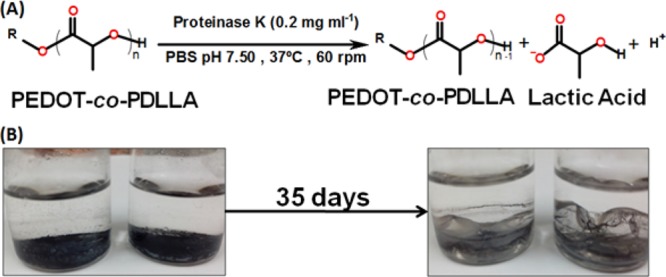
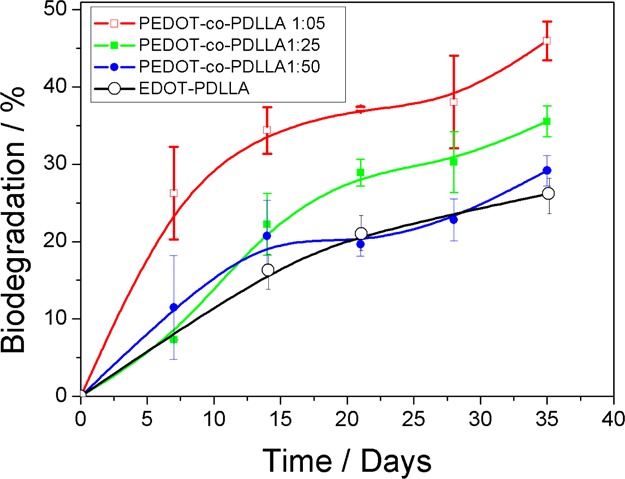
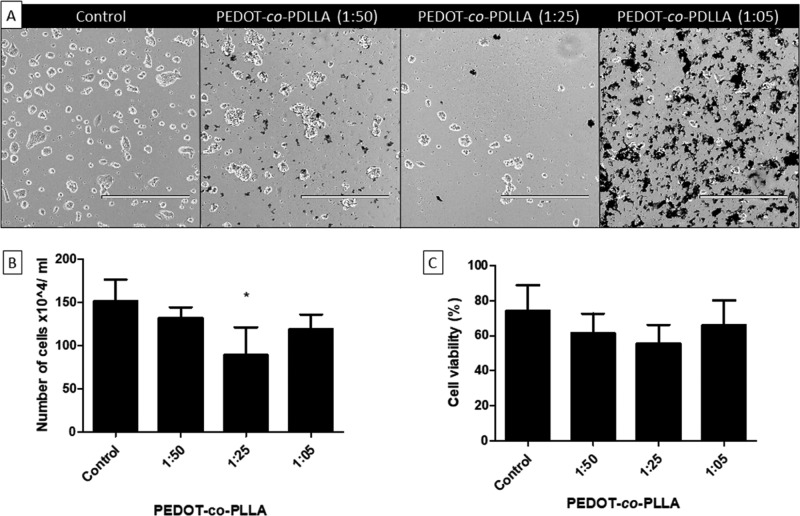
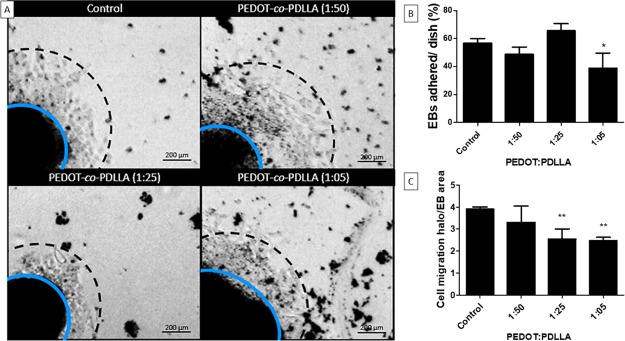
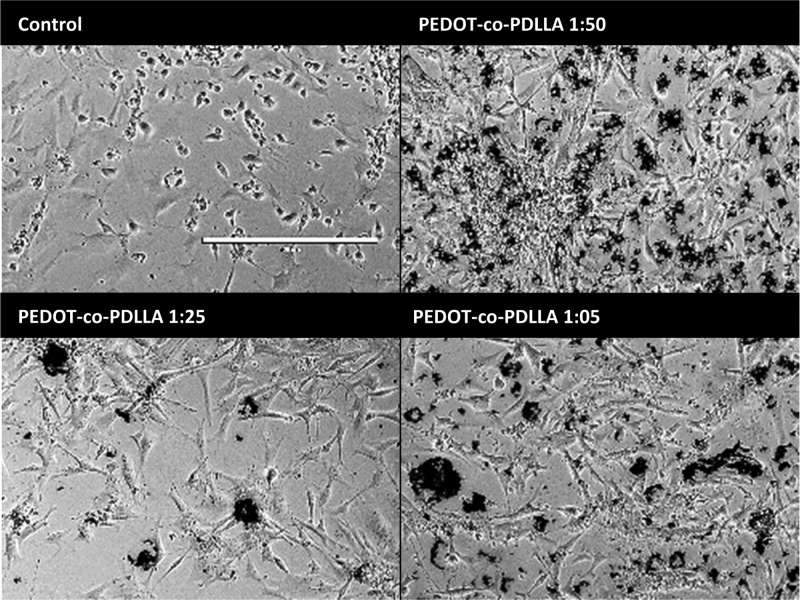
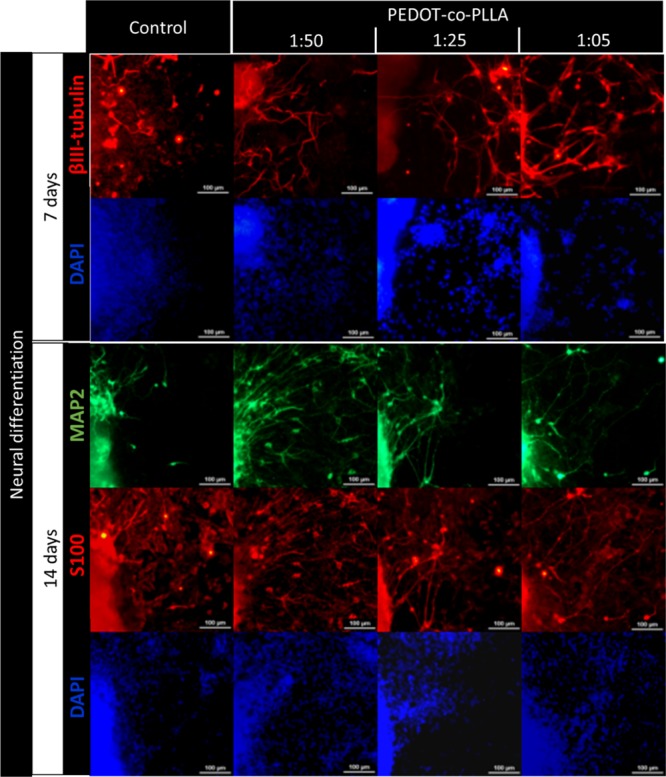
Electroactive biomaterials that are easily processed as scaffolds with good biocompatibility for tissue regeneration are difficult to design. Herein, the synthesis and characterization of a variety of novel electroactive, biodegradable biomaterials based on poly(3,4-ethylenedioxythiphene) copolymerized with poly(d,l lactic acid) (PEDOT--PDLLA) are presented. These copolymers were obtained using (2,3-dihydrothieno[3,4-][1,4]dioxin-2-yl)methanol (EDOT-OH) as an initiator in a lactide ring-opening polymerization reaction, resulting in EDOT-PDLLA macromonomer. Conducting PEDOT--PDLLA copolymers (in three different proportions) were achieved by chemical copolymerization with 3,4-ethylenedioxythiophene (EDOT) monomers and persulfate oxidant. The PEDOT--PDLLA copolymers were structurally characterized by H NMR and Fourier transform infrared spectroscopy. Cyclic voltammetry confirmed the electroactive character of the materials, and conductivity measurements were performed via electrochemical impedance spectroscopy. In vitro biodegradability was evaluated using over 35 days, showing 29-46% (w/w) biodegradation. Noncytotoxicity was assessed by adhesion, migration, and proliferation assays using embryonic stem cells (E14.tg2a); excellent neuronal differentiation was observed. These novel electroactive and biodegradable PEDOT--PDLLA copolymers present surface chemistry and charge density properties that make them potentially useful as scaffold materials in different fields of applications, especially for neuronal tissue engineering.
易于加工成具有良好生物相容性用于组织再生支架的电活性生物材料很难设计。本文介绍了多种基于聚(3,4-亚乙二氧基噻吩)与聚(d,l-乳酸)共聚(PEDOT-PDLLA)的新型电活性、可生物降解生物材料的合成与表征。这些共聚物是在丙交酯开环聚合反应中使用(2,3-二氢噻吩并[3,4-b][1,4]二恶英-2-基)甲醇(EDOT-OH)作为引发剂获得的,得到了EDOT-PDLLA大分子单体。通过与3,4-亚乙二氧基噻吩(EDOT)单体和过硫酸盐氧化剂进行化学共聚,制备了三种不同比例的导电PEDOT-PDLLA共聚物。通过核磁共振氢谱(1H NMR)和傅里叶变换红外光谱对PEDOT-PDLLA共聚物进行了结构表征。循环伏安法证实了材料的电活性,通过电化学阻抗谱进行了电导率测量。在超过35天的时间里评估了体外生物降解性,显示出29%-46%(w/w)的生物降解率。使用胚胎干细胞(E14.tg2a)通过黏附、迁移和增殖试验评估了无细胞毒性;观察到了优异的神经元分化。这些新型的电活性和可生物降解的PEDOT-PDLLA共聚物具有表面化学和电荷密度特性,使其在不同应用领域,特别是神经元组织工程中作为支架材料具有潜在的用途。