1 Department of Medicine, Section of Virology, Group of Mucosal Infection and Immunity, Imperial College London, London, United Kingdom; UPMC Univ Paris 06, INSERM, U1135, CNRS, ERL 8255, Centre d'Immunologie et des Maladies Infectieuses (CIMI-Paris), Paris, France .
2 Medical Research Council Clinical Trials Unit at UCL, University College London, London, United Kingdom; UPMC Univ Paris 06, INSERM, U1135, CNRS, ERL 8255, Centre d'Immunologie et des Maladies Infectieuses (CIMI-Paris), Paris, France .
Hum Gene Ther. 2018 Sep;29(9):1011-1028. doi: 10.1089/hum.2018.075.
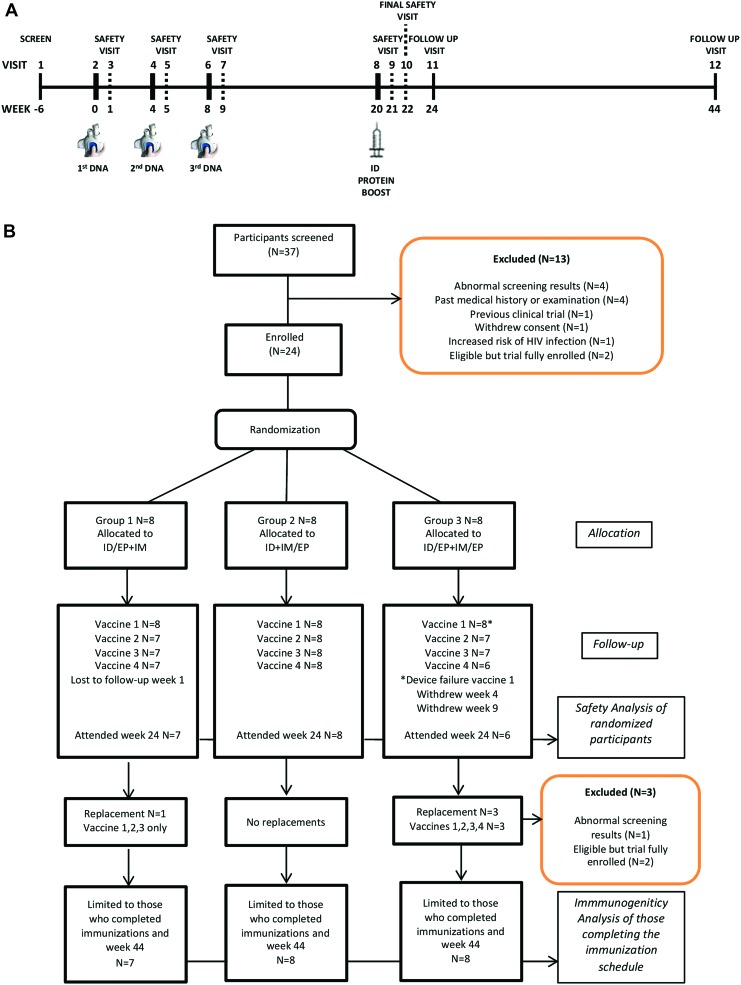
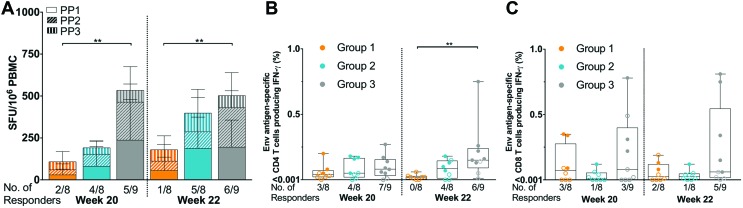
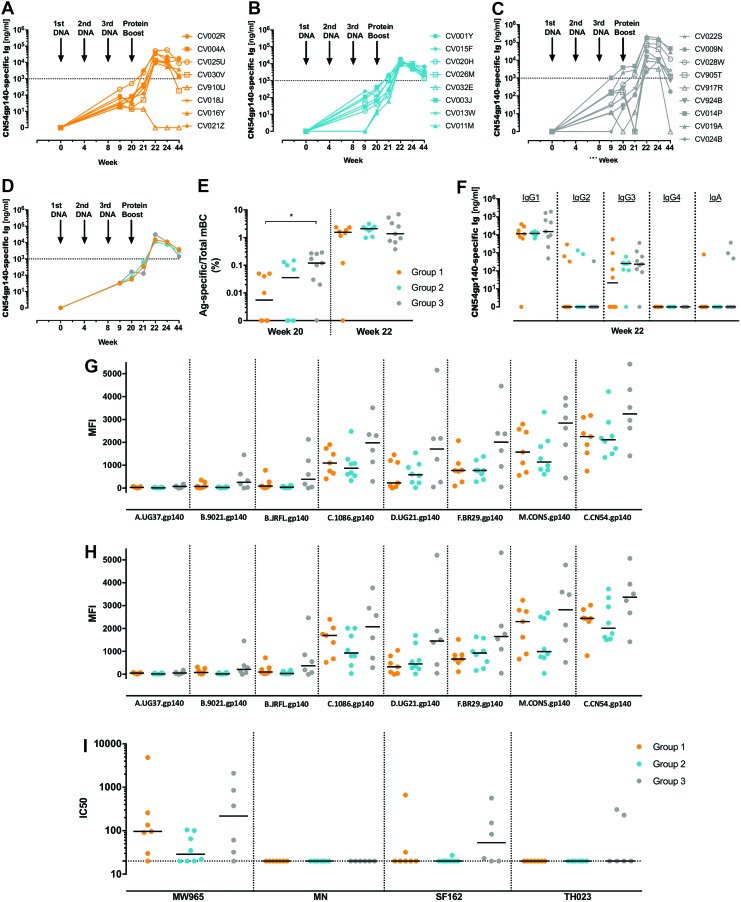
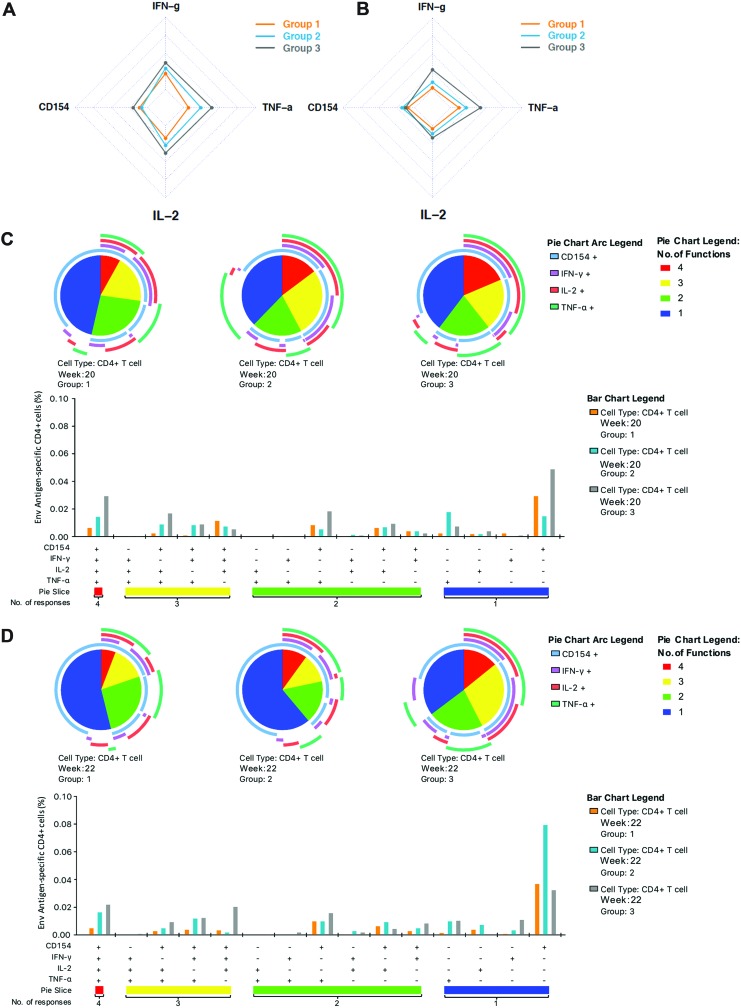
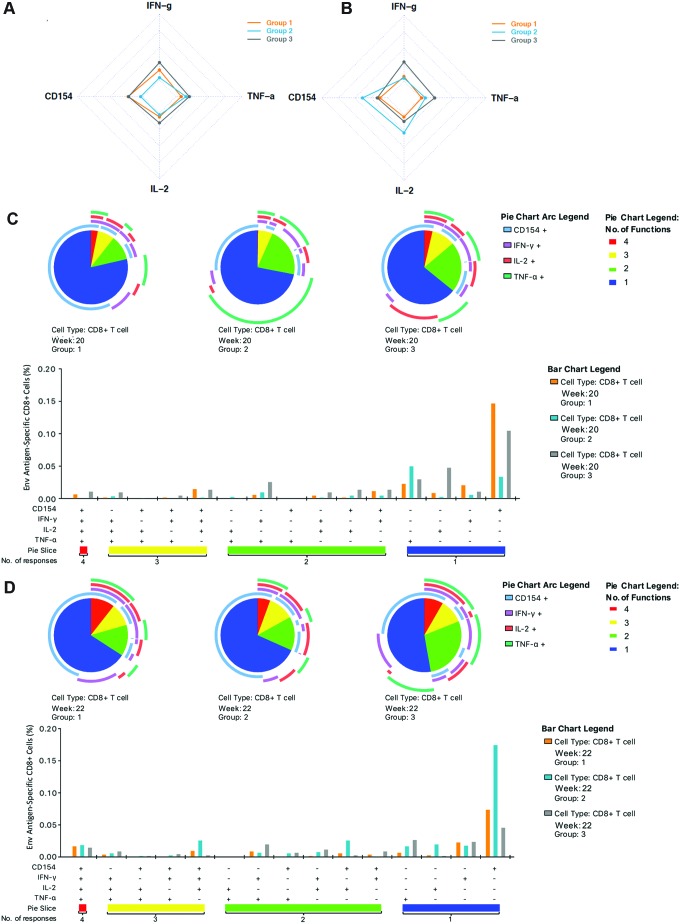
Intradermal (i.d.) and intramuscular (i.m.) injections when administered with or without electroporation (EP) have the potential to tailor the immune response to DNA vaccination. This Phase I randomized controlled clinical trial in human immunodeficiency virus type 1-negative volunteers investigated whether the site and mode of DNA vaccination influences the quality of induced cellular and humoral immune responses following the DNA priming phase and subsequent protein boost with recombinant clade C CN54 gp140. A strategy of concurrent i.d. and i.m. DNA immunizations administered with or without EP was adopted. Subtle differences were observed in the shaping of vaccine-induced virus-specific CD4+ and CD8+ T cell-mediated immune responses between groups receiving: i.d. + i.m., i.d. + i.m., and i.d. + i.m. regimens. The DNA priming phase induced 100% seroconversion in all of the groups. A single, non-adjuvanted protein boost induced a rapid and profound increase in binding antibodies in all groups, with a trend for higher responses in i.d. + i.m.. The magnitude of antigen-specific binding immunoglobulin G correlated with neutralization of closely matched clade C 93MW965 virus and Fc-dimer receptor binding (FcγRIIa and FcγRIIIa). These results offer new perspectives on the use of combined skin and muscle DNA immunization in priming humoral and cellular responses to recombinant protein.
皮内(i.d.)和肌肉内(i.m.)注射,无论是联合电穿孔(EP)还是不联合,都有可能调整 DNA 疫苗接种的免疫反应。这项在人类免疫缺陷病毒 1 型阴性志愿者中进行的 I 期随机对照临床试验,旨在研究 DNA 疫苗接种的部位和方式是否会影响 DNA 初免阶段和随后用重组 clade C CN54 gp140 进行蛋白加强后诱导的细胞和体液免疫反应的质量。我们采用了同时进行皮内和肌肉内 DNA 免疫接种的策略,联合或不联合 EP。接受皮内+肌肉内、皮内+肌肉内和皮内+肌肉内方案的组之间,观察到疫苗诱导的病毒特异性 CD4+和 CD8+T 细胞介导的免疫反应的形成存在细微差异。所有组在 DNA 初免阶段都诱导了 100%的血清转换。单次非佐剂蛋白加强在所有组中均迅速诱导结合抗体的显著增加,皮内+肌肉内组的反应呈上升趋势。抗原特异性结合免疫球蛋白 G 的水平与密切匹配的 clade C 93MW965 病毒的中和以及 Fc 二聚体受体结合(FcγRIIa 和 FcγRIIIa)相关。这些结果为使用联合皮肤和肌肉 DNA 免疫接种来启动对重组蛋白的体液和细胞反应提供了新的视角。