Department of Physics, Lehigh University, Bethlehem, Pennsylvania, United States of America.
Department of Fundamental Microbiology, University of Lausanne, Lausanne, Switzerland.
PLoS Comput Biol. 2018 Jul 20;14(7):e1006317. doi: 10.1371/journal.pcbi.1006317. eCollection 2018 Jul.
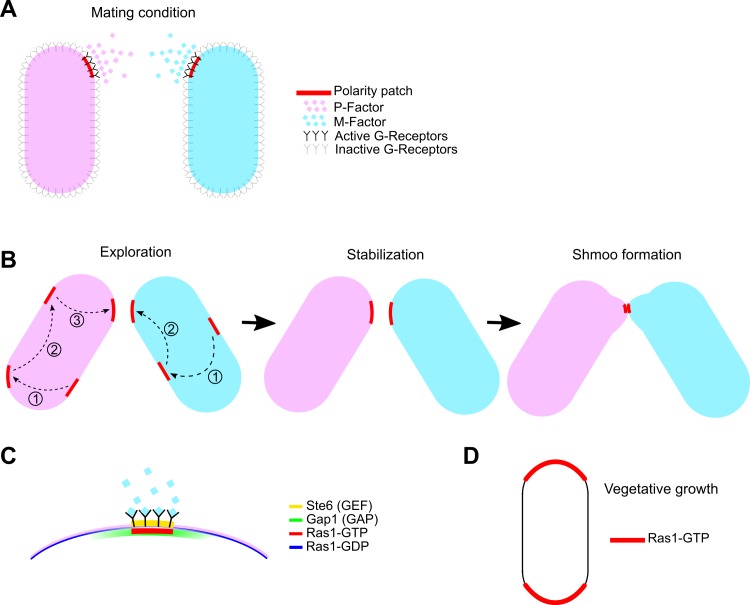
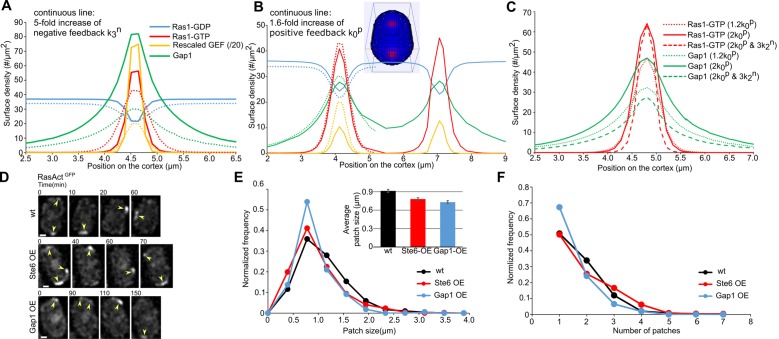
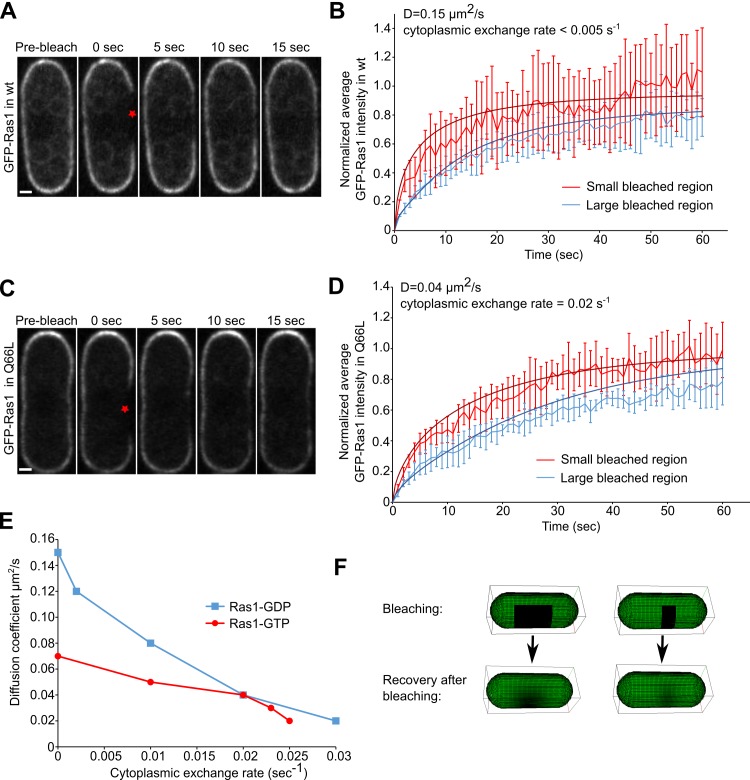
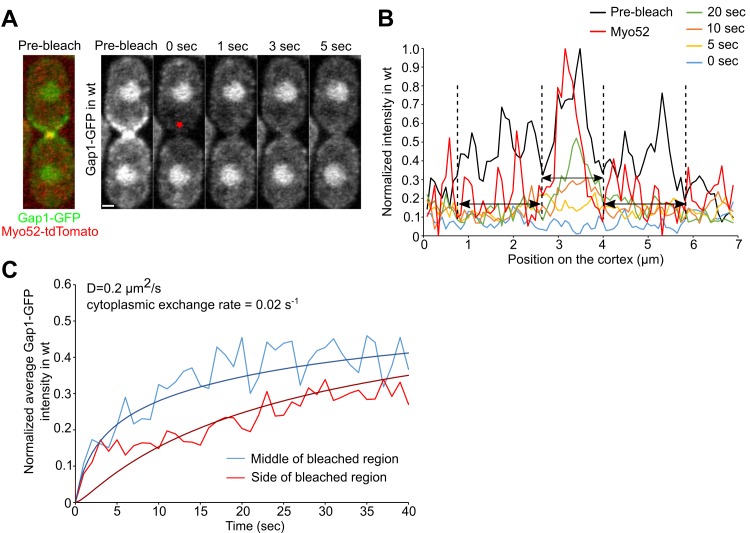
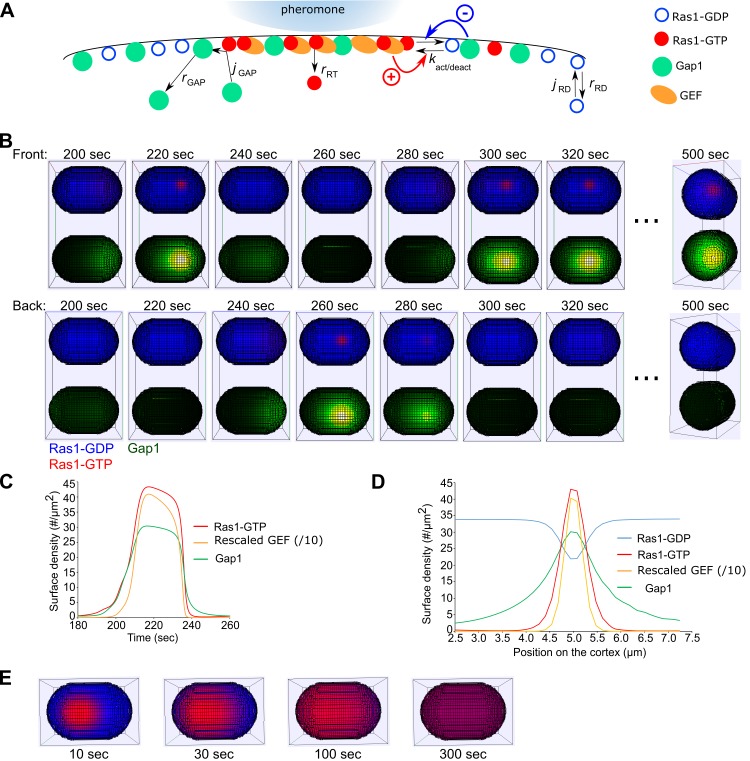
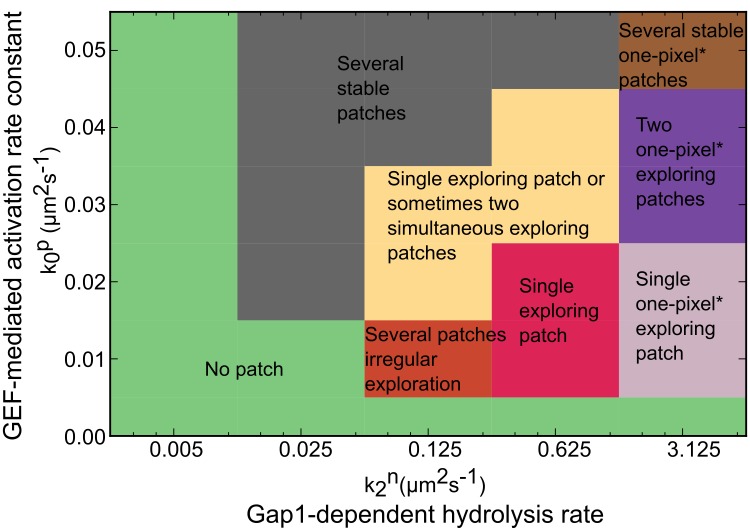
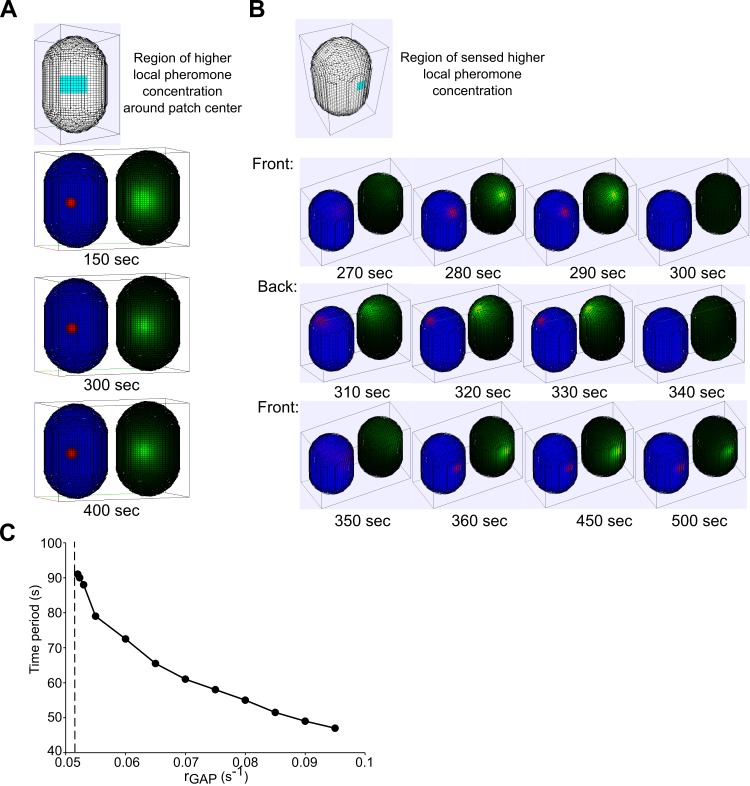
In mating fission yeast cells, sensing and response to extracellular pheromone concentrations occurs through an exploratory Cdc42 patch that stochastically samples the cell cortex before stabilizing towards a mating partner. Active Ras1 (Ras1-GTP), an upstream regulator of Cdc42, and Gap1, the GTPase-activating protein for Ras1, localize at the patch. We developed a reaction-diffusion model of Ras1 patch appearance and disappearance with a positive feedback by a Guanine nucleotide Exchange Factor (GEF) and Gap1 inhibition. The model is based on new estimates of Ras1-GDP, Ras1-GTP and Gap1 diffusion coefficients and rates of cytoplasmic exchange studied by FRAP. The model reproduces exploratory patch behavior and lack of Ras1 patch in cells lacking Gap1. Transition to a stable patch can occur by change of Gap1 rates constants or local increase of the positive feedback rate constants. The model predicts that the patch size and number of patches depend on the strength of positive and negative feedbacks. Measurements of Ras1 patch size and number in cells overexpressing the Ras1 GEF or Gap1 are consistent with the model.
在交配裂殖酵母细胞中,通过探索性的 Cdc42 斑来感知和响应细胞外信息素浓度,该斑在稳定于交配伙伴之前随机采样细胞皮层。活性 Ras1(Ras1-GTP),Cdc42 的上游调节剂,和 Gap1,Ras1 的 GTPase 激活蛋白,定位于斑块上。我们开发了一个 Ras1 斑块出现和消失的反应扩散模型,该模型通过鸟嘌呤核苷酸交换因子(GEF)和 Gap1 抑制的正反馈进行调节。该模型基于 FRAP 研究的 Ras1-GDP、Ras1-GTP 和 Gap1 扩散系数和细胞质交换率的新估计值。该模型再现了探索性斑块行为,以及在缺乏 Gap1 的细胞中缺乏 Ras1 斑块的现象。通过改变 Gap1 速率常数或局部增加正反馈速率常数,可以实现向稳定斑块的转变。该模型预测斑块的大小和数量取决于正反馈和负反馈的强度。在过表达 Ras1 GEF 或 Gap1 的细胞中测量 Ras1 斑块的大小和数量与模型一致。