Liew Winnie-Pui-Pui, Nurul-Adilah Zainuddin, Than Leslie T L, Mohd-Redzwan Sabran
Department of Nutrition and Dietetics, Faculty of Medicine and Health Sciences, Universiti Putra Malaysia, Serdang, Malaysia.
Department of Medical Microbiology and Parasitology, Faculty of Medicine and Health Sciences, Universiti Putra Malaysia, Serdang, Malaysia.
Front Microbiol. 2018 Jul 10;9:1503. doi: 10.3389/fmicb.2018.01503. eCollection 2018.
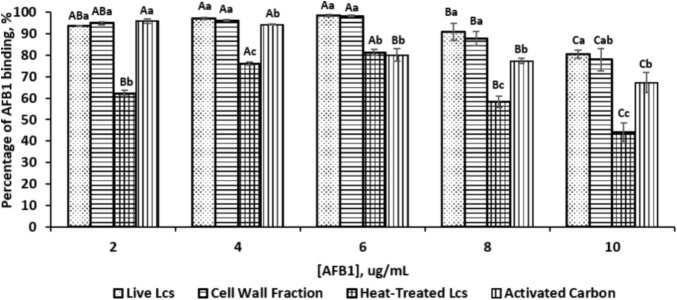
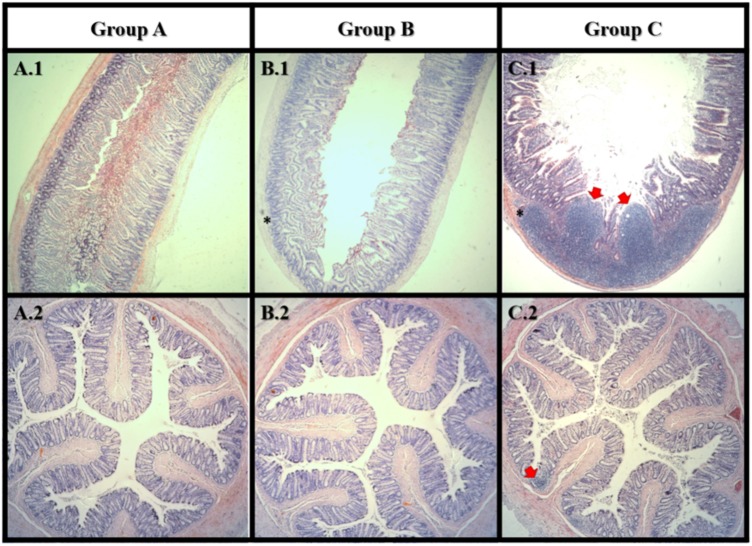
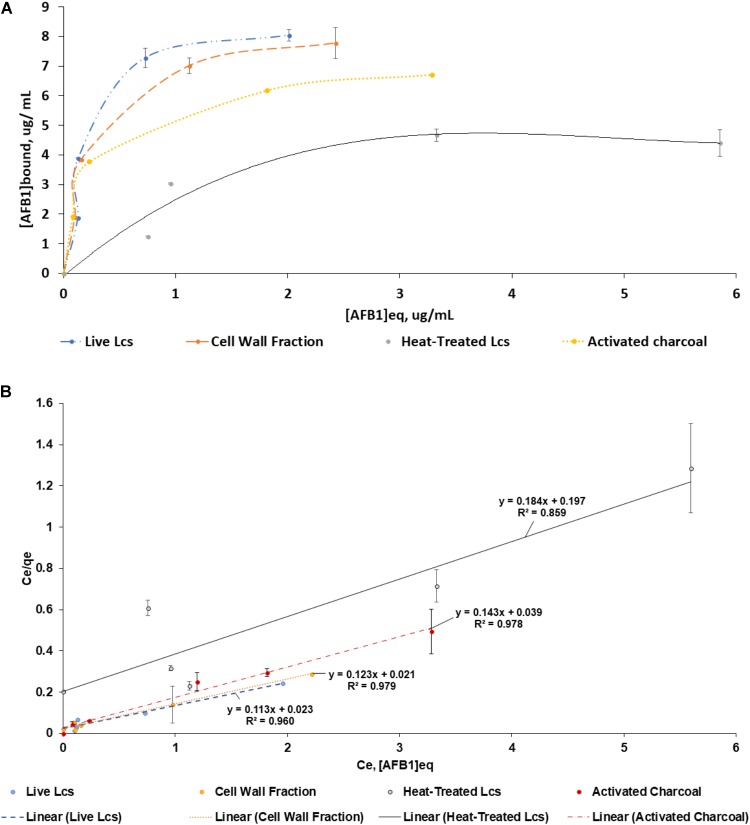
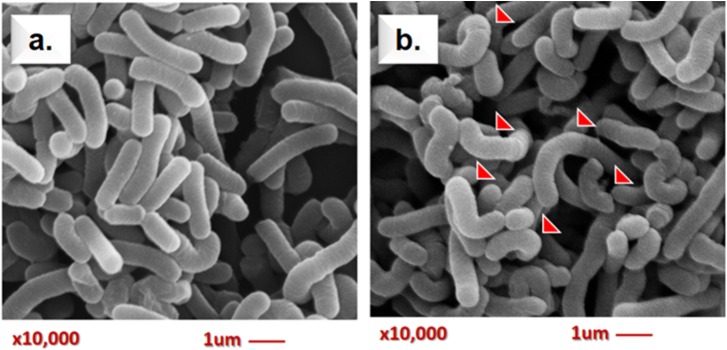
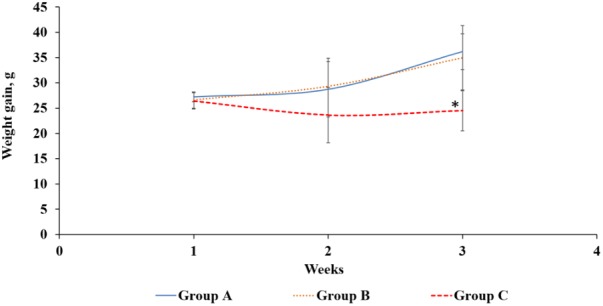
The use of probiotic as dietary approach to prevent exposure to food contaminant, aflatoxin B1 (AFB1) has greatly increased. Several studies found that AFB1 binding to the bacterial cell wall is strain-specific. Moreover, the interaction between AFB1 and bacterial cell wall is not well-understood, thus warrants further investigation. This research was conducted to assess the ability of Shirota (Lcs) to bind AFB1 at different concentrations and to determine AFB1 binding efficiency of different Lcs cell components including live cell, heat-treated, and cell wall. In addition, the interaction between AFB1 and Lcs was also evaluated via scanning electron microscopy (SEM) and through an animal study. The binding of AFB1 by all Lcs cell components depends on the concentration of available AFB1. Among all Lcs cell components, the live Lcs cells exhibited the highest binding efficiency (98%) toward AFB1. Besides, the SEM micrographs showed that AFB1 induced structural changes on the bacterial cell surface and morphology including rough and irregular surface along with a curve rod-shaped. experiment revealed that Lcs is capable to neutralize the toxicity of AFB1 on body weight and intestine through the binding process. The animal's growth was stunted due to AFB1 exposure, however, such effect was significantly ( < 0.05) alleviated by Lcs. This phenomenon can be explained by a significant ( < 0.05) decreased level of blood serum AFB1 by Lcs (49.6 ± 8.05 ng/mL) compared to AFB1-exposed rats without treatment (88.12 ± 10.65 ng/mL). Taken together, this study highlights the potential use of Lcs as a preventive agent against aflatoxicosis via its strong binding capability.
作为预防食品污染物黄曲霉毒素B1(AFB1)暴露的饮食方法,益生菌的使用已大幅增加。多项研究发现,AFB1与细菌细胞壁的结合具有菌株特异性。此外,AFB1与细菌细胞壁之间的相互作用尚未得到充分了解,因此值得进一步研究。本研究旨在评估嗜热链球菌(Lcs)在不同浓度下结合AFB1的能力,并确定不同Lcs细胞成分(包括活细胞、热处理细胞和细胞壁)的AFB1结合效率。此外,还通过扫描电子显微镜(SEM)和动物研究评估了AFB1与Lcs之间的相互作用。所有Lcs细胞成分对AFB1的结合取决于可用AFB1的浓度。在所有Lcs细胞成分中,活的Lcs细胞对AFB1的结合效率最高(98%)。此外,SEM显微照片显示,AFB1诱导了细菌细胞表面和形态的结构变化,包括表面粗糙不规则以及呈弯曲杆状。实验表明,Lcs能够通过结合过程中和AFB1对体重和肠道的毒性。由于暴露于AFB1,动物的生长受到抑制,然而,Lcs显著(<0.05)减轻了这种影响。与未治疗的AFB1暴露大鼠(88.12±10.65 ng/mL)相比,Lcs使血清AFB1水平显著(<0.05)降低(49.6±8.05 ng/mL),这一现象可以解释上述情况。综上所述,本研究强调了Lcs因其强大的结合能力作为预防黄曲霉毒素中毒的潜在用途。