Department of Nutrition and Dietetics, Faculty of Medicine and Health Sciences, Universiti Putra Malaysia, Serdang, Malaysia.
Front Cell Infect Microbiol. 2018 Feb 26;8:60. doi: 10.3389/fcimb.2018.00060. eCollection 2018.
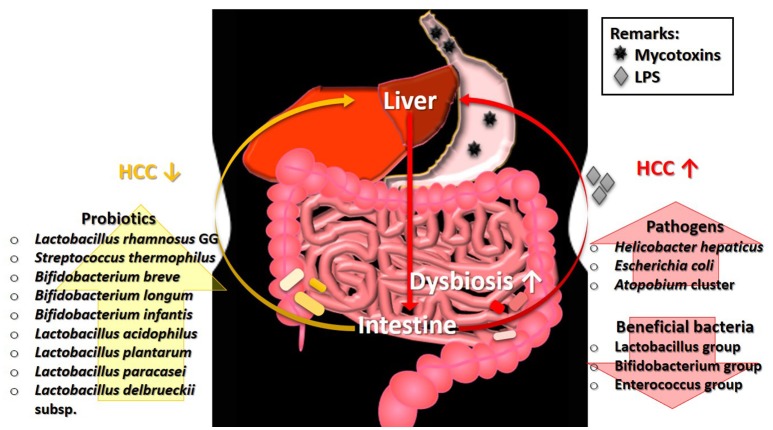
The secondary metabolites produced by fungi known as mycotoxins, are capable of causing mycotoxicosis (diseases and death) in human and animals. Contamination of feedstuffs as well as food commodities by fungi occurs frequently in a natural manner and is accompanied by the presence of mycotoxins. The occurrence of mycotoxins' contamination is further stimulated by the on-going global warming as reflected in some findings. This review comprehensively discussed the role of mycotoxins (trichothecenes, zearalenone, fumonisins, ochratoxins, and aflatoxins) toward gut health and gut microbiota. Certainly, mycotoxins cause perturbation in the gut, particularly in the intestinal epithelial. Recent insights have generated an entirely new perspective where there is a bi-directional relationship exists between mycotoxins and gut microbiota, thus suggesting that our gut microbiota might be involved in the development of mycotoxicosis. The bacteria-xenobiotic interplay for the host is highlighted in this review article. It is now well established that a healthy gut microbiota is largely responsible for the overall health of the host. Findings revealed that the gut microbiota is capable of eliminating mycotoxin from the host naturally, provided that the host is healthy with a balance gut microbiota. Moreover, mycotoxins have been demonstrated for modulation of gut microbiota composition, and such alteration in gut microbiota can be observed up to species level in some of the studies. Most, if not all, of the reported effects of mycotoxins, are negative in terms of intestinal health, where beneficial bacteria are eliminated accompanied by an increase of the gut pathogen. The interactions between gut microbiota and mycotoxins have a significant role in the development of mycotoxicosis, particularly hepatocellular carcinoma. Such knowledge potentially drives the development of novel and innovative strategies for the prevention and therapy of mycotoxin contamination and mycotoxicosis.
真菌产生的次生代谢物被称为真菌毒素,能够导致人和动物的真菌中毒(疾病和死亡)。真菌经常以自然的方式污染饲料和食品,同时伴随着真菌毒素的存在。一些研究发现,全球变暖的持续发生进一步刺激了真菌毒素的污染。本综述全面讨论了真菌毒素(单端孢霉烯族化合物、玉米赤霉烯酮、伏马菌素、黄曲霉毒素和赭曲霉毒素)对肠道健康和肠道微生物群的作用。当然,真菌毒素会破坏肠道,特别是破坏肠上皮。最近的研究结果产生了一个全新的观点,即真菌毒素和肠道微生物群之间存在双向关系,因此表明我们的肠道微生物群可能参与了真菌中毒的发展。本文强调了细菌-外源性物质对宿主的相互作用。现在已经确立,健康的肠道微生物群在很大程度上负责宿主的整体健康。研究结果表明,只要宿主肠道微生物群平衡且健康,肠道微生物群就能够自然地从宿主中消除真菌毒素。此外,真菌毒素已被证明能够调节肠道微生物群的组成,并且在一些研究中可以观察到这种肠道微生物群的改变达到了物种水平。如果不是所有的话,大多数报道的真菌毒素的影响在肠道健康方面都是负面的,有益细菌被消除,同时肠道病原体增加。肠道微生物群和真菌毒素之间的相互作用在真菌中毒的发展中起着重要作用,特别是肝细胞癌。这种知识可能会推动预防和治疗真菌毒素污染和真菌中毒的新策略的发展。