Lallemand Health Solutions Inc., 6100 Royalmount Avenue, Montreal, Quebec, H4P 2R2, Canada.
National Research Council Canada, Energy, Mining and Environment, 6100 Royalmount Avenue, Montreal, Quebec, H4P 2R2, Canada.
Sci Rep. 2018 Jul 25;8(1):11192. doi: 10.1038/s41598-018-29229-5.
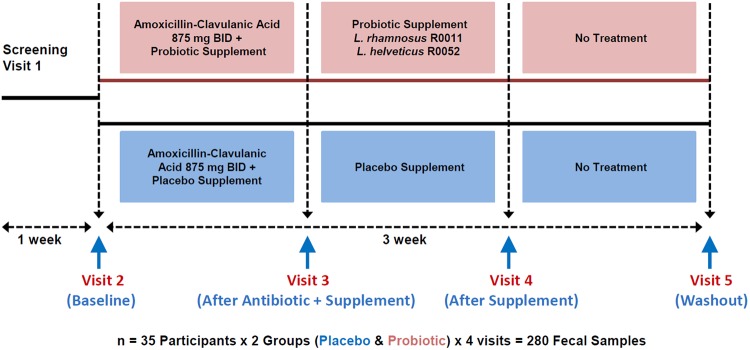
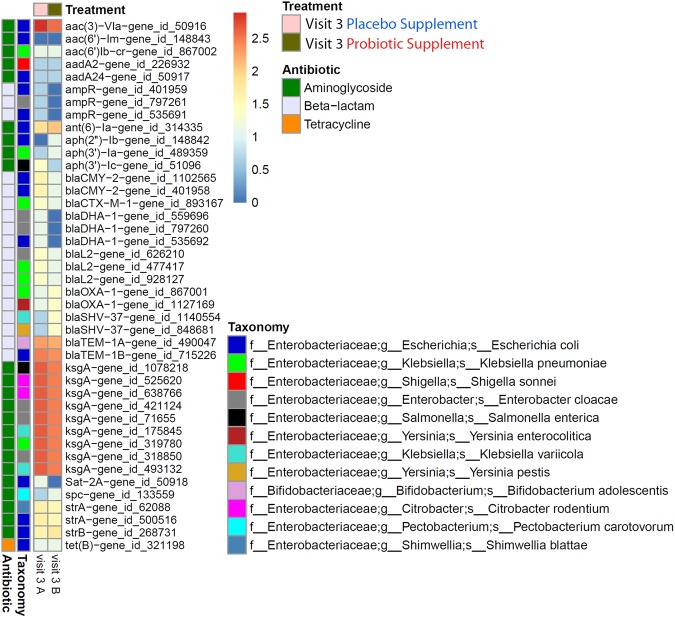
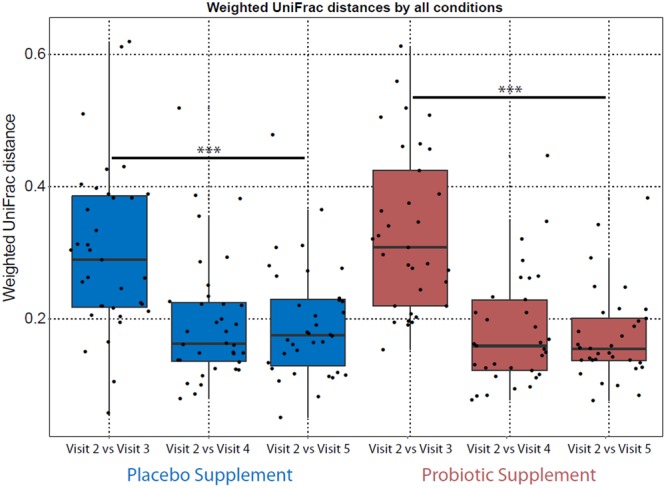
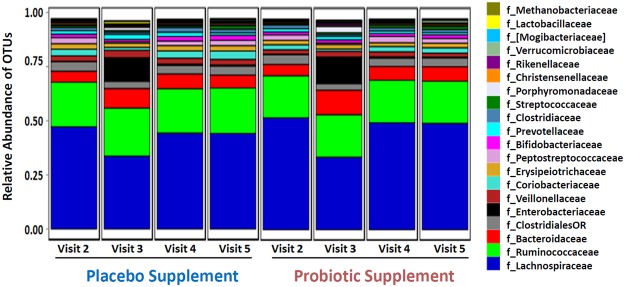
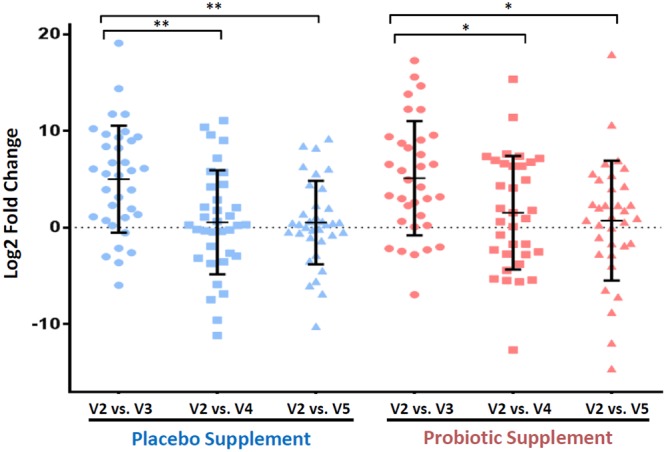
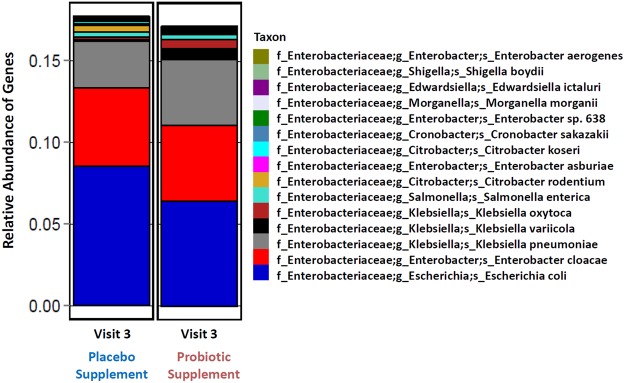
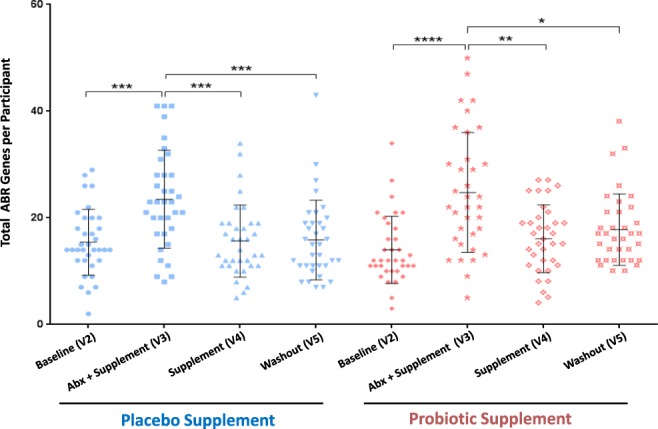
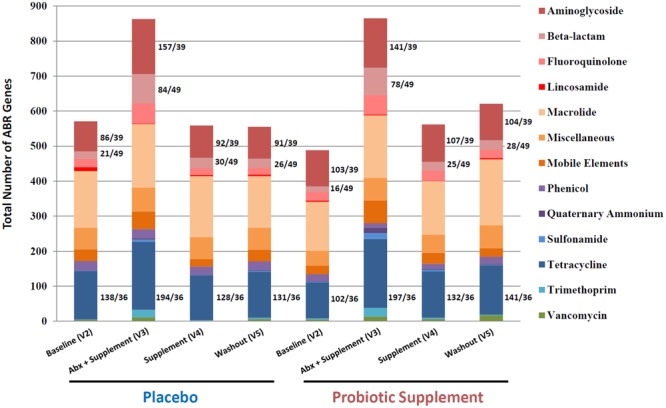
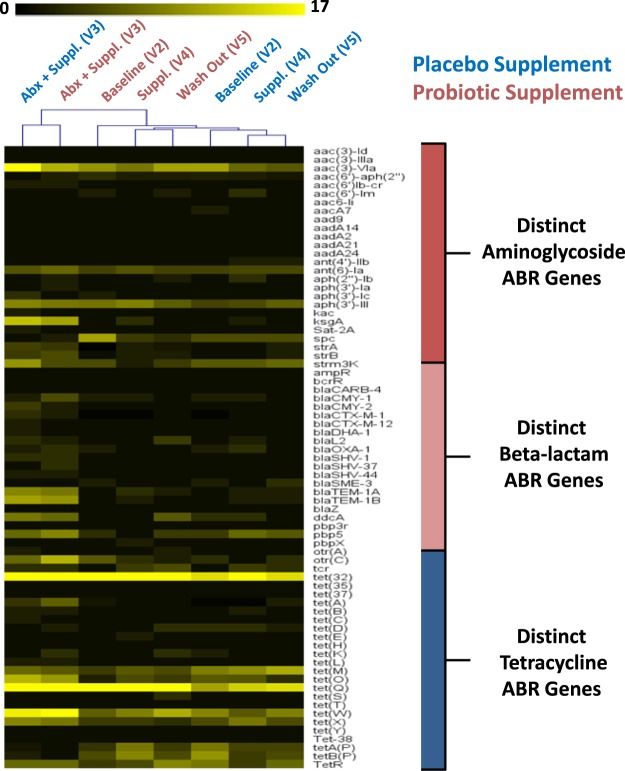
Clinical effects of antimicrobials and probiotics in combination have been reported, however, little is known about their impact on gut microbiota and its resistome. In this study 16S rRNA gene amplicon, shotgun metagenomics sequencing and antibiotic resistance (ABR) microarray were used on fecal samples of 70 healthy participants, taken at four time points in probiotic (Lactobacillus rhamnosus R0011 and Lactobacillus helveticus R0052) and placebo groups to profile the gut bacterial microbiota and its resistome following administration of amoxicillin-clavulanic acid for one week. Significant shifts in microbiota family composition caused by the antimicrobial in both groups that included decreases in the proportion of Lachnospiraceae, Coriobacteriaceae and unidentified Clostridiales; and notable increases for the proportion of Enterobacteriaceae, Bacteroidaceae and Porphyromonadaceae compared to baseline levels. Resistome showed a corresponding enrichment of ABR genes compared to baseline from such classes as aminoglycosides and beta-lactams that were linked, by in silico inference, to the enrichment of the family Enterobacteriaceae. Despite perturbations caused by short-term antibiotic treatment, both gut microbiota and resistome showed prompt recovery to baseline levels one week after cessation of the antimicrobial. This rapid recovery may be explained by the hypothesis of community resilience.
已报道抗菌药物和益生菌联合使用的临床效果,但对于它们对肠道微生物群及其抗药性的影响知之甚少。在这项研究中,我们使用 16S rRNA 基因扩增子、宏基因组测序和抗生素耐药性(ABR)微阵列,对 70 名健康参与者的粪便样本进行了分析,这些参与者在益生菌(鼠李糖乳杆菌 R0011 和瑞士乳杆菌 R0052)和安慰剂组中,分别在四个时间点采集,以在服用阿莫西林-克拉维酸一周后,分析肠道细菌微生物群及其抗药性。抗菌药物在两组中引起的微生物群家族组成的显著变化,包括lachnospiraceae、coriobacteriaceae 和未鉴定的clostridiales 比例的降低;与基线水平相比,enterobacteriaceae、bacteroidaceae 和 porphyromonadaceae 的比例显著增加。与基线相比,耐药组显示出相应的 ABR 基因富集,这些基因来自氨基糖苷类和β-内酰胺类等类别,通过计算机推理与 enterobacteriaceae 家族的富集有关。尽管短期抗生素治疗会引起菌群失调,但在停止使用抗生素一周后,肠道微生物群和耐药组都迅速恢复到基线水平。这种快速恢复可能可以用群落弹性假说来解释。