Sikder Kunal, Shukla Sanket Kumar, Patel Neel, Singh Harpreet, Rafiq Khadija
Center for Translational Medicine, Thomas Jefferson University, Philadelphia, Pennsylvania, USA.
Department of Pharmacology and Physiology, Drexel University College of Medicine, Philadelphia, Pennsylvania, USA.
Cell Physiol Biochem. 2018;48(3):1317-1331. doi: 10.1159/000492091. Epub 2018 Jul 26.
BACKGROUND/AIMS: Systemic hyperlipidemia and intracellular lipid accumulation induced by chronic high fat diet (HFD) leads to enhanced fatty acid oxidation (FAO) and ketogenesis. The present study was aimed to determine whether activation of peroxisome proliferator-activated receptor-γ (PPAR-γ) by surplus free fatty acids (FA) in hyperlipidemic condition, has a positive feedback regulation over FAO and ketogenic enzymes controlling lipotoxicity and cardiac apoptosis.
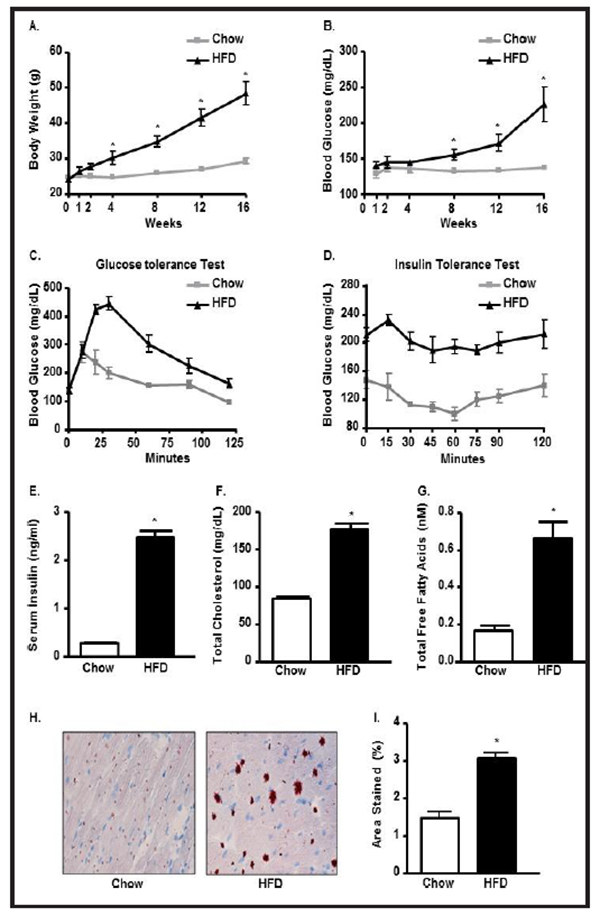
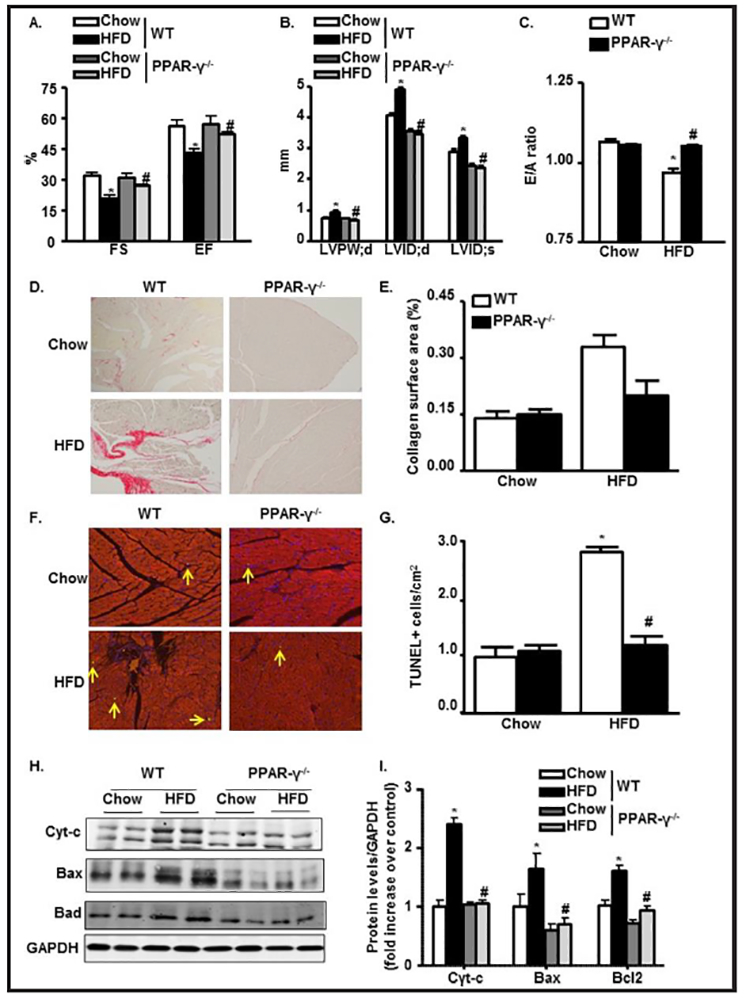
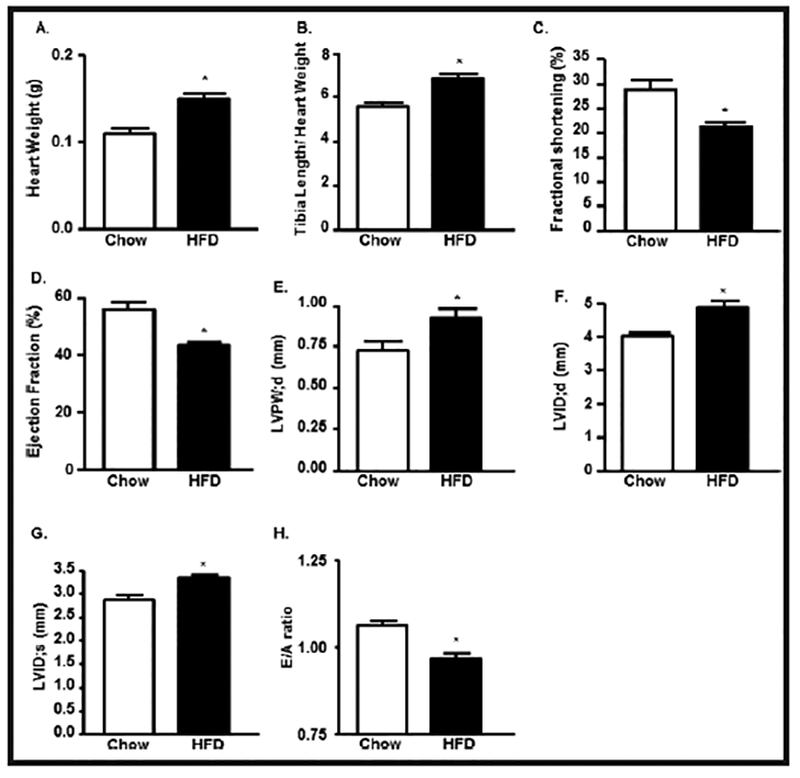
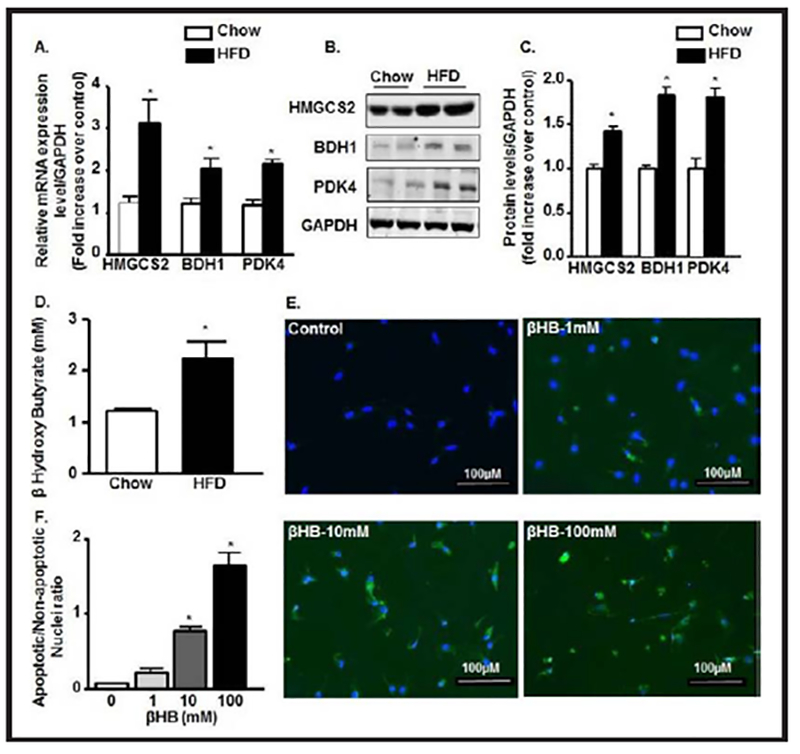
8 weeks old C57BL/6 wild type (WT) or PPAR-γ-/- mice were challenged with 16 weeks 60% HFD to induce obesity mediated type 2 diabetes mellitus (T2DM) and diabetic cardiomyopathy. Treatment course was followed by echocardiographic measurements, glycemic and lipid profiling, immunoblot, qPCR and immunohistochemistry (IHC) analysis of PPAR-γ and following mitochondrial metabolic enzymes 3-hydroxy-3-methylglutaryl-CoA synthase (HMGCS2), mitochondrial β- hydroxy butyrate dehydrogenase (BDH1) and pyruvate dehydrogenase kinase isoform 4 (PDK4). In vivo model was translated in vitro, with neonatal rat cardiomyocytes (NRCM) treated with PPAR-γ agonist/antagonist and PPAR-γ overexpression adenovirus in presence of palmitic acid (PA). Apoptosis was determined in vivo from left ventricular heart by TUNEL assay and immunoblot analysis.
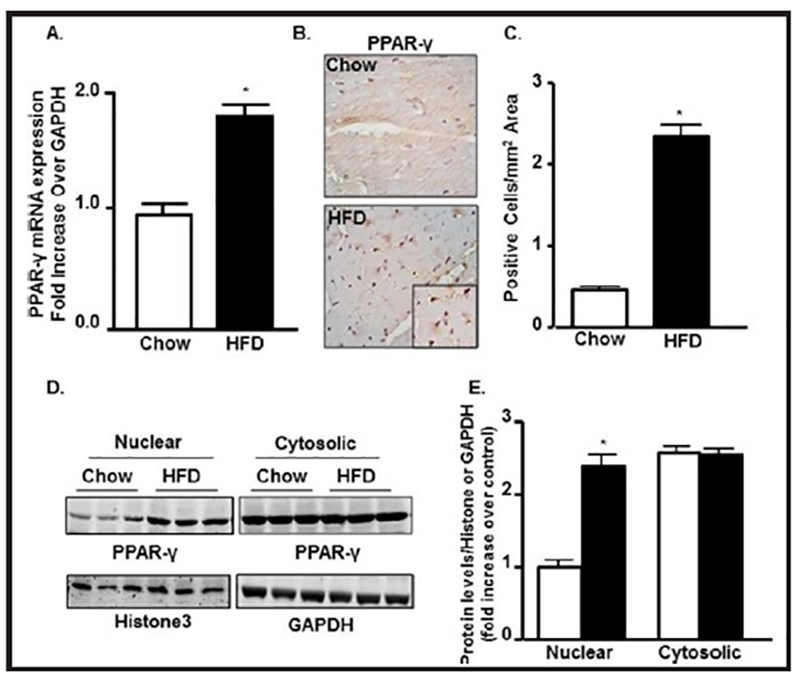
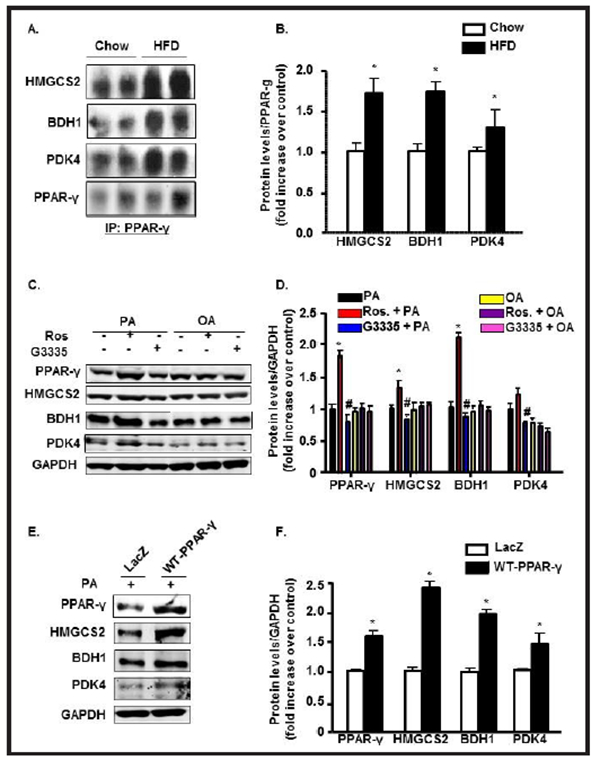
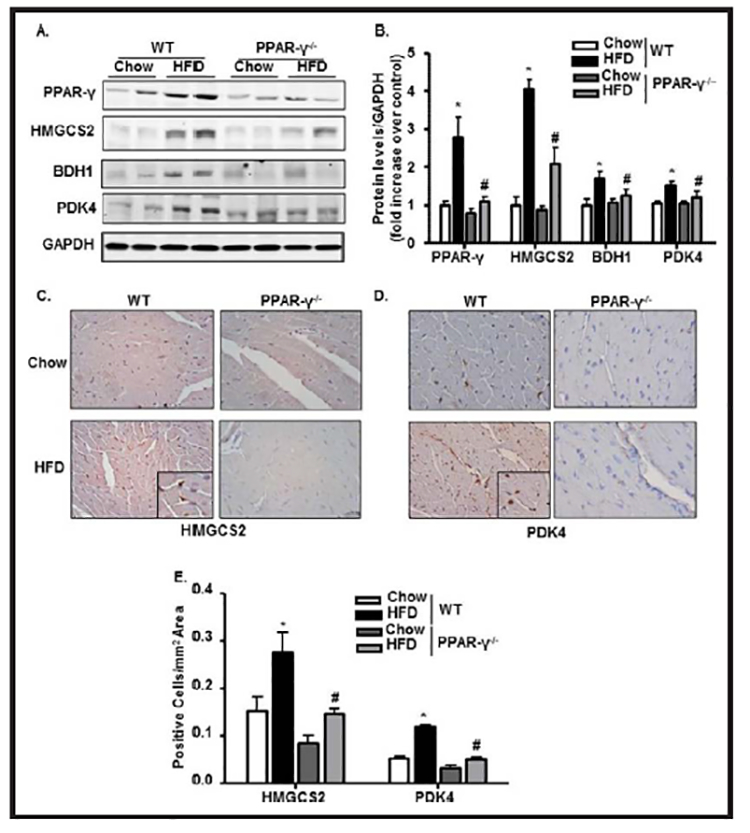
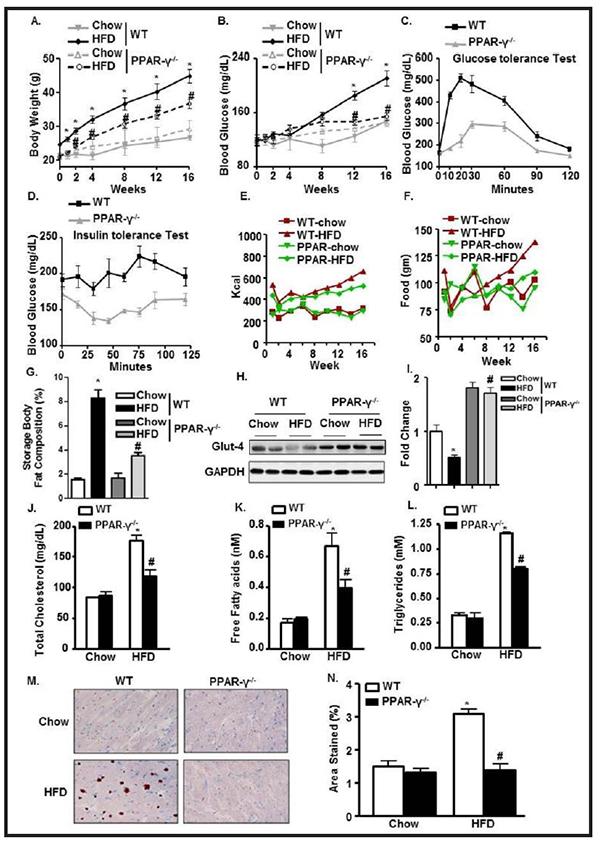
We found exaggerated circulating ketone bodies production and expressions of the related mitochondrial enzymes HMGCS2, BDH1 and PDK4 in HFD-induced diabetic hearts and in PA-treated NRCM. As a mechanistic approach we found HFD mediated activation of PPAR-γ is associated with the above-mentioned mitochondrial enzymes. HFD-fed PPAR-γ-/-mice display decreased hyperglycemia, hyperlipidemia associated with increased insulin responsiveness as compared to HFD-fed WT mice PPAR-γ-/-HFD mice demonstrated a more robust functional recovery after diabetes induction, as well as significantly reduced myocyte apoptosis and improved cardiac function.
PPAR-γ has been described previously to regulate lipid metabolism and adipogenesis. The present study suggests for the first time that increased PPAR-γ expression by HFD is responsible for cardiac dysfunction via upregulation of mitochondrial enzymes HMGCS2, BDH1 and PDK4. Targeting PPAR-γ and its downstream mitochondrial enzymes will provide novel strategies in preventing metabolic and myocardial dysfunction in diabetes mellitus.
背景/目的:慢性高脂饮食(HFD)诱导的全身性高脂血症和细胞内脂质蓄积会导致脂肪酸氧化(FAO)增强和生酮作用。本研究旨在确定高脂血症状态下多余的游离脂肪酸(FA)激活过氧化物酶体增殖物激活受体γ(PPAR-γ)是否对控制脂毒性和心脏细胞凋亡的FAO和生酮酶具有正反馈调节作用。
对8周龄的C57BL/6野生型(WT)或PPAR-γ基因敲除(-/-)小鼠进行16周60% HFD喂养,以诱导肥胖介导的2型糖尿病(T2DM)和糖尿病性心肌病。治疗过程中进行超声心动图测量、血糖和血脂分析、免疫印迹、qPCR以及对PPAR-γ和随后的线粒体代谢酶3-羟基-3-甲基戊二酰辅酶A合酶(HMGCS2)、线粒体β-羟基丁酸脱氢酶(BDH1)和丙酮酸脱氢酶激酶4亚型(PDK4)进行免疫组化(IHC)分析。体内模型转化为体外模型,用PPAR-γ激动剂/拮抗剂和PPAR-γ过表达腺病毒在棕榈酸(PA)存在的情况下处理新生大鼠心肌细胞(NRCM)。通过TUNEL测定法和免疫印迹分析在体内从左心室测定细胞凋亡情况。
我们发现HFD诱导的糖尿病心脏和PA处理的NRCM中循环酮体生成以及相关线粒体酶HMGCS2、BDH1和PDK4的表达均增加。作为一种机制性方法,我们发现HFD介导的PPAR-γ激活与上述线粒体酶有关。与HFD喂养的WT小鼠相比,HFD喂养的PPAR-γ-/-小鼠表现出高血糖和高脂血症减轻,胰岛素反应性增加。PPAR-γ-/- HFD小鼠在糖尿病诱导后表现出更强的功能恢复,以及心肌细胞凋亡显著减少和心脏功能改善。
PPAR-γ先前已被描述为调节脂质代谢和脂肪生成。本研究首次表明,HFD导致的PPAR-γ表达增加通过上调线粒体酶HMGCS2、BDH1和PDK4导致心脏功能障碍。靶向PPAR-γ及其下游线粒体酶将为预防糖尿病中的代谢和心肌功能障碍提供新策略。