Hergert Melinda, le Roux Kevin, Nel Louis H
Department of Paraclinical Sciences, Faculty of Veterinary Science, University of Pretoria, Onderstepoort, Pretoria,
KwaZulu-Natal Department of Environment, Agriculture and Rural Development, Government Veterinary Services, Pietermaritzburg.
Vet Med (Auckl). 2016 Jun 27;7:75-83. doi: 10.2147/VMRR.S103859. eCollection 2016.
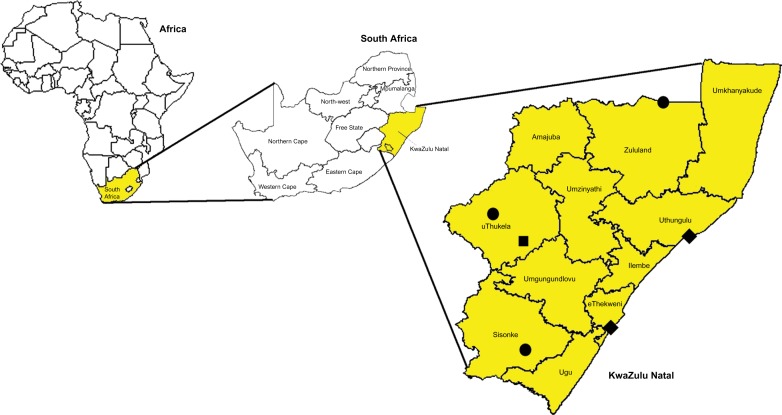
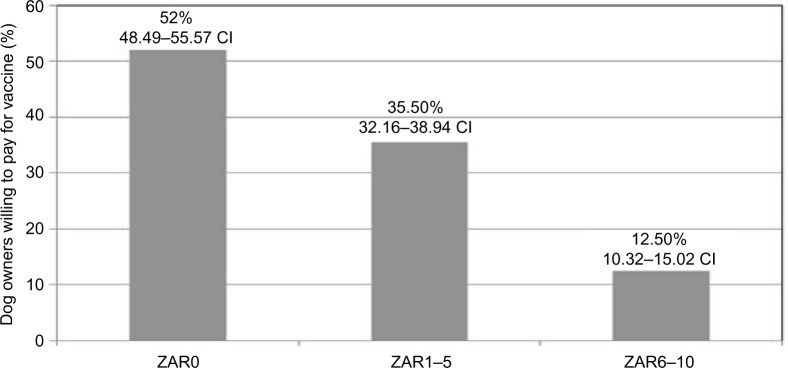
Canine rabies has been enzootic in the dog population of the KwaZulu-Natal province of South Africa since the mid-1970s and has been associated with high rates of human exposures and frequent transmissions to other domestic animal species. Several decades of control efforts, consisting primarily of mass vaccination programs, failed to sufficiently curb rabies in this province. For meaningful progression toward better control and elimination, the factors contributing to the persistence of this disease need to be elucidated and addressed. This paper reports evaluated observations from survey records captured through a cross-sectional observational study regarding owned canine populations in this South African province. We used logistic regression modeling to predict variables associated with risk of nonvaccination of rabies in owned dogs. The study indicated that husbandry practices, rabies knowledge, geographical area/location, and the ages of dogs were important factors associated with the risk of nonvaccination. High population turnover, together with large free roaming dog populations, compromised the levels of vaccination achieved and contributed to the persistence of dog rabies in the province. Dog owners in this study also reported that they were more likely to present their dogs for vaccination when the vaccines were free of charge (52%) and less than a kilometer from their homes (91%). It has been suggested that effective dog rabies control requires 70% or more of the dog population to be vaccinated. Our data showed that this figure was not reached in the surveyed dog population.
自20世纪70年代中期以来,犬类狂犬病在南非夸祖鲁-纳塔尔省的犬类群体中呈地方流行性,并且与人类高暴露率以及频繁传播给其他家养动物物种有关。几十年来的防控努力,主要包括大规模疫苗接种计划,未能充分遏制该省的狂犬病。为了在更好的控制和消除方面取得有意义的进展,需要阐明并解决导致这种疾病持续存在的因素。本文报告了通过一项横断面观察性研究收集的关于该南非省份家养犬类群体的调查记录的评估观察结果。我们使用逻辑回归模型来预测与家养犬未接种狂犬病疫苗风险相关的变量。研究表明,饲养方式、狂犬病知识、地理区域/位置以及犬的年龄是与未接种疫苗风险相关的重要因素。高人口流动率,再加上大量自由放养的犬类群体,影响了疫苗接种水平,并导致该省犬类狂犬病持续存在。本研究中的犬主还报告称,当疫苗免费(52%)且距离家不到一公里(91%)时,他们更有可能带犬接种疫苗。有人提出,有效的犬类狂犬病控制需要70%或更多的犬类群体接种疫苗。我们的数据显示,在被调查的犬类群体中未达到这一数字。