Backlund Anja, Holmbeck Olga, Kumlien Christine, Axelsson Malin
Faculty of Health and Society Department of Caring Science Malmö University Malmö Sweden.
Department of Cardio-Thoracic and Vascular Surgery Skane University hospital Malmö Sweden.
Nurs Open. 2018 Apr 16;5(3):341-350. doi: 10.1002/nop2.144. eCollection 2018 Jul.
The aim was to explore planned nursing interventions and evaluations of such interventions, in older people at risk for malnutrition living in municipal residential care homes.
A registry study.
The study was conducted using data from the Swedish national quality registry Senior Alert. Data on all persons assessed and registered in Senior Alert living in municipal residential care homes in a mid-sized town between January and December 2014 were subjected to statistical analysis.
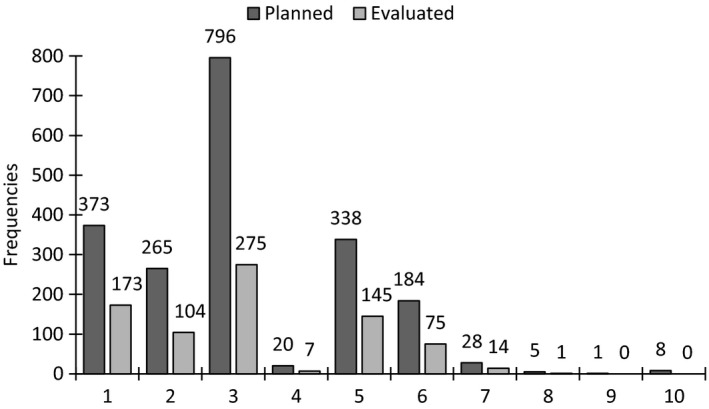
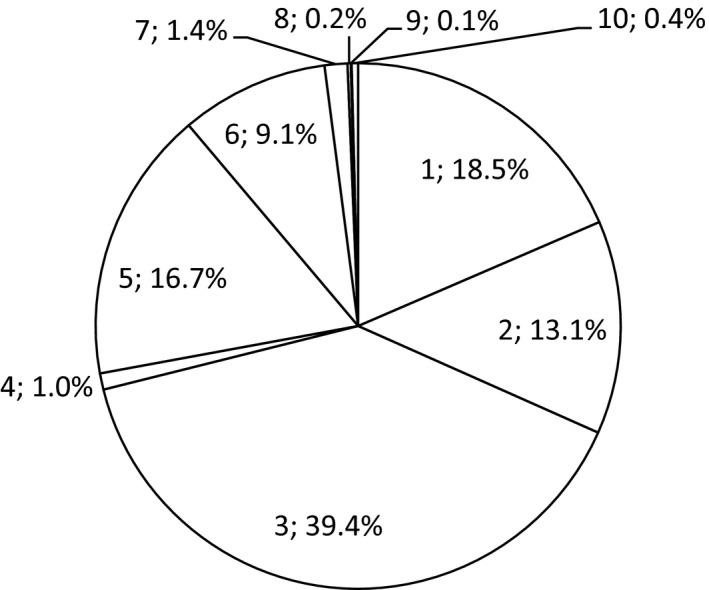
In total, 677 nutritional risk assessments were performed among the participants ( = 587), who were between 65-109 years. A larger proportion of women were estimated as being at risk for malnutrition compared with men. The three most common prescribed nursing interventions were nutritional treatment, dietary support and weight control; however, interventions were not prescribed for all participants at risk for malnutrition. Lesser than 50% of the interventions were evaluated, with dietary support, pharmaceutical review and weight control the three most likely to be evaluated. Further, planned interventions for participants at risk of malnutrition were implemented more often for men than for women.
旨在探讨针对居住在市政养老院中存在营养不良风险的老年人的计划性护理干预措施及其评估。
一项登记研究。
本研究使用来自瑞典国家质量登记处“老年警报”的数据进行。对2014年1月至12月期间在一个中等规模城镇的市政养老院中接受评估并登记在“老年警报”中的所有人员的数据进行统计分析。
参与者(n = 587)年龄在65至109岁之间,共进行了677次营养风险评估。与男性相比,估计有更大比例的女性存在营养不良风险。最常见的三项规定护理干预措施是营养治疗、饮食支持和体重控制;然而,并非对所有存在营养不良风险的参与者都规定了干预措施。不到50%的干预措施得到了评估,饮食支持、药物审查和体重控制是最有可能得到评估的三项。此外,针对存在营养不良风险的参与者的计划性干预措施在男性中比在女性中实施得更频繁。