Guevarra Robin B, Hong Sang Hyun, Cho Jin Ho, Kim Bo-Ra, Shin Jiwon, Lee Jun Hyung, Kang Bit Na, Kim Young Hwa, Wattanaphansak Suphot, Isaacson Richard E, Song Minho, Kim Hyeun Bum
1Department of Animal Resources Science, Dankook University, Cheonan, South Korea.
2Division of Food and Animal Sciences, Chungbuk National University, Cheongju, South Korea.
J Anim Sci Biotechnol. 2018 Jul 30;9:54. doi: 10.1186/s40104-018-0269-6. eCollection 2018.
Understanding the composition of the microbial community and its functional capacity during weaning is important for pig production as bacteria play important roles in the pig's health and growth performance. However, limited information is available regarding the composition and function of the gut microbiome of piglets in early-life. Therefore, we performed 16S rRNA gene and whole metagenome shotgun sequencing of DNA from fecal samples from healthy piglets during weaning to measure microbiome shifts, and to identify the potential contribution of the early-life microbiota in shaping piglet health with a focus on microbial stress responses, carbohydrate and amino acid metabolism.
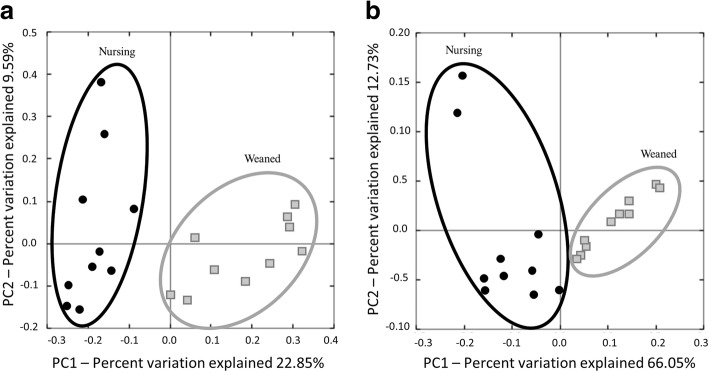
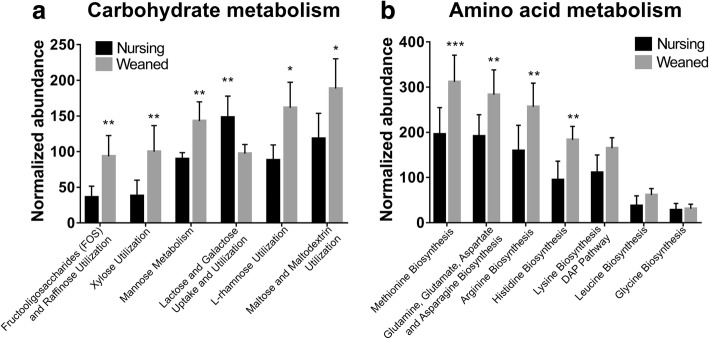
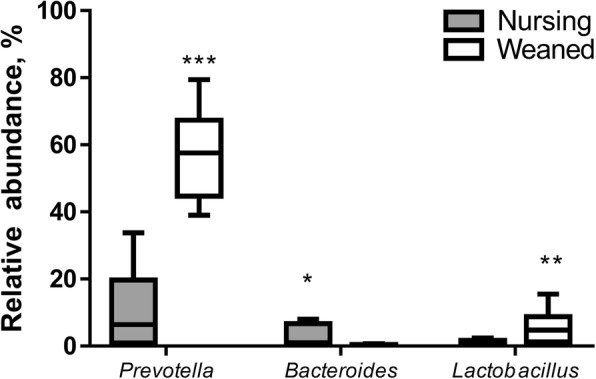
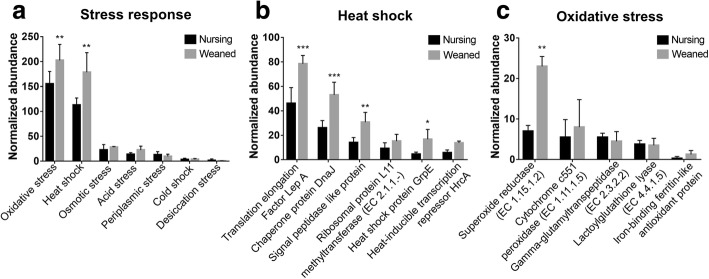
The analysis of 16S rRNA genes and whole metagenome shotgun sequencing revealed significant compositional and functional differences between the fecal microbiome in nursing and weaned piglets. The fecal microbiome of the nursing piglets showed higher relative abundance of bacteria in the genus with abundant gene families related to the utilization of lactose and galactose. and were enriched in weaned piglets with an enrichment for the gene families associated with carbohydrate and amino acid metabolism. In addition, an analysis of the functional capacity of the fecal microbiome showed higher abundances of genes associated with heat shock and oxidative stress in the metagenome of weaned piglets compared to nursing piglets.
Overall, our data show that microbial shifts and changes in functional capacities of the piglet fecal microbiome resulted in potential reductions in the effects of stress, including dietary changes that occur during weaning. These results provide us with new insights into the piglet gut microbiome that contributes to the growth of the animal.
了解断奶期间微生物群落的组成及其功能能力对养猪生产很重要,因为细菌在猪的健康和生长性能中发挥着重要作用。然而,关于仔猪早期肠道微生物组的组成和功能的信息有限。因此,我们对断奶期间健康仔猪粪便样本中的DNA进行了16S rRNA基因和全宏基因组鸟枪法测序,以测量微生物组的变化,并确定早期微生物群在塑造仔猪健康方面的潜在贡献,重点关注微生物应激反应、碳水碳水碳水和氨基酸代谢。
对16S rRNA基因和全宏基因组鸟枪法测序的分析揭示了哺乳仔猪和断奶仔猪粪便微生物组在组成和功能上的显著差异。哺乳仔猪的粪便微生物组显示出属中细菌的相对丰度较高,有与乳糖和半乳糖利用相关的丰富基因家族。和在断奶仔猪中富集,且与碳水化合物和氨基酸代谢相关的基因家族也有富集。此外,对粪便微生物组功能能力的分析表明,与哺乳仔猪相比,断奶仔猪宏基因组中与热休克和氧化应激相关的基因丰度更高。
总体而言,我们的数据表明,仔猪粪便微生物组的微生物变化和功能能力变化可能降低了应激的影响,包括断奶期间发生的饮食变化。这些结果为我们提供了关于有助于动物生长的仔猪肠道微生物组的新见解。