The Medical Intensive Care Unit, Centre Hospitalier et Universitaire de Brest - Université de Bretagne Occidentale, Bvd Tanguy Prigent, 29609, Brest Cedex, France.
The Australian and New Zealand Intensive Care Research Centre, Department of Epidemiology and Preventive Medicine, Monash University, Melbourne, Australia.
Crit Care. 2018 Aug 5;22(1):185. doi: 10.1186/s13054-018-2114-x.
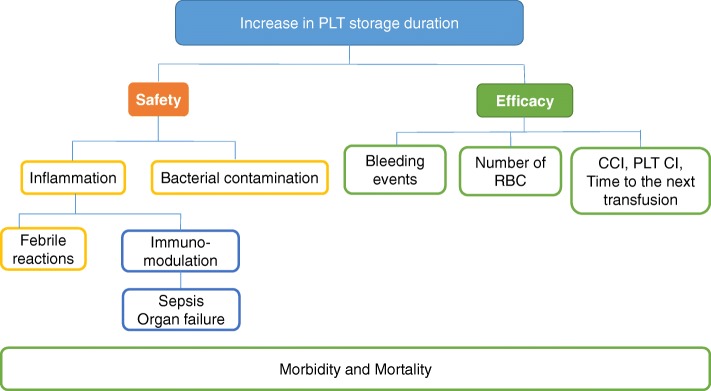
Platelets (PLTs) are usually stored for up to 5 days prior to transfusion, although in some blood services the storage period is extended to 7 days. During storage, changes occur in both PLT and storage medium, which may lead to PLT activation and dysfunction. The clinical significance of these changes remains uncertain.
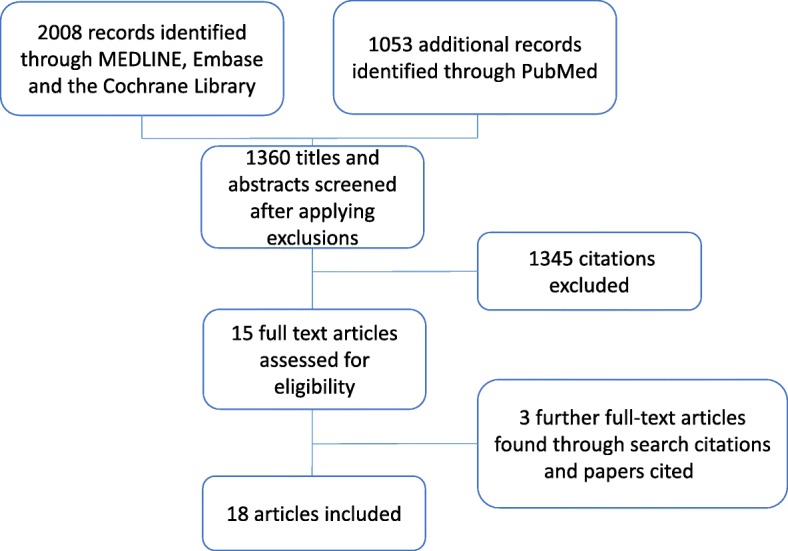
We performed a systematic review to assess the association between PLT storage time and clinical or transfusion outcomes in patients receiving allogeneic PLT transfusion. We searched studies published in English between January 2000 and July 2017 identified from MEDLINE, Embase, PubMed and the Cochrane Libraries.
Of the 18 studies identified, five included 4719 critically ill patients (trauma, post-cardiac surgery and a heterogeneous population of critically ill patients) and 13 included 8569 haematology patients. The five studies in critically ill patients were retrospective and did not find any association between PLT storage time when PLTs were stored for up to 5 days and mortality. There was also no association between older PLTs and sepsis in the two largest studies (n = 4008 patients). Of the 13 studies in haematology patients, seven analysed prolonged storage time up to 6.5 or 7 days. Administration of fresh PLTs (less than 2 or 3 days) was associated with a significant increase in corrected count increment (CCI) compared to older PLTs in seven of the eight studies analysing this outcome. One single centre retrospective study found an increase in bleeding events in patients receiving older PLTs.
PLT storage time does not appear to be associated with clinical outcomes, including bleeding, sepsis or mortality, in critically ill patients or haematology patients. The freshest PLTs (less than 3 days) were associated with a better CCI, although there was no impact on bleeding events, questioning the clinical significance of this association. However, there is an absence of evidence to draw definitive conclusions, especially in critically ill patients.
血小板(PLT)通常在输注前储存不超过 5 天,尽管在一些血液服务机构中,储存时间延长至 7 天。在储存过程中,PLT 和储存介质都会发生变化,这可能导致 PLT 激活和功能障碍。这些变化的临床意义尚不确定。
我们进行了一项系统评价,以评估接受同种异体 PLT 输注的患者 PLT 储存时间与临床或输血结果之间的关系。我们检索了 2000 年 1 月至 2017 年 7 月期间 MEDLINE、Embase、PubMed 和 Cochrane 图书馆中发表的英文研究。
在确定的 18 项研究中,有 5 项研究纳入了 4719 例危重症患者(创伤、心脏手术后和一组混杂的危重症患者),13 项研究纳入了 8569 例血液科患者。5 项危重症患者的研究为回顾性研究,当 PLT 储存时间不超过 5 天时,并未发现 PLT 储存时间与死亡率之间存在任何关联。在两项最大的研究(n=4008 例患者)中,也没有发现陈旧 PLT 与脓毒症之间存在关联。在 13 项血液科患者的研究中,有 7 项分析了长达 6.5 或 7 天的延长储存时间。与陈旧 PLT 相比,在分析该结局的八项研究中的七项研究中,输注新鲜 PLT(少于 2 天或 3 天)与校正计数增加(CCI)显著增加相关。一项单中心回顾性研究发现,接受陈旧 PLT 的患者出血事件增加。
PLT 储存时间似乎与危重症患者或血液科患者的临床结局(包括出血、脓毒症或死亡率)无关。最“新鲜”的 PLT(少于 3 天)与更好的 CCI 相关,尽管对出血事件没有影响,这对该关联的临床意义提出了质疑。然而,由于缺乏明确的结论,特别是在危重症患者中,目前尚无确凿的证据。