Engle-Friedman Mindy, Mathew Gina Marie, Martinova Anastasia, Armstrong Forrest, Konstantinov Viktoriya
Baruch College, City University of New York, Psychology - New York - NY - USA.
Sleep Sci. 2018 Mar-Apr;11(2):74-84. doi: 10.5935/1984-0063.20180016.
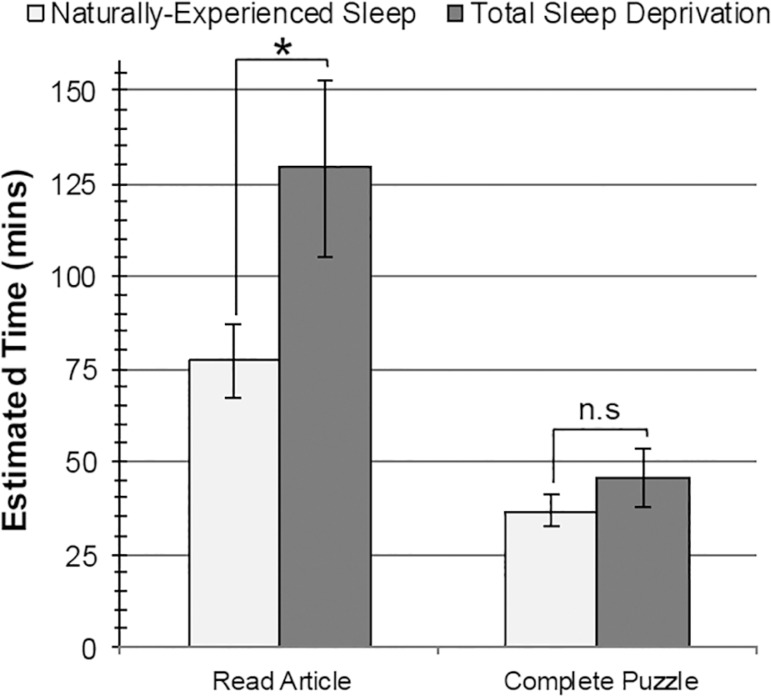
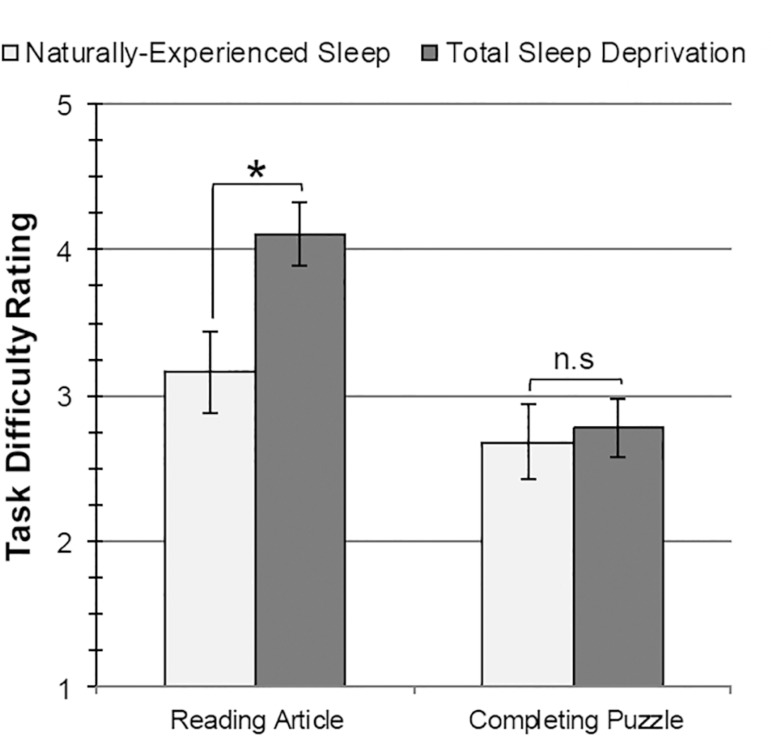
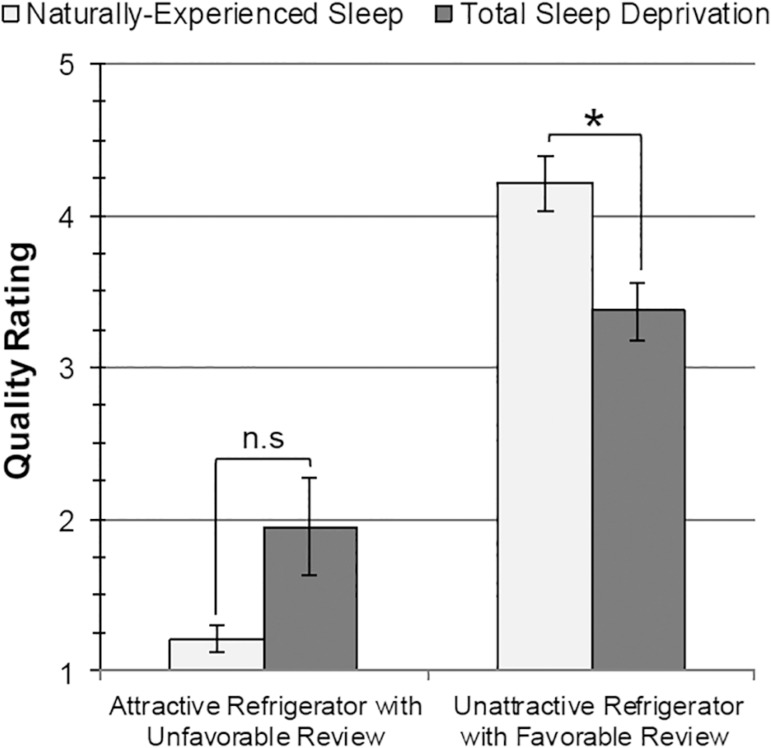
This study investigated the effects of sleep deprivation on perception of task difficulty and use of heuristics (mental shortcuts) compared to naturally-experienced sleep at home. Undergraduate students were screened and assigned through block-random assignment to Naturally-Experienced Sleep (NES; =19) or Total Sleep Deprivation (TSD; =20). The next morning, reported fatigue, perception of task difficulty, and use of "what-is-beautiful-is-good," "greedy algorithm," and "speed-accuracy trade-off" heuristics were assessed. NES slept for an average of 354.74 minutes (=72.84), or 5.91 hours. TSD rated a reading task as significantly more difficult and requiring more time than NES. TSD was significantly more likely to use the greedy algorithm heuristic by skipping instructions and the what-is-beautiful-is-good heuristic by rating an unattractive consumer item with a favorable review as poor quality. Those in Total Sleep Deprivation who chose more difficult math problems made this selection to finish the task more quickly in findings approaching significance, indicating use of the speed-accuracy trade-off heuristic. Collapsed across conditions, self-reported fatigue predicted greater perceived difficulty in both the reading task and a visuo-motor task, higher quality rating for the attractive consumer item, and lower quality rating for the unattractive consumer item. Findings indicate sleep deprivation and fatigue increase perceptions of task difficulty, promote skipping instructions, and impair systematic evaluation of unappealing stimuli compared to naturally-experienced sleep.
本研究调查了与在家自然睡眠相比,睡眠剥夺对任务难度感知和启发式策略(心理捷径)使用的影响。通过区组随机分配对本科生进行筛选并分组,分为自然睡眠组(NES;n = 19)或完全睡眠剥夺组(TSD;n = 20)。第二天早上,评估报告的疲劳程度、任务难度感知以及“美的就是好的”“贪婪算法”和“速度 - 准确性权衡”启发式策略的使用情况。NES组平均睡眠354.74分钟(SD = 72.84),即5.91小时。TSD组认为阅读任务比NES组明显更难且需要更多时间。TSD组更有可能通过跳过说明来使用贪婪算法启发式策略,并通过将评价良好的无吸引力消费商品评为质量差来使用“美的就是好的”启发式策略。在接近显著水平的结果中,完全睡眠剥夺组中选择更难数学问题的人做出这种选择是为了更快完成任务,这表明使用了速度 - 准确性权衡启发式策略。综合各种情况来看,自我报告的疲劳预示着在阅读任务和视觉运动任务中会有更大的难度感知、对有吸引力消费商品的更高质量评价以及对无吸引力消费商品的更低质量评价。研究结果表明,与自然睡眠相比,睡眠剥夺和疲劳会增加对任务难度的感知、促使跳过说明,并损害对无吸引力刺激的系统评估。