Department of Biology, University of Turku, 20014, Turku, Finland.
Department of Evolutionary Genetics, Leibniz Institute for Zoo and Wildlife Research, Alfred-Kowalke-Strasse, Berlin, 10315, Germany.
Nat Commun. 2018 Aug 7;9(1):3023. doi: 10.1038/s41467-018-05515-8.
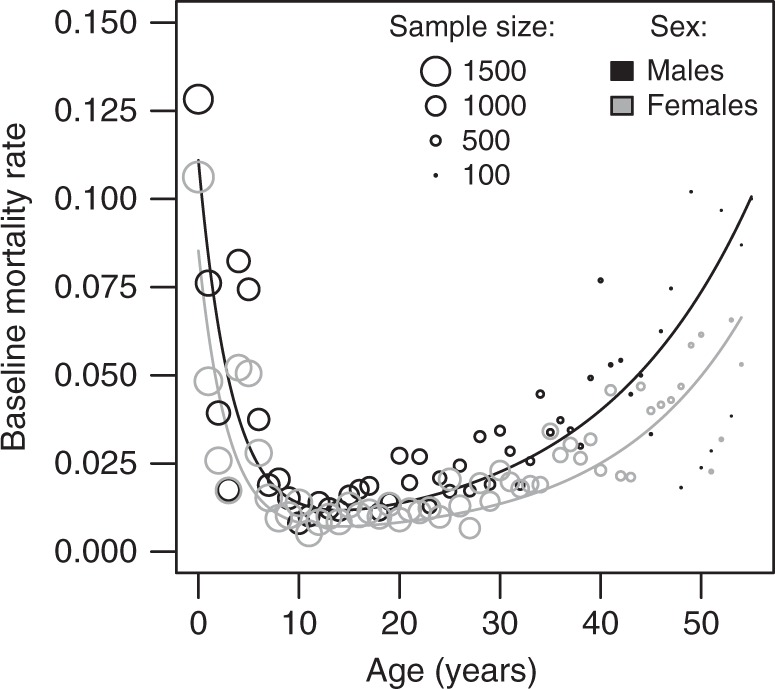
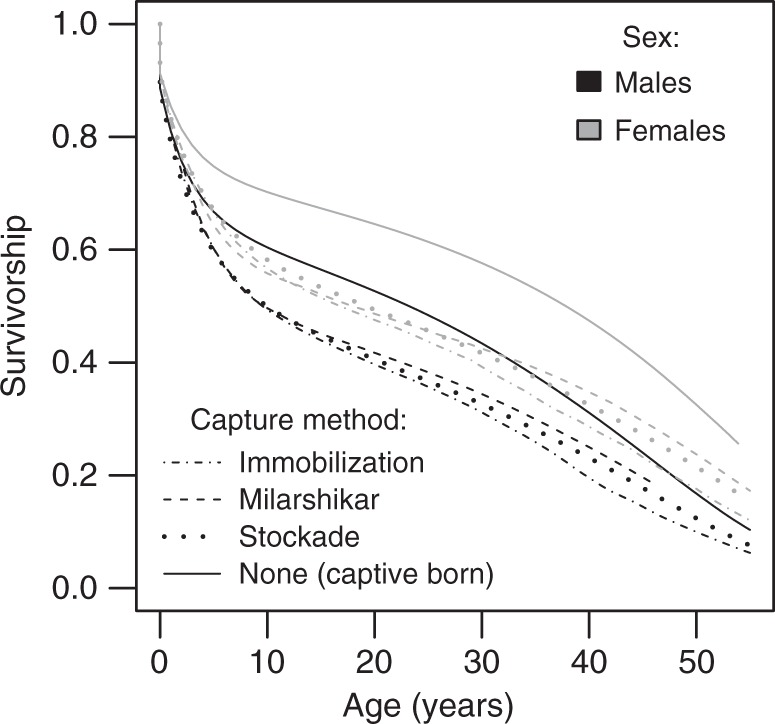
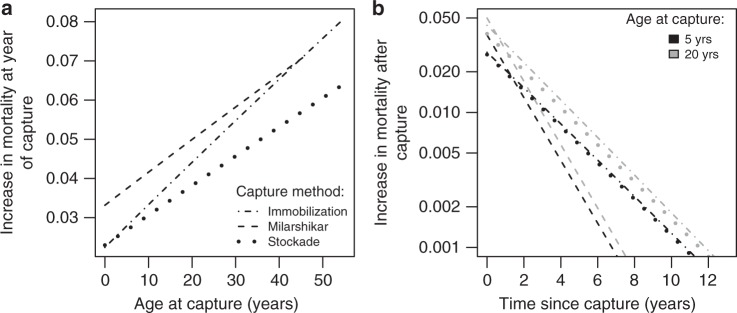
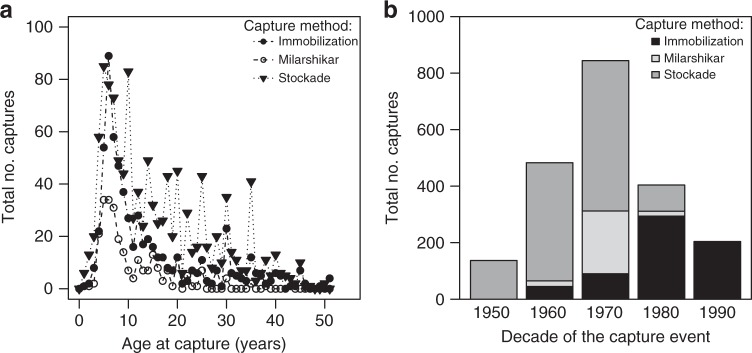
Wild-capture of numerous species is common for diverse purposes, including medical experiments, conservation, veterinary interventions and research, but little objective data exists on its consequences. We use exceptional demographic records on Asian elephants from timber camps in Myanmar to investigate the long-term consequences of wild-capture during 1951-2000 on their mortality (N = 5150). We show that captured elephants have increased mortality compared to captive-born elephants, regardless of their capture method. These detrimental effects of capture are similar for both sexes but differ substantially according to age. Elephants captured and tamed at older ages show a higher increase in mortality after capture than elephants captured and tamed young. Moreover, the increased mortality risk following capture and taming is still perceived several years after capture. Our results are timely given the continued capture of elephants and other wild animals to supplement captive populations despite the alarming declines of wild populations globally.
野生动物的大量捕获是为了多种目的,包括医学实验、保护、兽医干预和研究,但关于其后果的客观数据很少。我们利用缅甸木材营中关于亚洲象的特殊人口记录,来调查 1951-2000 年期间野生动物捕获对其死亡率(N=5150)的长期后果。我们表明,与圈养出生的大象相比,被捕猎的大象的死亡率更高,无论其捕获方法如何。这种捕获的不利影响对雌雄大象都是相似的,但根据年龄有很大的不同。年龄较大时被捕猎和驯化的大象在被捕猎和驯化后死亡率增加更高。此外,在被捕猎和驯化后的几年内,仍能察觉到死亡率风险增加。考虑到尽管全球野生动物数量急剧下降,但仍在继续捕获大象和其他野生动物来补充圈养种群,我们的研究结果是及时的。