Department of Clinical Pharmacology and Therapeutics, Seoul National University College of Medicine and Hospital, Seoul, Korea.
Department of Clinical Pharmacology and Therapeutics, Seoul National University College of Medicine and Bundang Hospital, Seongnam, Korea.
Sci Rep. 2018 Aug 8;8(1):11874. doi: 10.1038/s41598-018-30349-1.
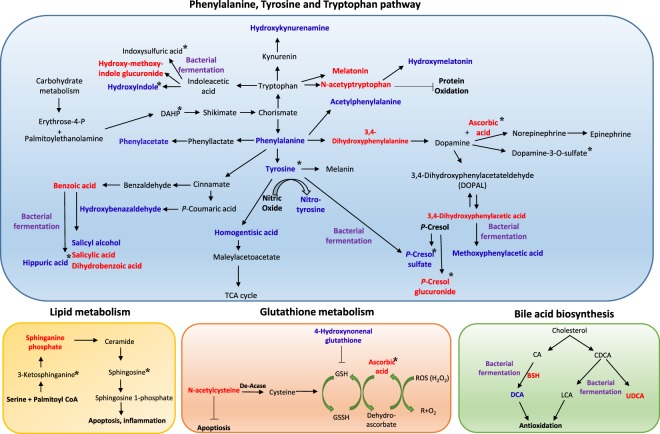
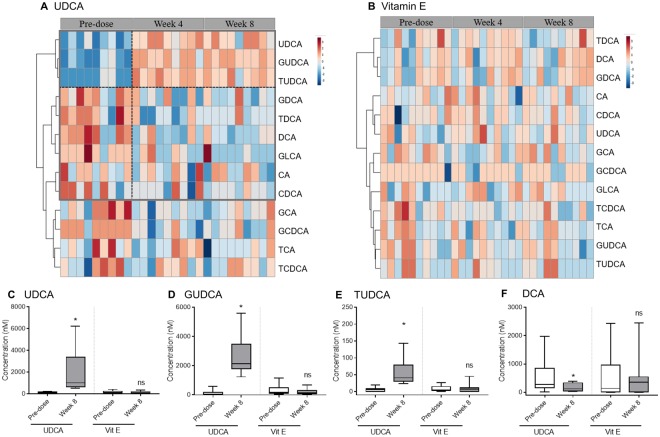
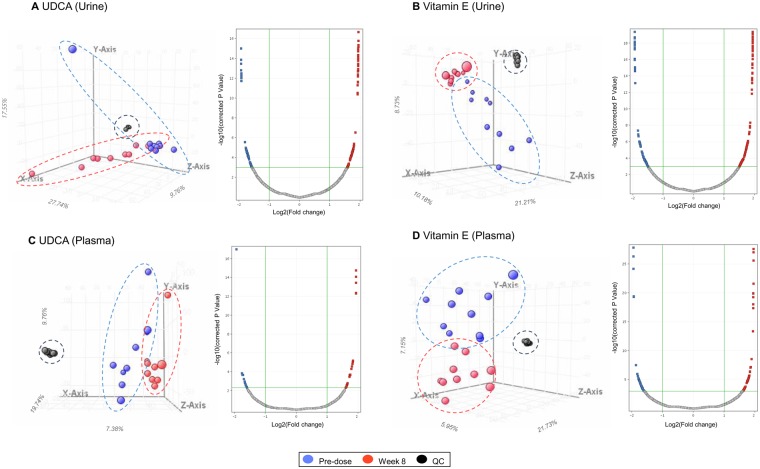
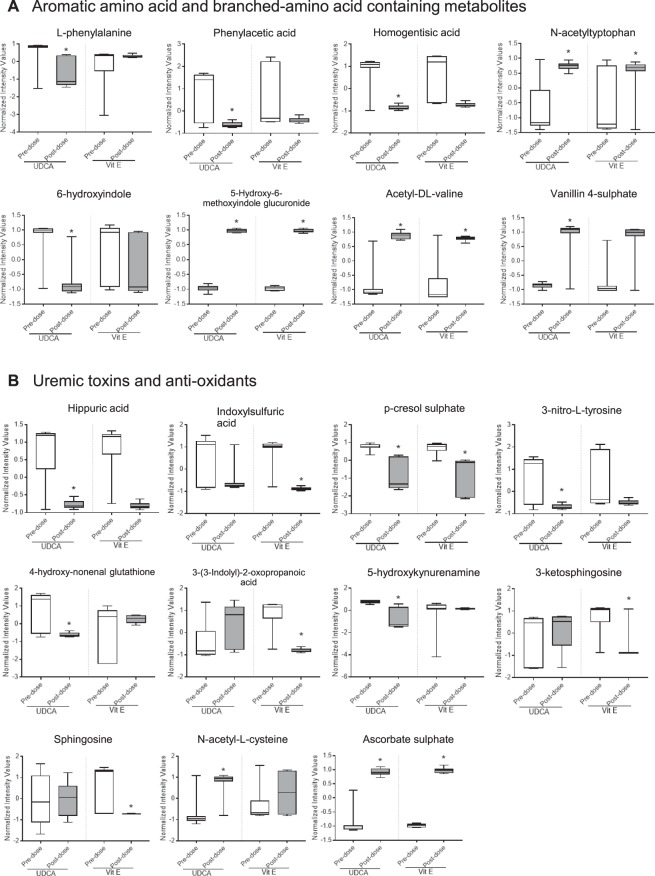
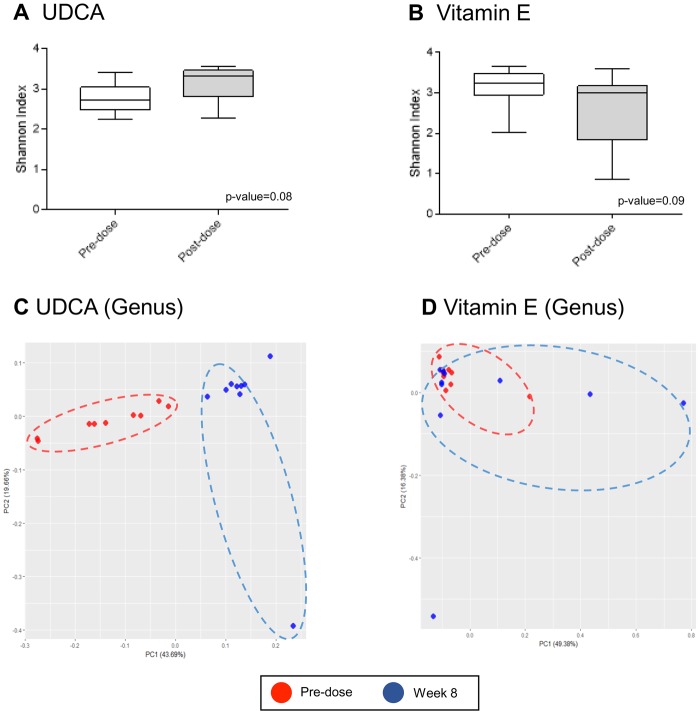
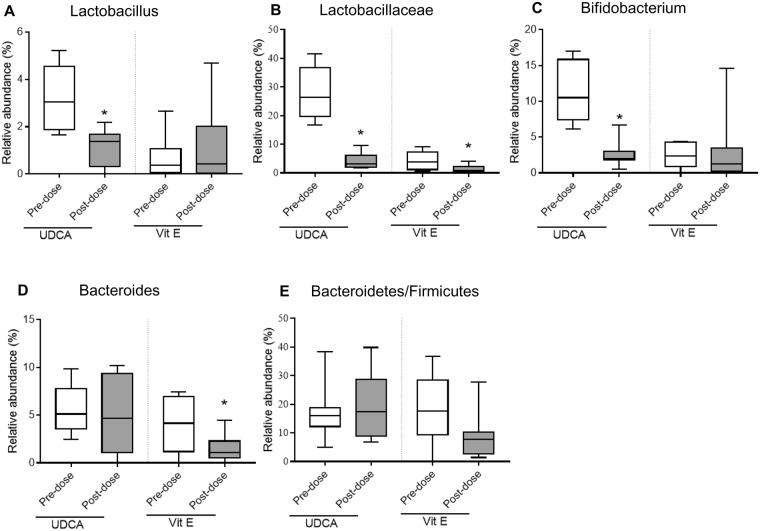
Ursodeoxycholic acid (UDCA) is a metabolic by-product of intestinal bacteria, showing hepatoprotective effects. However, its underlying molecular mechanisms remain unclear. The purpose of this study was to elucidate the action mechanisms underlying the protective effects of UDCA and vitamin E against liver dysfunction using metabolomics and metagenomic analysis. In this study, we analysed blood and urine samples from patients with obesity and liver dysfunction. Nine patients were randomly assigned to receive UDCA (300 mg twice daily), and 10 subjects received vitamin E (400 IU twice daily) for 8 weeks. UDCA significantly improved the liver function scores after 4 weeks of treatment and effectively reduced hepatic deoxycholic acid and serum microRNA-122 levels. To better understand its protective mechanism, a global metabolomics study was conducted, and we found that UDCA regulated uremic toxins (hippuric acid, p-cresol sulphate, and indole-derived metabolites), antioxidants (ascorbate sulphate and N-acetyl-L-cysteine), and the phenylalanine/tyrosine pathway. Furthermore, microbiome involvement, particularly of Lactobacillus and Bifidobacterium, was demonstrated through metagenomic analysis of bacteria-derived extracellular vesicles. Meanwhile, vitamin E treatment did not result in such alterations, except that it reduced uremic toxins and liver dysfunction. Our findings suggested that both treatments were effective in improving liver function, albeit via different mechanisms.
熊去氧胆酸 (UDCA) 是肠道细菌的代谢副产物,具有肝脏保护作用。但其潜在的分子机制尚不清楚。本研究旨在通过代谢组学和宏基因组分析阐明 UDCA 和维生素 E 对肝功能障碍的保护作用的作用机制。在这项研究中,我们分析了肥胖和肝功能障碍患者的血液和尿液样本。将 9 名患者随机分为 UDCA 组(每天 300mg,分两次服用),10 名患者接受维生素 E 治疗(每天 400IU,分两次服用),疗程为 8 周。UDCA 治疗 4 周后可显著改善肝功能评分,并有效降低肝脱氧胆酸和血清 microRNA-122 水平。为了更好地了解其保护机制,我们进行了一项全局代谢组学研究,发现 UDCA 可调节尿毒症毒素(马尿酸、对甲酚硫酸盐和吲哚衍生代谢物)、抗氧化剂(硫酸抗坏血酸和 N-乙酰-L-半胱氨酸)和苯丙氨酸/酪氨酸途径。此外,通过细菌衍生的细胞外囊泡的宏基因组分析,证明了微生物组的参与,特别是乳杆菌属和双歧杆菌属的参与。同时,维生素 E 治疗除了降低尿毒症毒素和肝功能障碍外,并没有产生这样的改变。我们的研究结果表明,两种治疗方法都有效改善肝功能,尽管作用机制不同。