Li Bo, Zheng Feng, Chauvin Jean-Philippe R, Pratt Derek A
Department of Chemistry and Biomolecular Sciences , University of Ottawa , 10 Marie Curie Pvt. , Ottawa , Ontario , Canada . Email:
Chem Sci. 2015 Nov 1;6(11):6165-6178. doi: 10.1039/c5sc02270c. Epub 2015 Jul 29.
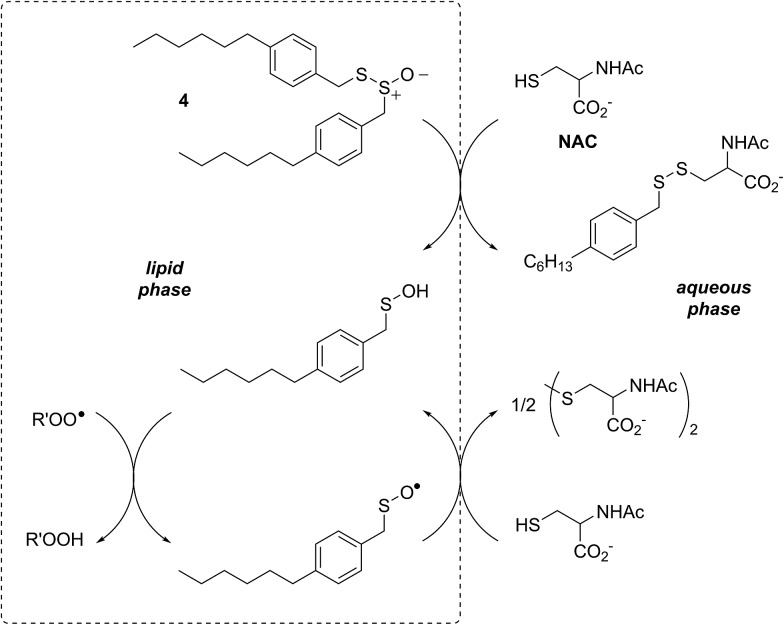
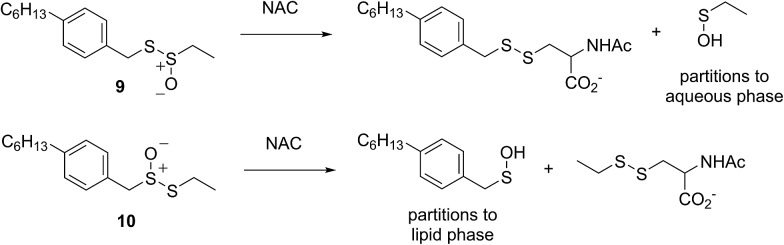
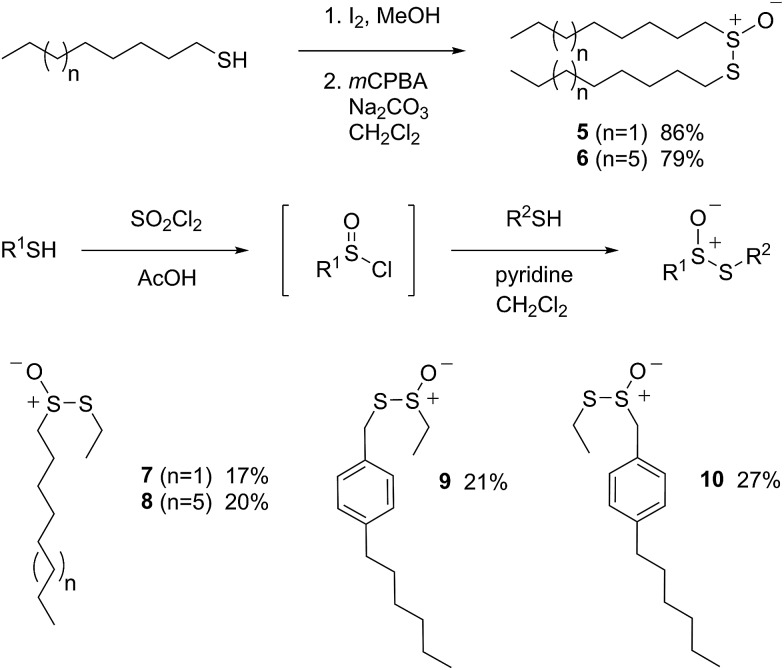
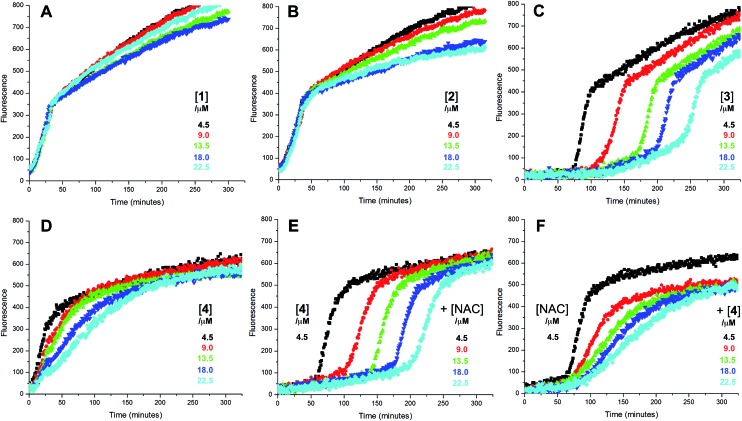
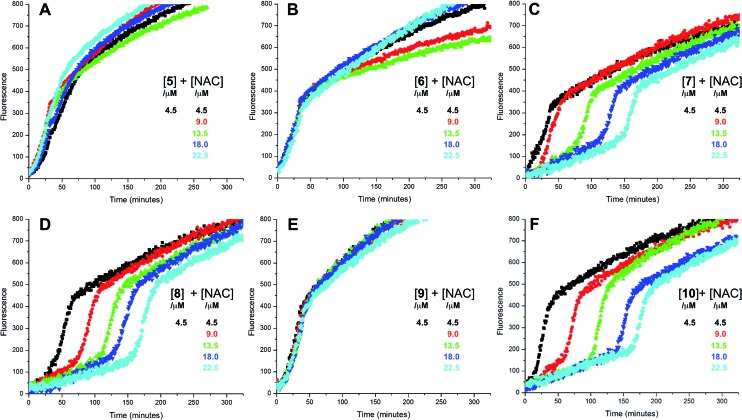
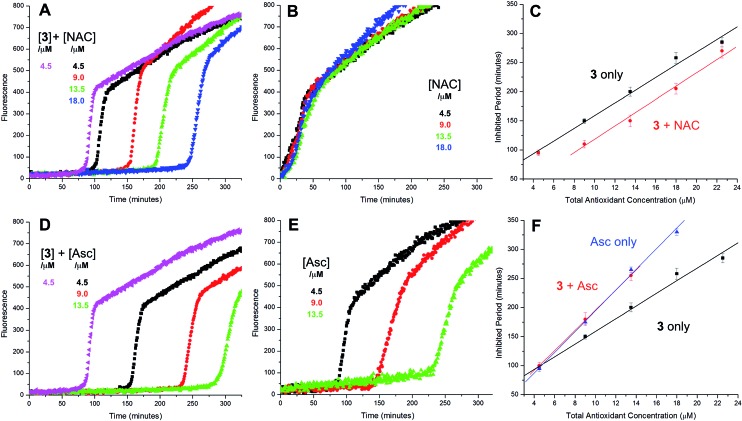
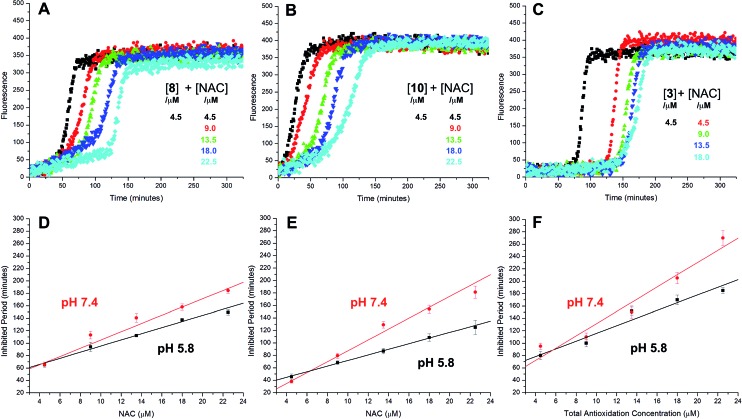
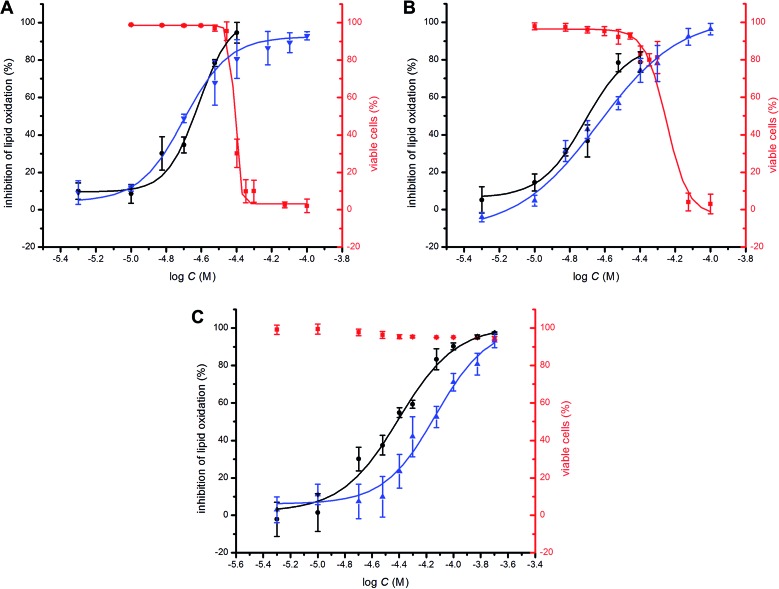
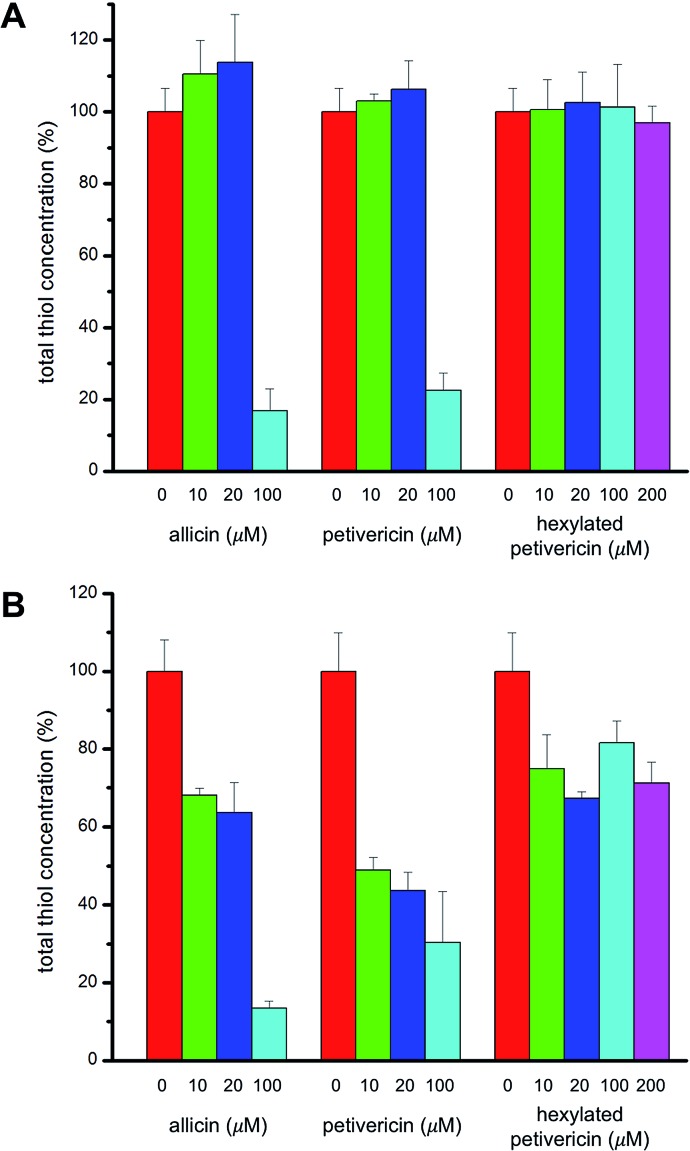
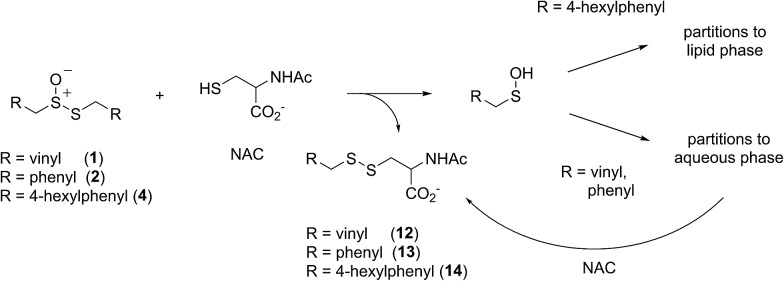
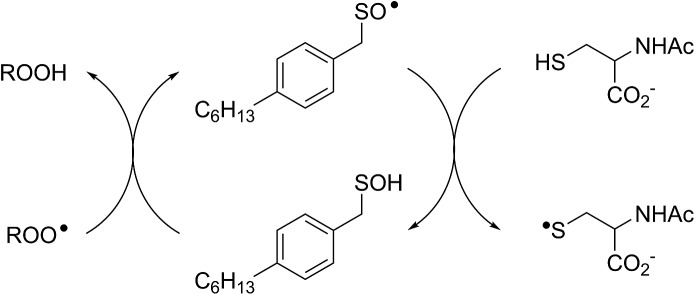
The radical-trapping antioxidant (RTA) activities of allicin and petivericin, thiosulfinates widely believed responsible for the medicinal properties of garlic and , were determined in phosphatidylcholine lipid bilayers. The results indicate that both compounds are surprisingly ineffective, in sharp contrast with previous studies in organic solution which showed that they undergo facile Cope elimination to produce sulfenic acids - potent radical-trapping agents. In an effort to understand the medium dependence of this activity, a more lipophilic (hexylated) analog of petivericin was synthesized and shown to be among the most effective RTAs known, but only in the presence of a hydrophilic thiol (-acetylcysteine). Additional symmetric and unsymmetric thiosulfinates were synthesized to shed light on the structural features that underlie this reactivity. These studies reveal that amphiphilic thiosulfinates which undergo -thiolation with a hydrophilic thiol to give lipophilic sulfenic acids are required, and that an activated methylene group - key to promote Cope elimination - is not. Interestingly, the added thiol was also found to regenerate the sulfenic acid following its reaction with peroxyl radicals. This activity was diminished at more acidic pH, suggesting that it occurs by electron transfer from the thiolate. Allicin, petivericin and hexylated petivericin were assayed as inhibitors of lipid peroxidation in human TF1a erythroblasts and HEK-293 kidney cells, revealing similar efficacies in the low μM range - the same range in which allicin and petivericin were found to induce cell death concomitant with, or as a result of, glutathione (GSH) depletion. In contrast, hexylated petivericin was not cytotoxic throughout the concentration range assayed, and had no effect on GSH levels. Taken together, the results in lipid bilayers and in cell culture suggest that the greater lipophilicity of hexylated petivericin enables it to partition to membranous cell compartments where it forms a lipid-soluble sulfenic acid that traps peroxyl radicals, whereas allicin and petivericin partition to the cytosol where they deplete GSH and induce cell death.
在磷脂酰胆碱脂质双层中测定了大蒜素和瓣蕊唐松草素(人们普遍认为这两种硫代亚磺酸盐具有大蒜的药用特性)的自由基捕获抗氧化剂(RTA)活性。结果表明,这两种化合物的效果出人意料地差,这与之前在有机溶液中的研究形成了鲜明对比,之前的研究表明它们能轻易地进行柯普消除反应生成亚磺酸——强效的自由基捕获剂。为了理解这种活性对介质的依赖性,合成了一种亲脂性更强(己基化)的瓣蕊唐松草素类似物,结果表明它是已知最有效的RTA之一,但前提是存在亲水性硫醇(N - 乙酰半胱氨酸)。还合成了其他对称和不对称的硫代亚磺酸盐,以阐明这种反应性背后的结构特征。这些研究表明,需要两亲性硫代亚磺酸盐与亲水性硫醇发生α - 硫醇化反应生成亲脂性亚磺酸,而促进柯普消除反应的关键活性亚甲基并非必需。有趣的是,还发现添加的硫醇在与过氧自由基反应后能使亚磺酸再生。在酸性更强的pH条件下,这种活性会降低,这表明它是通过硫醇盐的电子转移发生的。对大蒜素、瓣蕊唐松草素和己基化瓣蕊唐松草素在人TF1a成红细胞和HEK - 293肾细胞中作为脂质过氧化抑制剂进行了测定,结果显示在低 microM范围内它们具有相似的功效——在这个浓度范围内,大蒜素和瓣蕊唐松草素会导致细胞死亡,同时或由于谷胱甘肽(GSH)耗竭。相比之下,己基化瓣蕊唐松草素在整个测定浓度范围内均无细胞毒性,且对GSH水平没有影响。综合来看,脂质双层和细胞培养的结果表明,己基化瓣蕊唐松草素更强的亲脂性使其能够分配到膜性细胞区室,在那里形成一种脂溶性亚磺酸来捕获过氧自由基,而大蒜素和瓣蕊唐松草素则分配到细胞质中,在那里它们会消耗GSH并诱导细胞死亡。