Ng M, Privalsky M L
J Virol. 1986 May;58(2):542-53. doi: 10.1128/JVI.58.2.542-553.1986.
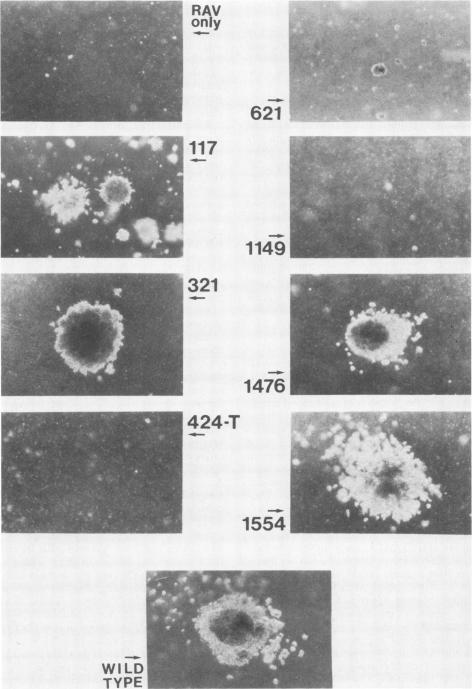
Avian erythroblastosis virus (AEV) induces erythroblastosis and fibrosarcomas. The viral erbB protein is required for AEV-mediated oncogenesis. To explore the structural aspects of the v-erbB polypeptide necessary for its oncogenic function, we created a series of small in-frame insertions in different domains of the v-erbB oncogene. AEV genomes bearing lesions within the v-erbB kinase domain demonstrated a drastically decreased ability to transform avian fibroblasts, establishing a functional role for this structurally conserved oncogene domain. In contrast, mutations in the extracellular domain, between the transmembrane region and the kinase domain, or at the extreme C terminus of the v-erbB protein had no effect on AEV-mediated fibroblast transformation. One lesion within the v-erbB kinase domain, a 10-amino acid insertion, produced a temperature-sensitive mutant capable of fibroblast transformation at 36 degrees C but not at 41 degrees C, suggesting that small in-frame insertions have general utility for the in vitro creation of conditional mutants.
禽成红细胞增多症病毒(AEV)可诱发成红细胞增多症和纤维肉瘤。病毒erbB蛋白是AEV介导的肿瘤发生所必需的。为了探究v-erbB多肽致癌功能所必需的结构方面,我们在v-erbB癌基因的不同结构域中创建了一系列小的读框内插入。在v-erbB激酶结构域内带有损伤的AEV基因组显示出转化禽成纤维细胞的能力大幅下降,确立了这个结构保守的癌基因结构域的功能作用。相比之下,v-erbB蛋白的细胞外结构域、跨膜区域与激酶结构域之间或极端C末端的突变对AEV介导的成纤维细胞转化没有影响。v-erbB激酶结构域内的一个损伤,即一个10个氨基酸的插入,产生了一个温度敏感突变体,该突变体在36摄氏度时能够转化成纤维细胞,但在41摄氏度时则不能,这表明读框内小插入对于体外创建条件性突变体具有普遍用途。