Department of Economics, University of Minnesota, Minneapolis, Minnesota, United States of America.
National Institute of Public Finance and Policy, Delhi, India.
PLoS One. 2018 Aug 13;13(8):e0200371. doi: 10.1371/journal.pone.0200371. eCollection 2018.
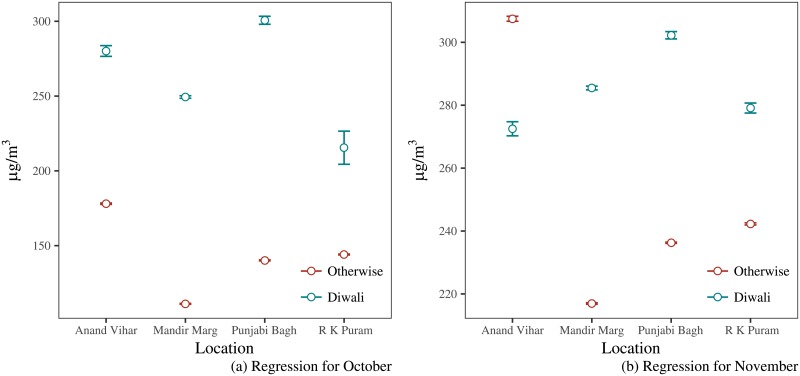
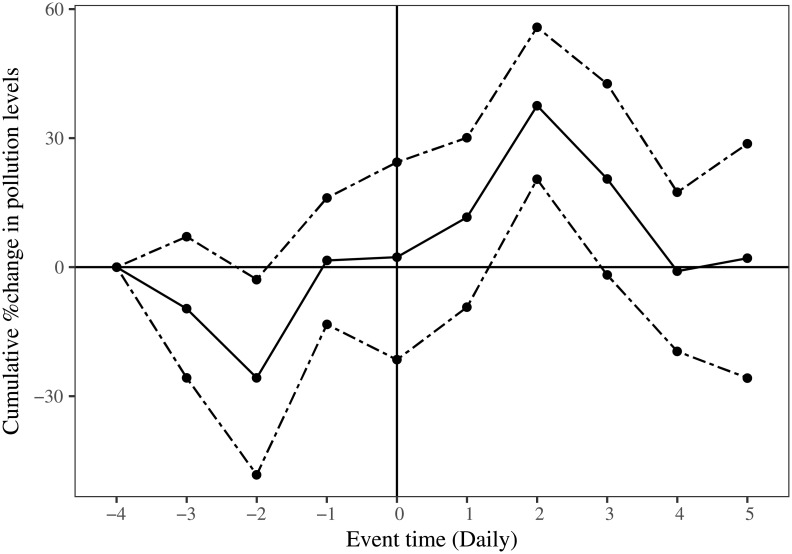
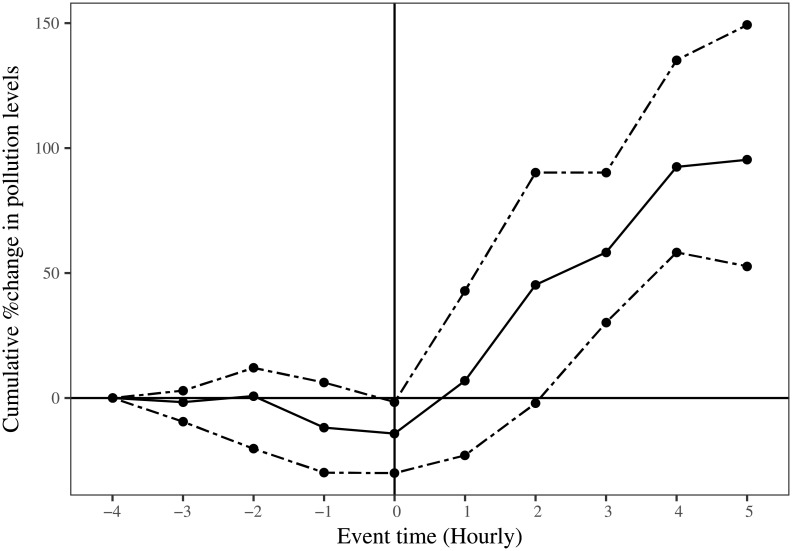
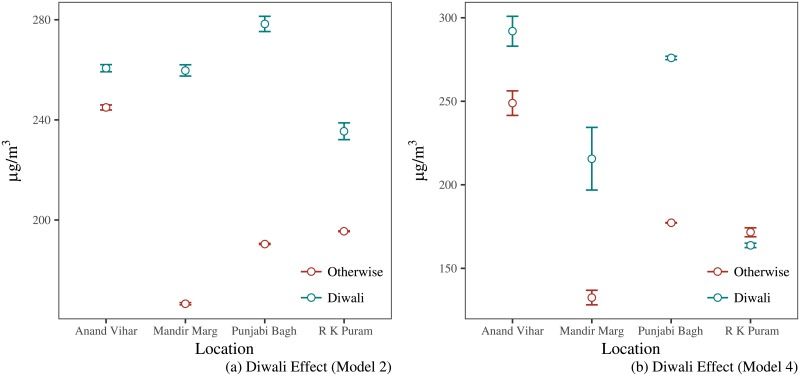
Delhi has had the distinction of being one of the most polluted cities in the world, especially in the winter months from October-January. These months coincide with the religious festival of Diwali. It is argued that air quality gets worse in the aftermath of Diwali on account of firecrackers that get burned during the festival. We use hourly data on PM 2.5 particulate concentration from 2013 to 2017 to estimate the Diwali effect on air quality in Delhi. We improve on existing work by using the event study technique as well as a difference-in-difference regression framework to estimate the Diwali effect on air quality. The results suggest that Diwali leads to a small, but statistically significant increase in air pollution. The effect is different across locations within Delhi. To our knowledge, this is the first causal estimate of the contribution of Diwali firecracker burning to air pollution.
德里一直是世界上污染最严重的城市之一,尤其是在 10 月至 1 月的冬季。这些月份恰逢印度教的排灯节。有人认为,排灯节后空气质量会恶化,原因是节日期间燃烧的鞭炮会产生烟雾。我们使用 2013 年至 2017 年每小时的 PM2.5 颗粒物浓度数据,来估算排灯节对德里空气质量的影响。我们采用事件研究技术和差分法回归框架来改进现有工作,以估算排灯节对空气质量的影响。结果表明,排灯节导致空气污染略有增加,但具有统计学意义。这种影响在德里的不同地区有所不同。据我们所知,这是首次对排灯节鞭炮燃烧对空气污染的贡献进行因果估计。