Benioff Children's Hospital, Microbial Pathogenesis and Host Defense Program, University of California, San Francisco, San Francisco, California, USA.
Department of Biology, Xavier University, Cincinnati, Ohio, USA.
Infect Immun. 2018 Oct 25;86(11). doi: 10.1128/IAI.00397-18. Print 2018 Nov.
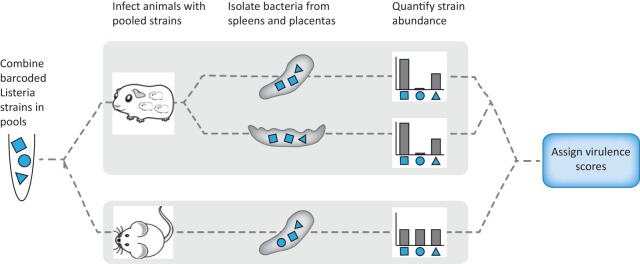
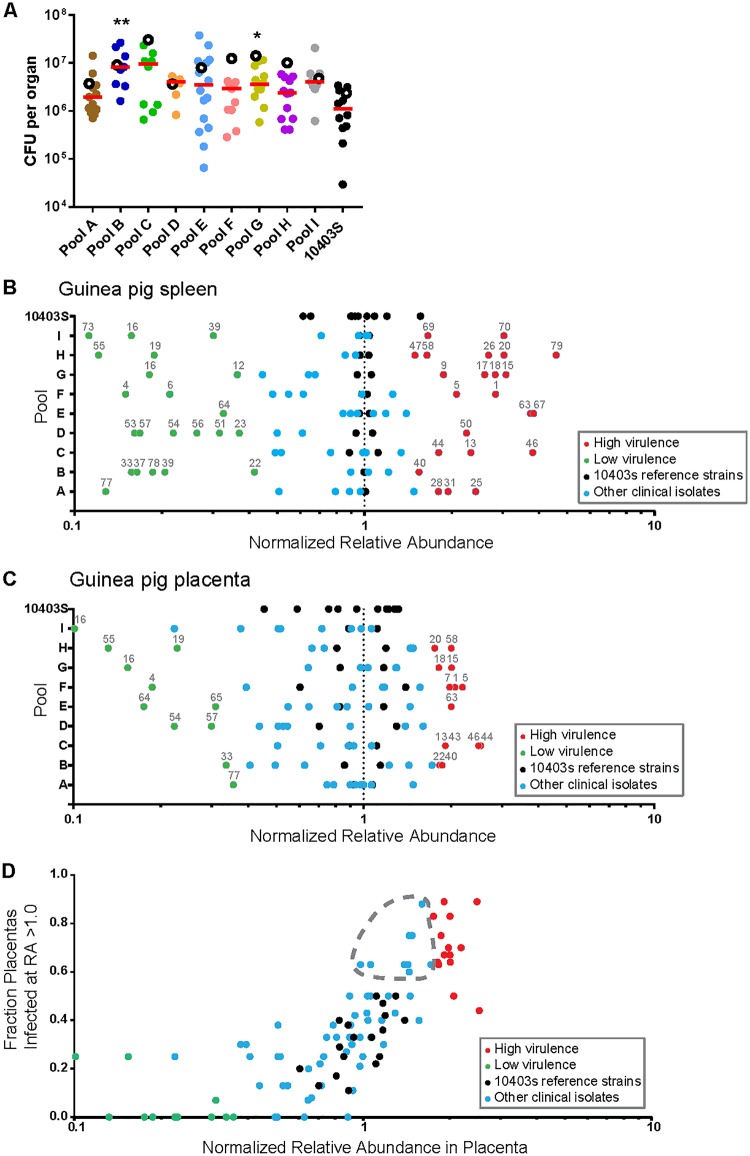
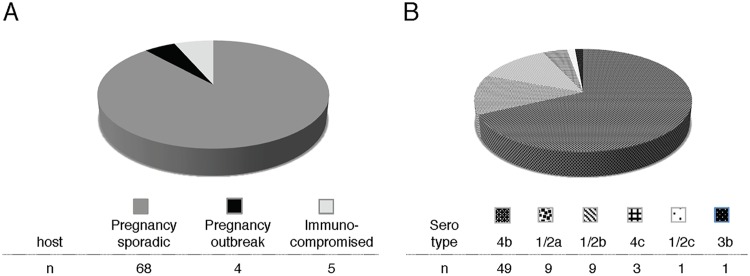
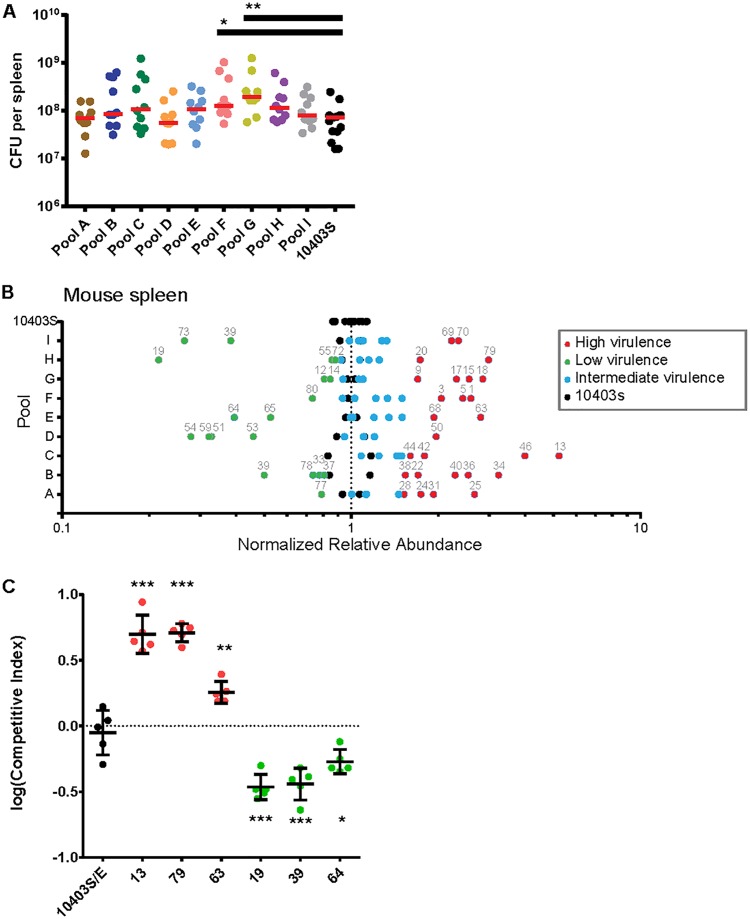
is a foodborne pathogen that infects the placenta and can cause pregnancy complications. Listeriosis usually occurs as a sporadic infection, but large outbreaks are also reported. Virulence from clinical isolates is rarely analyzed due to the large number of animals required, but this knowledge could help guide the response to an outbreak. We implemented a DNA barcode system using signature tags that allowed us to efficiently assay variations in virulence across a large number of isolates. We tested 77 signature-tagged clones of clinical strains from 72 infected human placentas and 5 immunocompromised patients, all of which were isolated since 2000. These strains were tested for virulence in a modified competition assay in comparison to that of the laboratory strain 10403S. We used two models of listeriosis: the nonpregnant mouse and the pregnant guinea pig. Strains that were frequently found at a high abundance within infected organs were considered hypervirulent, while strains frequently found at a low abundance were considered hypovirulent. Virulence split relatively evenly among hypovirulent strains, hypervirulent strains, and strains as virulent as 10403S. The laboratory strain was found to have an intermediate virulence phenotype, supporting its suitability for use in pathogenesis studies. Further, we found that splenic virulence and placental virulence are closely linked in both the guinea pig and mouse models. This suggests that outbreak and sporadic pregnancy-associated strains are not generally more virulent than lab reference strains. However, some strains did show consistent and reproducible virulence differences, suggesting that their further study may reveal deeper insights into the biological underpinnings of listeriosis.
李斯特菌是一种食源性病原体,可感染胎盘并导致妊娠并发症。李斯特菌病通常是散发性感染,但也有大规模暴发的报道。由于需要大量动物,因此很少对临床分离株的毒力进行分析,但这些知识可以帮助指导对暴发的应对。我们实施了一种 DNA 条码系统,使用特征标签,使我们能够有效地检测大量分离株的毒力变异。我们测试了 72 例感染人类胎盘和 5 例免疫功能低下患者的临床分离株的 77 个特征标记克隆,这些分离株均在 2000 年以后分离得到。在与实验室菌株 10403S 的比较中,我们在改良的竞争测定中测试了这些菌株的毒力。我们使用非妊娠小鼠和妊娠豚鼠两种李斯特菌病模型。在感染器官中大量频繁发现的菌株被认为是高毒力的,而大量低频率发现的菌株被认为是低毒力的。毒力在低毒力菌株、高毒力菌株和与 10403S 毒力相当的菌株之间相对平均分布。实验室菌株被发现具有中等毒力表型,支持其在发病机制研究中的适用性。此外,我们发现豚鼠和小鼠模型中脾脏毒力和胎盘毒力密切相关。这表明暴发和散发性妊娠相关李斯特菌病菌株通常并不比实验室参考菌株更具毒力。然而,一些菌株确实表现出一致且可重复的毒力差异,这表明对其进一步研究可能会揭示李斯特菌病更深层次的生物学基础。