Ng Ka-Chon, Chaves Luis Fernando, Tsai Kun-Hsien, Chuang Ting-Wu
College of Public Health, National Taiwan University, Taipei 10055, Taiwan.
Instituto Costarricense de Investigación y Enseñanza en Nutrición y Salud (INCIENSA), Apartado Postal 4-2250, Tres Ríos, Cartago, Costa Rica.
Insects. 2018 Aug 13;9(3):98. doi: 10.3390/insects9030098.
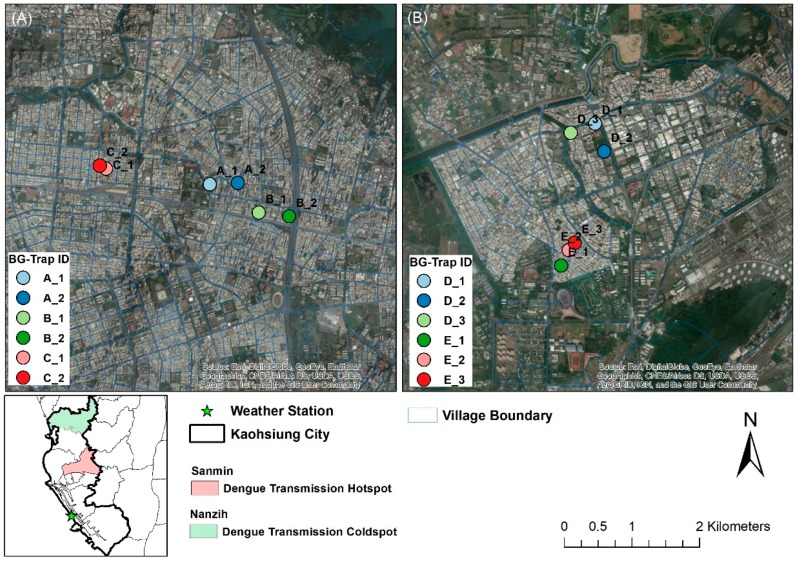
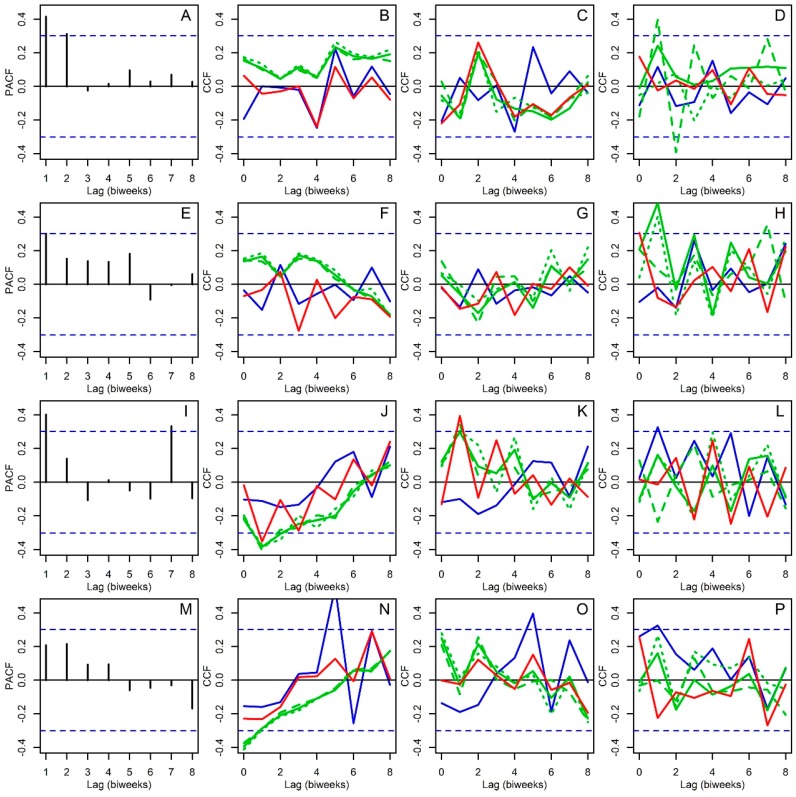
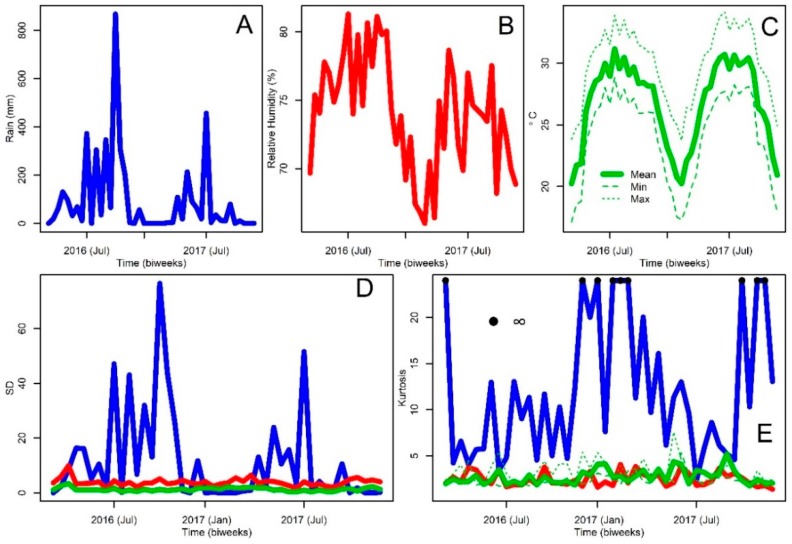
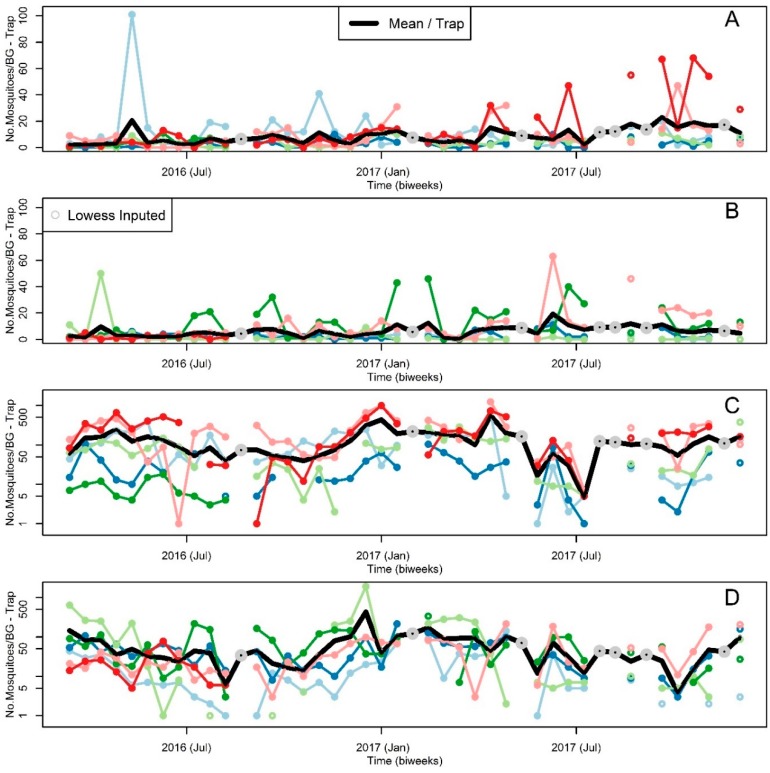
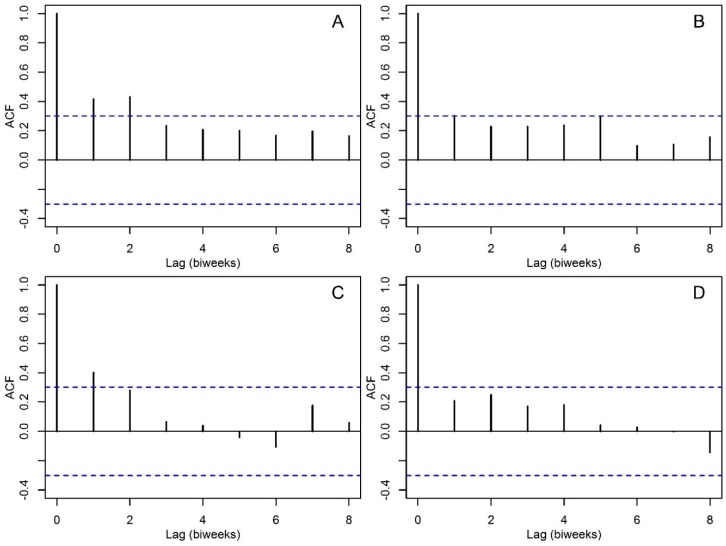
The assumption that vector abundance differences might drive spatial and temporal heterogeneities in vector-borne disease transmission is common, though data supporting it is scarce. Here, we present data from two common mosquito species (Linnaeus) and Say, biweekly sampled as adults, from March 2016 through December 2017, with BG-sentinel traps in two neighboring districts of Kaohsiung City (KC), Taiwan. One district has historically been a dengue transmission hotspot (Sanmin), and the other a coldspot (Nanzih). We collected a total 41,027 mosquitoes, and we found that average mosquito abundance (mean ± S.D.) was higher in Sanmin (: 9.03 ± 1.46; : 142.57 ± 14.38) than Nanzih (: 6.21 ± 0.47; : 63.37 ± 8.71) during the study period. In both districts, and population dynamics were sensitive to changes in temperature, the most platykurtic environmental variable at KC during the study period, a pattern predicted by Schmalhausen's law, which states that organisms are more sensitive to small changes in environmental variables whose average value is more uncertain than its extremes. Our results also suggest that differences in abundance might be responsible for spatial differences in dengue transmission at KC. Our comparative approach, where we also observed a significant increment in the abundance of in the dengue transmission hotspot, suggests this area might be more likely to experience outbreaks of other vector borne diseases and should become a primary focus for vector surveillance and control.
病媒数量差异可能导致虫媒疾病传播的空间和时间异质性,这一假设很常见,不过支持这一假设的数据却很稀少。在此,我们展示了2016年3月至2017年12月期间,在台湾高雄市(KC)两个相邻地区,使用BG-哨兵诱捕器,每两周对两种常见蚊虫(林奈蚊和赛伊蚊)成虫进行采样的数据。其中一个地区(三民)历来是登革热传播热点地区,另一个地区(楠梓)则是冷点地区。我们共采集到41,027只蚊虫,发现在研究期间,三民地区的平均蚊虫数量(均值±标准差)(林奈蚊:9.03±1.46;赛伊蚊:142.57±14.38)高于楠梓地区(林奈蚊:6.21±0.47;赛伊蚊:63.37±8.71)。在这两个地区,林奈蚊和赛伊蚊的种群动态对温度变化敏感,温度是研究期间高雄市最呈平峰态的环境变量,这一模式符合施马尔豪森定律的预测,该定律指出,生物体对环境变量的微小变化更为敏感,这些环境变量的平均值比其极值更不确定。我们的结果还表明,赛伊蚊数量的差异可能是高雄市登革热传播空间差异的原因。我们的比较方法还观察到登革热传播热点地区赛伊蚊数量显著增加,这表明该地区可能更易爆发其他虫媒疾病,应成为病媒监测和控制的主要重点。