Systems Life Sciences Laboratory, Department of Medical Life Systems, Faculty of Life and Medical Sciences, Doshisha University, Kyoto, 610-0394, Japan.
Neuropathology, Department of Life and Medical Systems, Faculty of Life and Medical Sciences, Doshisha University, Kyoto, 610-0394, Japan.
Sci Rep. 2018 Aug 13;8(1):12056. doi: 10.1038/s41598-018-30561-z.
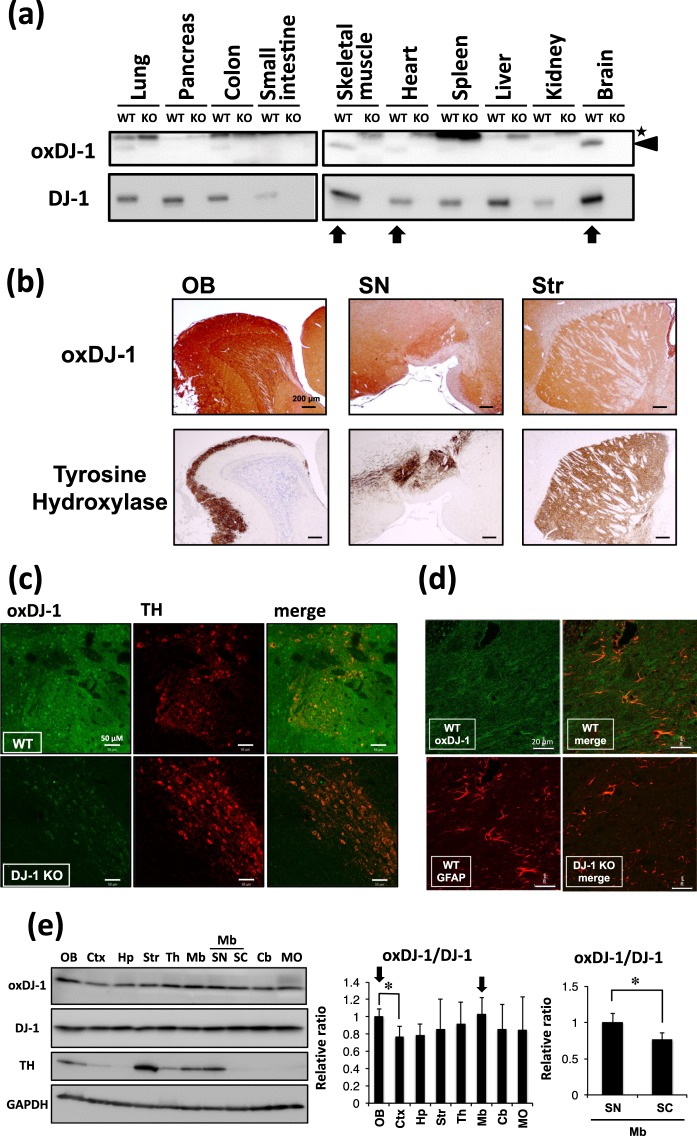
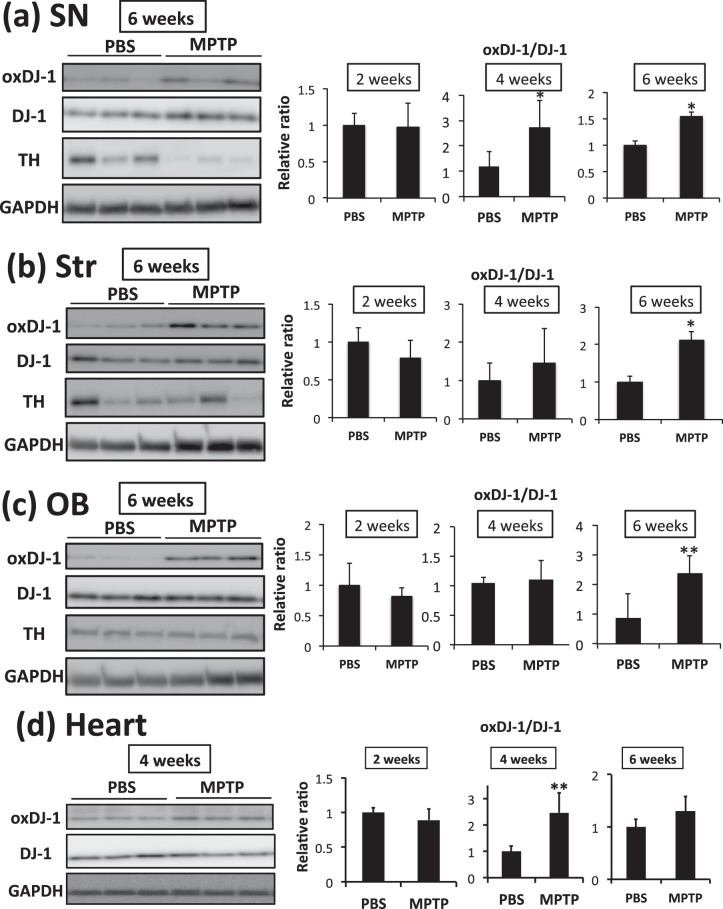
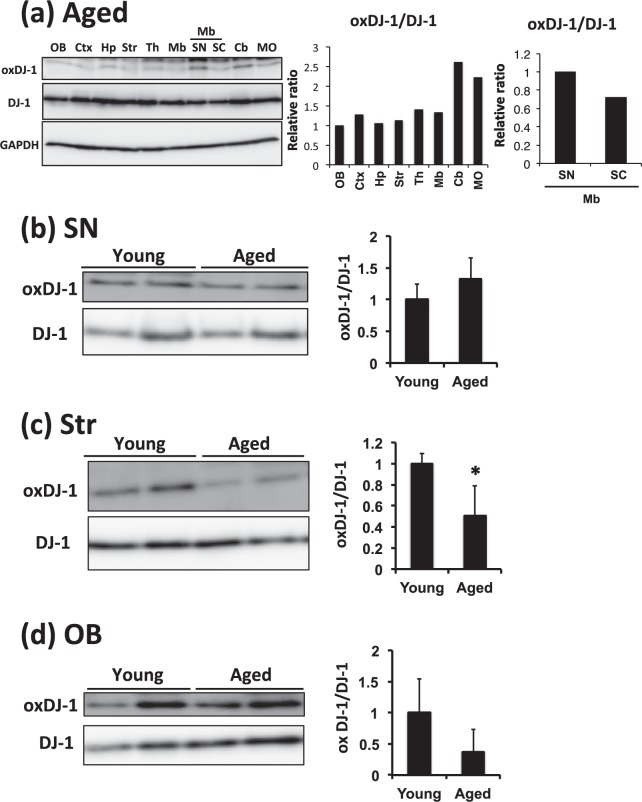
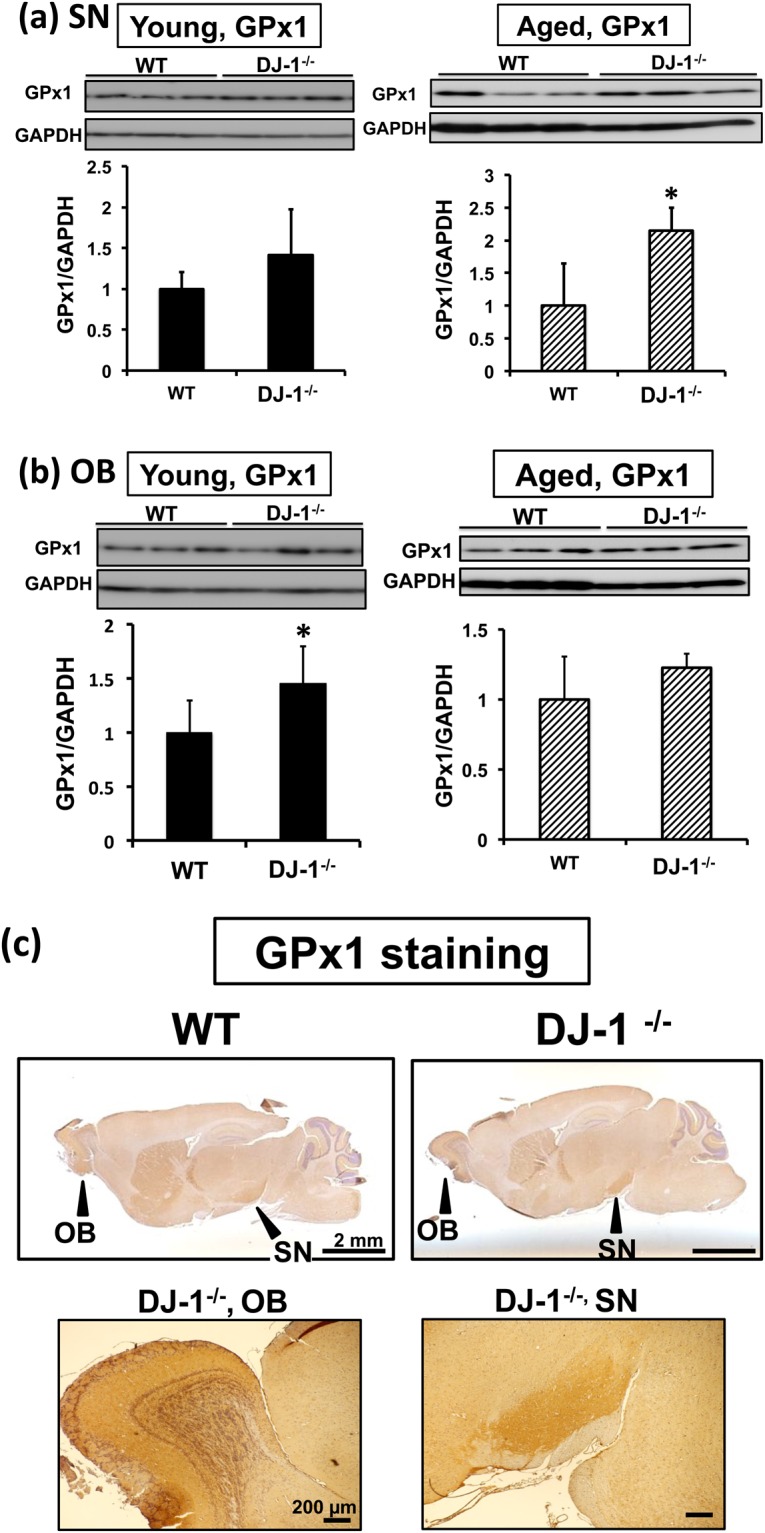
DJ-1 plays an important role in antioxidant defenses, and a reactive cysteine at position 106 (Cys106) of DJ-1, a critical residue of its biological function, is oxidized under oxidative stress. DJ-1 oxidation has been reported in patients with Parkinson's disease (PD), but the relationship between DJ-1 oxidation and PD is still unclear. In the present study using specific antibody for Cys106-oxidized DJ-1 (oxDJ-1), we analyzed oxDJ-1 levels in the brain and peripheral tissues in young and aged mice and in a mouse model of PD induced using 1-methyl-4-phenyl-1,2,3,6-tetrahydropyridine (MPTP). OxDJ-1 levels in the brain, heart, and skeletal muscle were high compared with other tissues. In the brain, oxDJ-1 was detected in PD-related brain sites such as the substantia nigra (SN) of the midbrain, olfactory bulb (OB), and striatum. In aged wild-type mice, oxDJ-1 levels in the OB, striatum, and heart tended to decrease, while those in the skeletal muscle increased significantly. Expression of dopamine-metabolizing enzymes significantly increased in the SN and OB of aged DJ-1 mice, accompanied by a complementary increase in glutathione peroxidase 1. MPTP treatment concordantly changed oxDJ-1 levels in PD-related brain sites and heart. These results indicate that the effects of physiological metabolism, aging, and neurotoxin change oxDJ-1 levels in PD-related brain sites, heart, and skeletal muscle where mitochondrial load is high, suggesting a substantial role of DJ-1 in antioxidant defenses and/or dopamine metabolism in these tissues.
DJ-1 在抗氧化防御中发挥重要作用,其生物学功能的关键残基 106 位的活性半胱氨酸(Cys106)在氧化应激下被氧化。帕金森病(PD)患者 DJ-1 氧化已被报道,但 DJ-1 氧化与 PD 的关系仍不清楚。在本研究中,我们使用针对 DJ-1 第 106 位半胱氨酸氧化(oxDJ-1)的特异性抗体,分析了年轻和老年小鼠以及使用 1-甲基-4-苯基-1,2,3,6-四氢吡啶(MPTP)诱导的 PD 小鼠模型的大脑和外周组织中的 oxDJ-1 水平。与其他组织相比,大脑、心脏和骨骼肌中的 oxDJ-1 水平较高。在大脑中,oxDJ-1 存在于与 PD 相关的脑区,如中脑的黑质(SN)、嗅球(OB)和纹状体。在老年野生型小鼠中,OB、纹状体和心脏中的 oxDJ-1 水平趋于降低,而骨骼肌中的 oxDJ-1 水平显著增加。多巴胺代谢酶的表达在老年 DJ-1 小鼠的 SN 和 OB 中显著增加,同时谷胱甘肽过氧化物酶 1 的表达也相应增加。MPTP 处理一致改变了与 PD 相关的脑区和心脏中的 oxDJ-1 水平。这些结果表明,生理代谢、衰老和神经毒素的影响改变了与 PD 相关的脑区、心脏和骨骼肌中的 oxDJ-1 水平,这些组织中线粒体负荷较高,表明 DJ-1 在这些组织的抗氧化防御和/或多巴胺代谢中发挥重要作用。