Wang Sake, Tian Hongyu, Ren Chongdan, Yu Jin, Sun Minglei
College of Science, Jinling Institute of Technology, Nanjing, Jiangsu, 211169, China.
School of Physics and Electronic Engineering, Linyi University, Linyi, Shandong, 276005, China.
Sci Rep. 2018 Aug 13;8(1):12009. doi: 10.1038/s41598-018-30614-3.
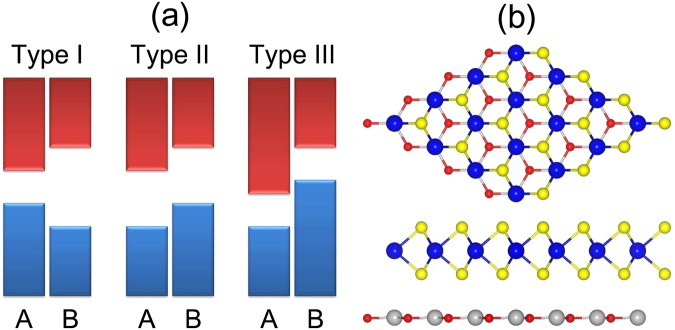
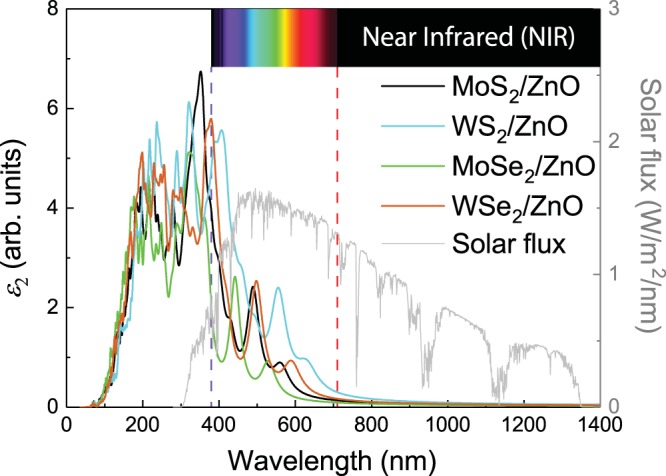
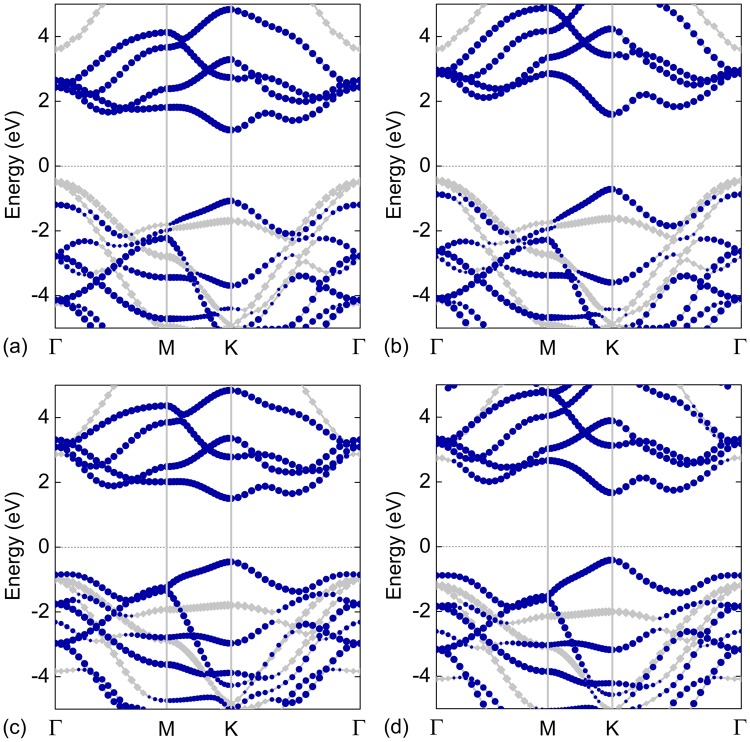
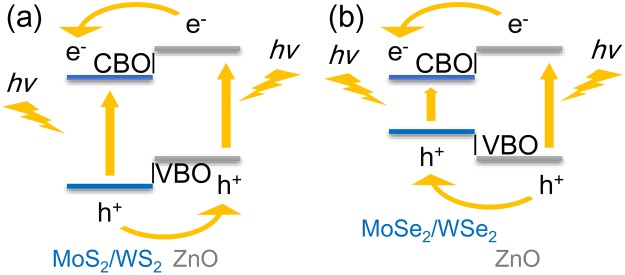
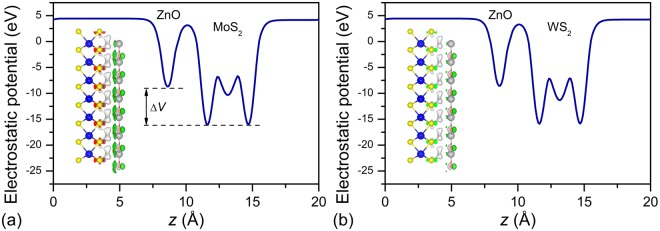
The structural, electronic, and optical properties of heterostructures formed by transition metal dichalcogenides MX (M = Mo, W; X = S, Se) and graphene-like zinc oxide (ZnO) were investigated using first-principles calculations. The interlayer interaction in all heterostructures was characterized by van der Waals forces. Type-II band alignment occurs at the MoS/ZnO and WS/ZnO interfaces, together with the large built-in electric field across the interface, suggesting effective photogenerated-charge separation. Meanwhile, type-I band alignment occurs at the MoSe/ZnO and WSe/ZnO interfaces. Moreover, all heterostructures exhibit excellent optical absorption in the visible and infrared regions, which is vital for optical applications.
采用第一性原理计算方法研究了由过渡金属二硫属化物MX(M = Mo、W;X = S、Se)和类石墨烯氧化锌(ZnO)形成的异质结构的结构、电子和光学性质。所有异质结构中的层间相互作用均由范德华力表征。在MoS/ZnO和WS/ZnO界面处出现II型能带排列,同时界面上存在较大的内建电场,表明光生电荷能有效分离。与此同时,在MoSe/ZnO和WSe/ZnO界面处出现I型能带排列。此外,所有异质结构在可见光和红外区域均表现出优异的光吸收性能,这对光学应用至关重要。