Department of Biomedical Sciences, Asan Medical Center, University of Ulsan College of Medicine, Seoul, South Korea.
Stem Cell Immunomodulation Research Center, Asan Medical Center, University of Ulsan College of Medicine, Seoul, South Korea.
Front Immunol. 2018 Jul 30;9:1790. doi: 10.3389/fimmu.2018.01790. eCollection 2018.
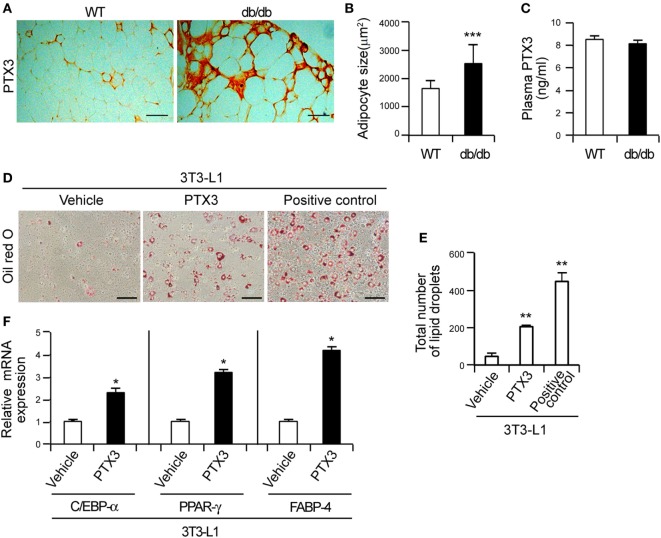
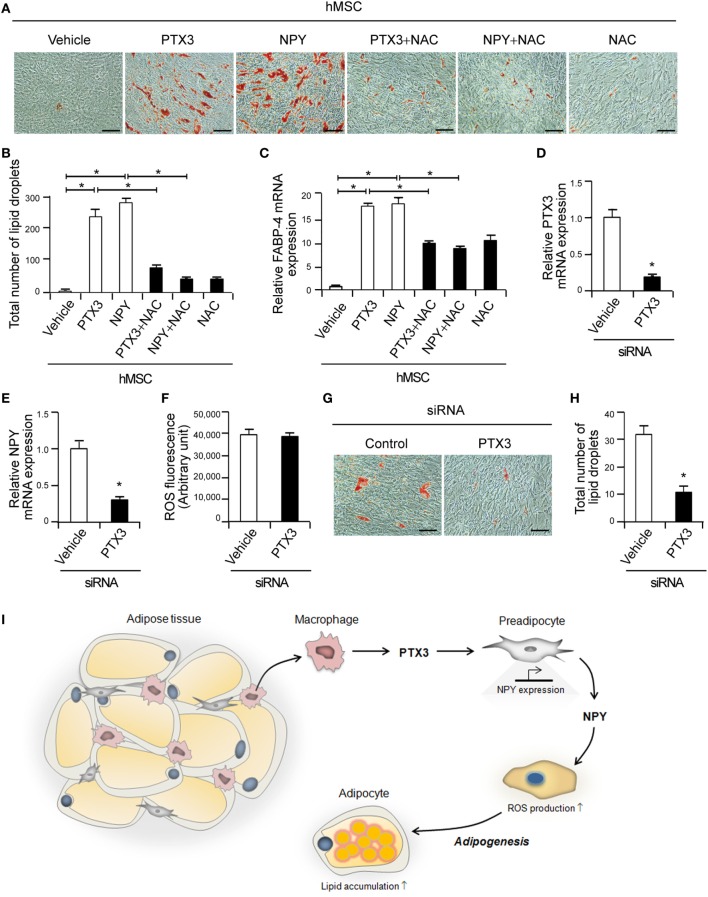
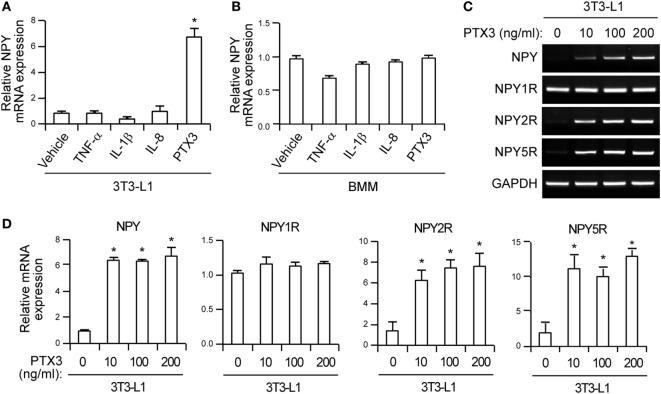
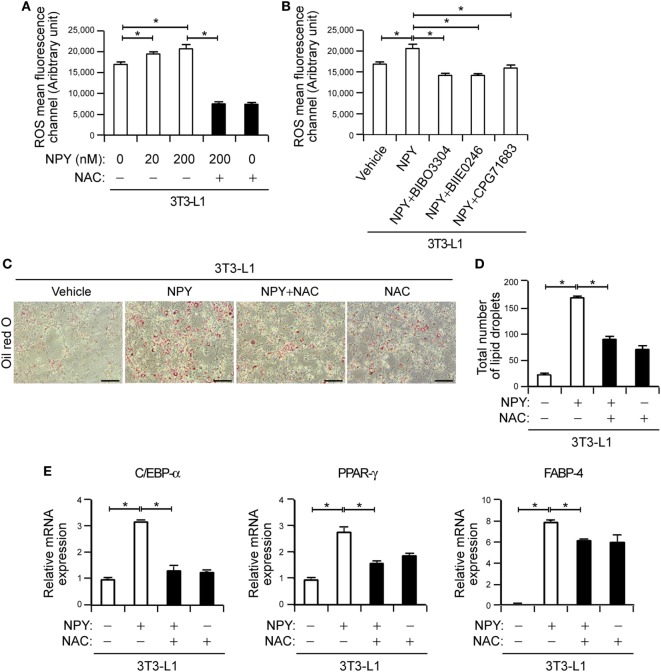
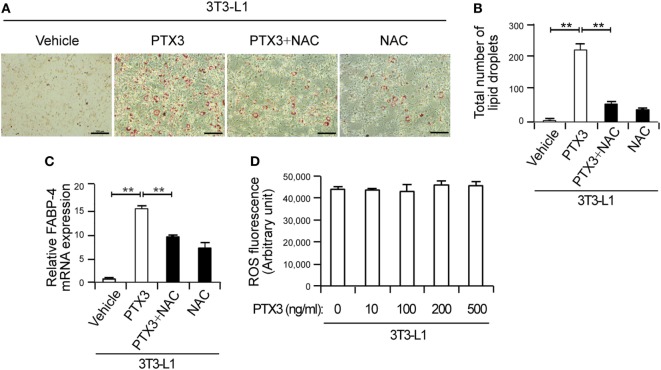
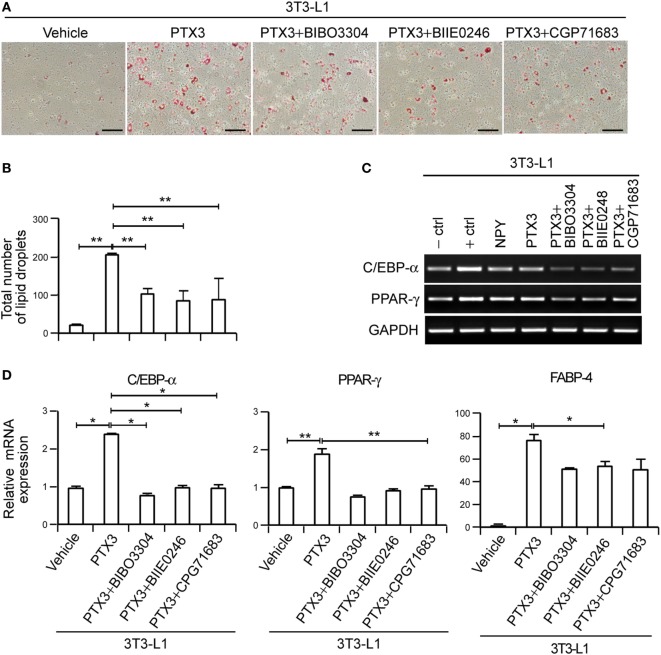
Obesity is accompanied by chronic systemic inflammation characterized by macrophage infiltration of obese tissues, an elevated plasma level of inflammatory substances, and excessive accumulation of lipids. The pro-inflammatory factor pentraxin 3 (PTX3) is also elevated in obese tissues, suggesting its potential role in adipogenesis. We found by analyzing murine preadipocyte 3T3-L1 cells, and human adipocytes derived from mesenchymal stem cells, which locally elevated PTX3 in obese adipose tissue augments adipocyte differentiation and subsequent lipid accumulation. This occurs the upregulation of adipogenesis-related transcription factors. PTX3 enhanced lipid accumulation in murine 3T3-L1 cells by upregulating the expression of neuropeptide Y (NPY)/NPY receptor (NPYR) expression in preadipocytes. Pharmacological inhibition by NPYR antagonists abolished these effects. NPY also promoted the production of reactive oxygen species (ROS), a known trigger of adipogenesis. NPYR antagonists as well as antioxidant -acetylcysteine showed anti-adipogenic effects by reducing the ROS levels, indicating that PTX3 mediates adipogenesis through NPY-dependent ROS production. These findings suggest that PTX3 plays a key role in the development of obesity by enhancing adipocyte differentiation and lipid synthesis NPY/NPYR signaling. These observations provide a mechanistic explanation for the adipogenesis mediated by PTX3.
肥胖症伴随着慢性系统性炎症,其特征是肥胖组织中巨噬细胞浸润、炎症物质血浆水平升高以及脂质过度积累。促炎因子五聚素 3(PTX3)在肥胖组织中也升高,表明其在脂肪生成中具有潜在作用。我们通过分析小鼠前体脂肪细胞 3T3-L1 细胞和源自间充质干细胞的人类脂肪细胞发现,局部升高肥胖脂肪组织中的 PTX3 会增强脂肪细胞分化和随后的脂质积累。这是通过上调与脂肪生成相关的转录因子来实现的。PTX3 通过在前脂肪细胞中上调神经肽 Y(NPY)/NPY 受体(NPYR)的表达来增强小鼠 3T3-L1 细胞中的脂质积累。NPYR 拮抗剂的药理学抑制作用消除了这些效应。NPY 还促进了活性氧(ROS)的产生,ROS 是脂肪生成的已知触发因素。NPYR 拮抗剂和抗氧化剂乙酰半胱氨酸通过降低 ROS 水平显示出抗脂肪生成作用,表明 PTX3 通过 NPY 依赖性 ROS 产生介导脂肪生成。这些发现表明,PTX3 通过增强脂肪细胞分化和脂质合成 NPY/NPYR 信号来在肥胖症的发展中发挥关键作用。这些观察结果为 PTX3 介导的脂肪生成提供了机制解释。