Zhou Ruoyu, Guo Qiaoyue, Xiao Ye, Guo Qi, Huang Yan, Li Changjun, Luo Xianghang
Department of Endocrinology, Endocrinology Research Center, Xiangya Hospital of Central South University, Changsha, Hunan, China.
Bone Res. 2021 May 20;9(1):25. doi: 10.1038/s41413-021-00142-4.
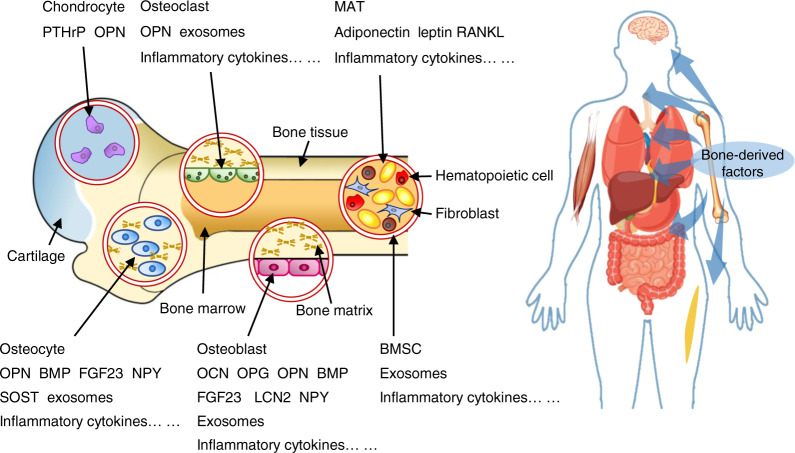
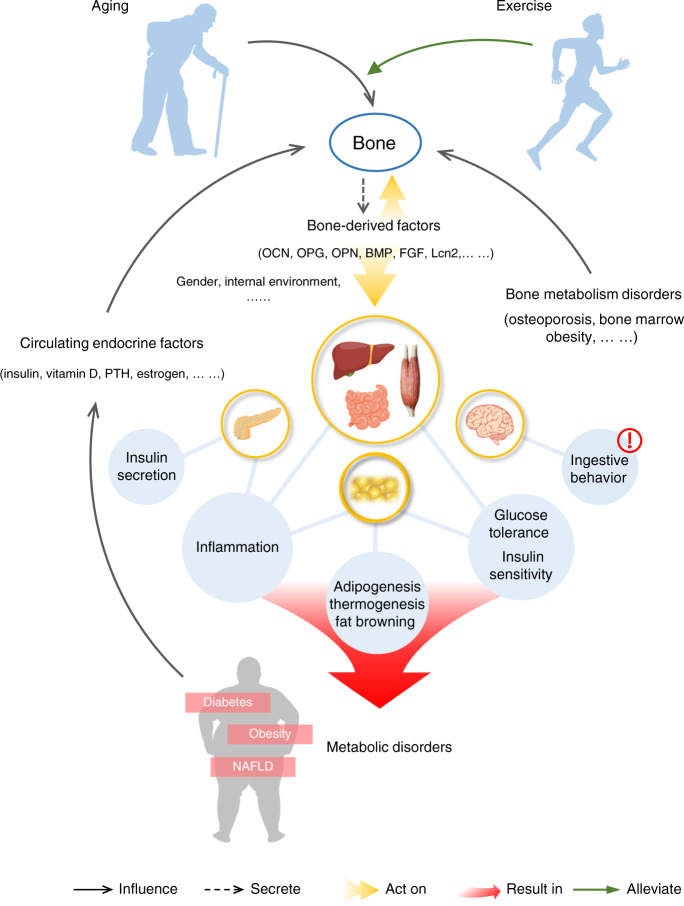
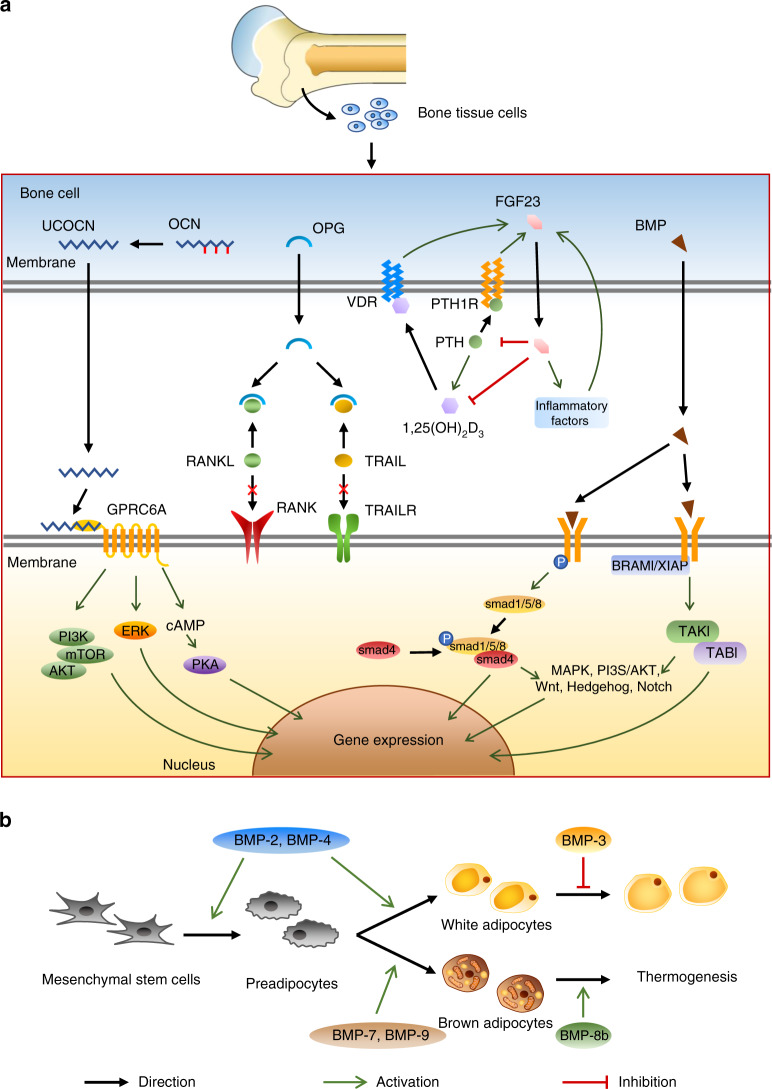
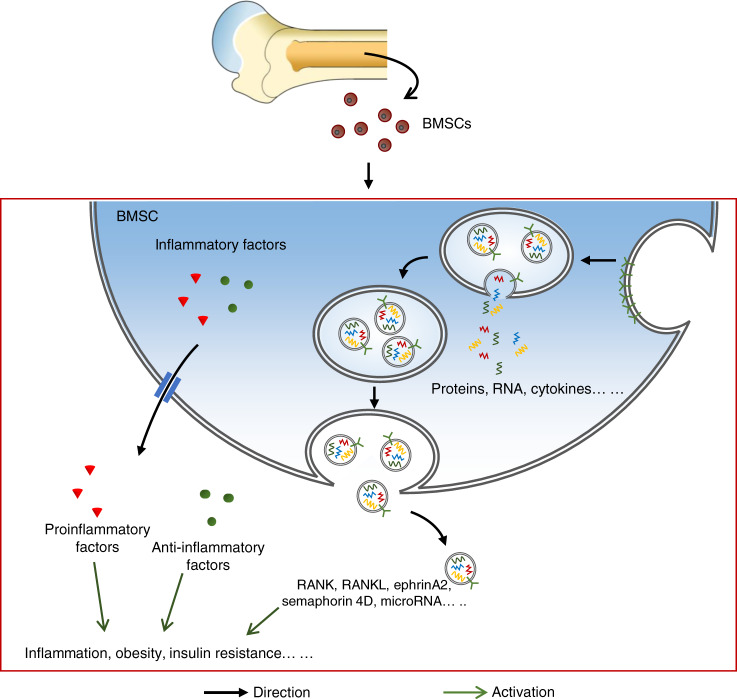
Bone mainly functions as a supportive framework for the whole body and is the major regulator of calcium homeostasis and hematopoietic function. Recently, an increasing number of studies have characterized the significance of bone as an endocrine organ, suggesting that bone-derived factors regulate local bone metabolism and metabolic functions. In addition, these factors can regulate global energy homeostasis by altering insulin sensitivity, feeding behavior, and adipocyte commitment. These findings may provide a new pathological mechanism for related metabolic diseases or be used in the diagnosis, treatment, and prevention of metabolic diseases such as osteoporosis, obesity, and diabetes mellitus. In this review, we summarize the regulatory effect of bone and bone-derived factors on energy metabolism and discuss directions for future research.
骨骼主要作为全身的支撑框架发挥作用,并且是钙稳态和造血功能的主要调节者。最近,越来越多的研究已明确骨骼作为一个内分泌器官的重要性,这表明骨源性因子可调节局部骨代谢和代谢功能。此外,这些因子可通过改变胰岛素敏感性、进食行为和脂肪细胞定向分化来调节整体能量稳态。这些发现可能为相关代谢疾病提供一种新的病理机制,或用于骨质疏松症、肥胖症和糖尿病等代谢疾病的诊断、治疗及预防。在本综述中,我们总结了骨骼及骨源性因子对能量代谢的调节作用,并讨论了未来的研究方向。