Department of Chemistry , University of Michigan , 930 N. University Avenue , Ann Arbor , Michigan 48109 , United States.
Department of Pharmacology , University of Michigan , 1150 W. Medical Center Drive , Ann Arbor , Michigan 48109 , United States.
Anal Chem. 2018 Sep 18;90(18):10943-10950. doi: 10.1021/acs.analchem.8b02468. Epub 2018 Aug 27.
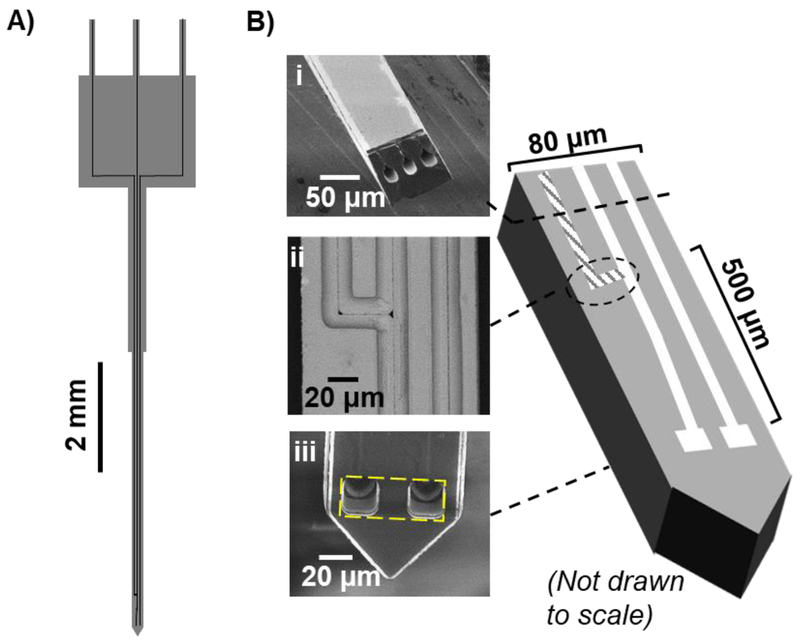
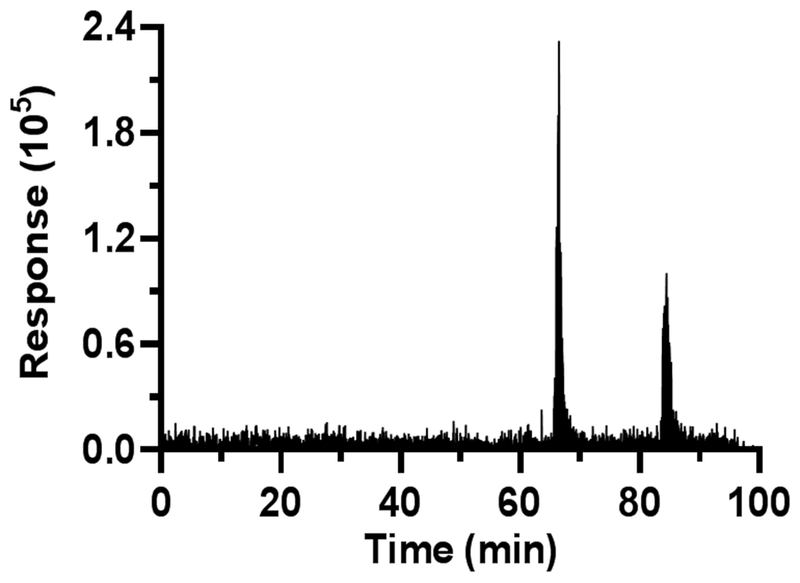
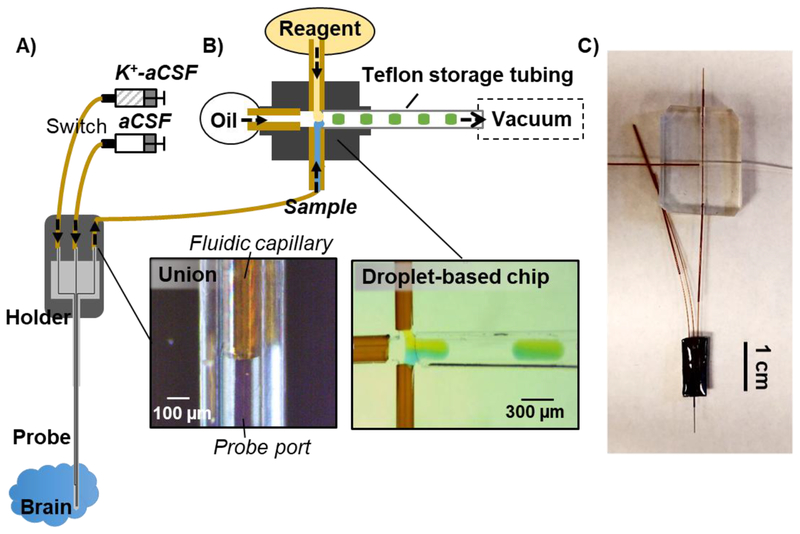
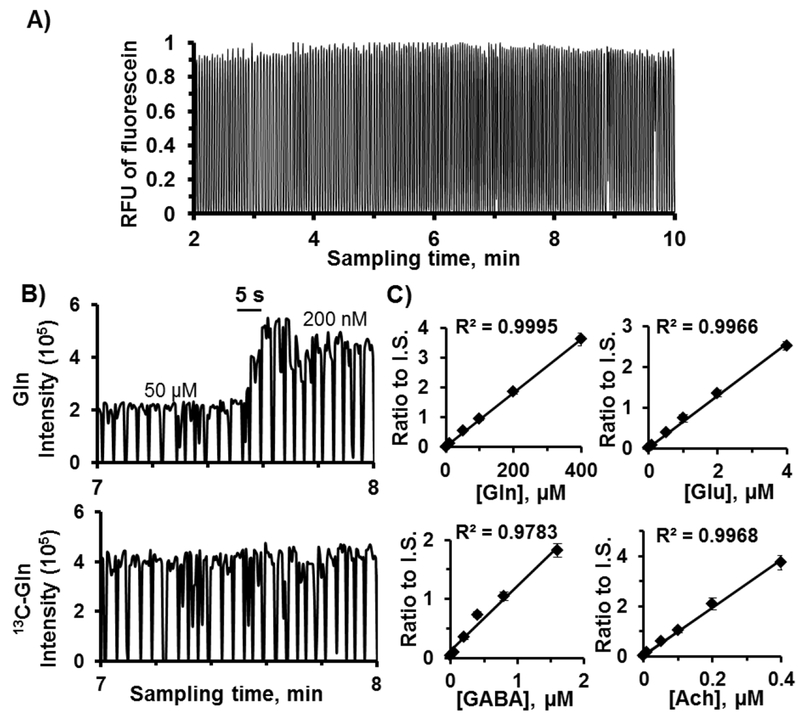
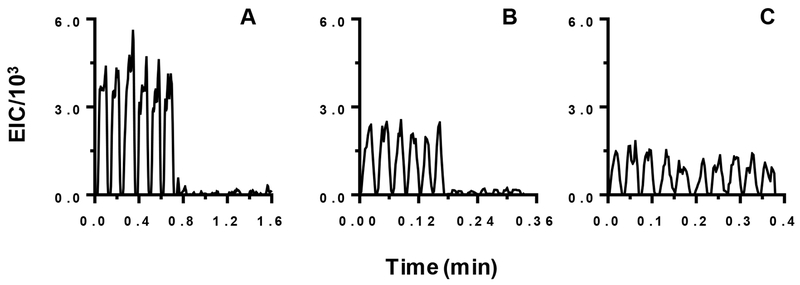
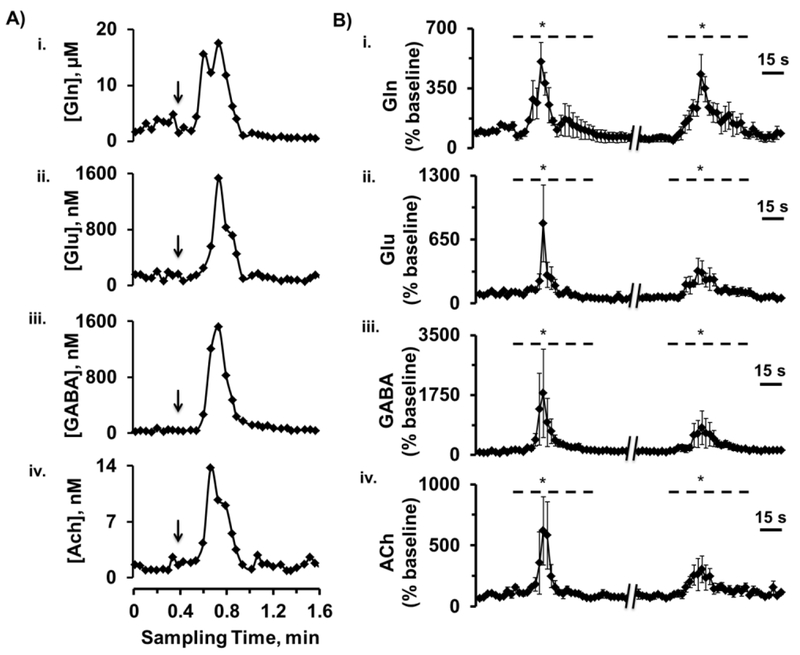
An essential approach for in vivo chemical monitoring is to use sampling probes coupled with analytical methods; however, this method traditionally has limited spatial and temporal resolution. To address this problem, we developed an analytical system that combines microfabricated push-pull sampling probes with droplet-based microfluidics. The microfabricated probe provides spatial resolution approximately 1000-fold better than that of common microdialysis probes. Microfabrication also facilitated integration of an extra channel into the probe for microinjection. We created microfluidic devices and interfaces that allowed manipulation of nanoliter droplet samples collected from the microfabricated probe at intervals of a few seconds. Use of droplet-based microfluidics prevented broadening of collected zones, yielding 6 s temporal resolution at 100 nL/min perfusion rates. Resulting droplets were analyzed by direct infusion nanoelectrospray ionization (nESI) mass spectrometry for simultaneous determination of glutamine, glutamate, γ-aminobutyric acid, and acetylcholine. Use of low infusion rates that enabled nESI (50 nL/min) was critical to allowing detection in the complex samples. Addition of C-labeled internal standards to the droplet samples was used for improved quantification. Utility of the overall system was demonstrated by monitoring dynamic chemical changes evoked by microinjection of high potassium concentrations into the brain of live rats. The results showed stimulated neurochemical release with rise times of 15 s. This work demonstrates the potential of coupling microfabricated sampling probes to droplet-based mass spectrometric assays for studying chemical dynamics in a complex microenvironment at high spatiotemporal resolution.
体内化学监测的一个基本方法是使用采样探针与分析方法相结合;然而,这种方法传统上空间和时间分辨率有限。为了解决这个问题,我们开发了一种分析系统,该系统将微加工推拉式采样探针与基于液滴的微流控技术相结合。微加工探针提供的空间分辨率比普通微透析探针高约 1000 倍。微加工还便于在探针中集成一个额外的通道进行微注射。我们创建了微流控器件和接口,允许每隔几秒钟从微加工探针中采集的纳升级液滴样品进行操作。基于液滴的微流控技术防止了收集区域的展宽,在 100 nL/min 的灌注速率下实现了 6 s 的时间分辨率。通过直接进样纳升电喷雾电离(nESI)质谱法分析得到的液滴,同时测定谷氨酰胺、谷氨酸、γ-氨基丁酸和乙酰胆碱。使用允许 nESI(50 nL/min)的低进样速率对于在复杂样品中进行检测至关重要。向液滴样品中添加 C 标记的内标物用于提高定量分析的准确性。通过向活鼠大脑中微注射高钾浓度来监测动态化学变化,证明了整个系统的实用性。结果表明,神经化学物质的释放具有 15 s 的上升时间。这项工作证明了将微加工采样探针与基于液滴的质谱分析相结合,用于在高时空分辨率下研究复杂微环境中的化学动力学的潜力。