Zhujiang Hospital, Southern Medical University, Department of Otolaryngology, Guangzhou, Guangdong, China.
Jinan University, Zhuhai People's Hospital, Xiangzhou District, Zhuhai, Guangdong, China; University of Science and Technology of China, School of Life Sciences and Medical Center, The Chinese Academy of Sciences Key Laboratory of Innate Immunity and Chronic Diseases, Hefei, Anhui, China.
Braz J Otorhinolaryngol. 2019 Nov-Dec;85(6):705-715. doi: 10.1016/j.bjorl.2018.05.012. Epub 2018 Jul 18.
Serum- and glucocorticoid-inducible kinase 3, a serine/threonine kinase that functions downstream of the PI3K signaling pathway, plays a critical role in neoplastic processes. It is expressed by various tumors and contributes to carcinogenesis.
The objective was to investigate serum- and glucocorticoid-inducible kinase 3 expression in nasopharyngeal carcinoma, to study the anti-tumor effects of serum- and glucocorticoid-inducible kinase 3 shRNA by inhibiting its expression in nasopharyngeal carcinoma cells and to discuss the potential implications of our findings.
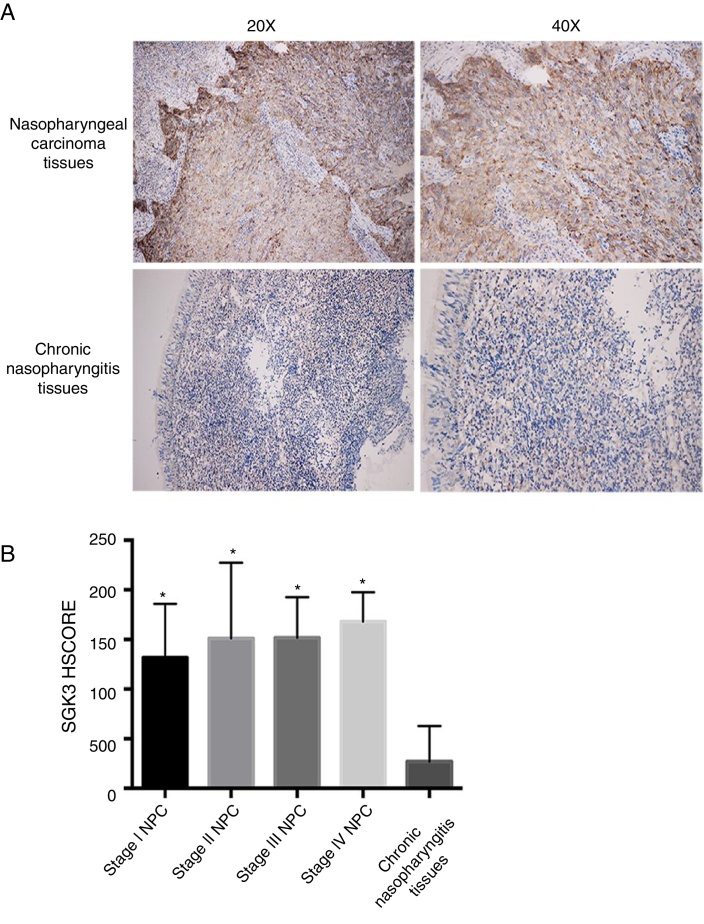
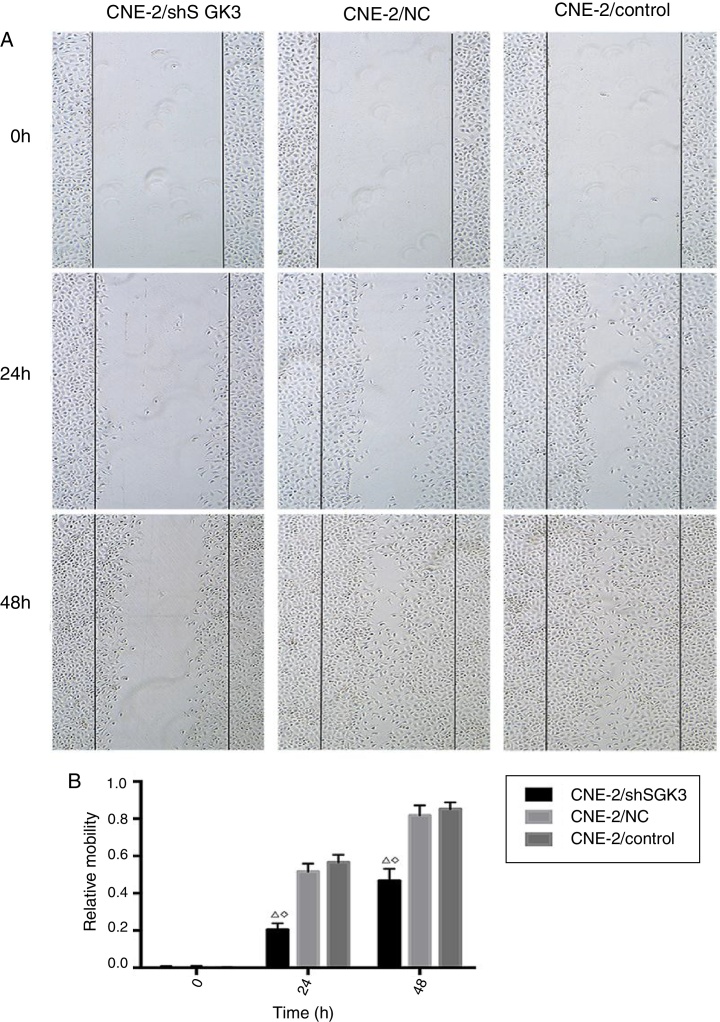
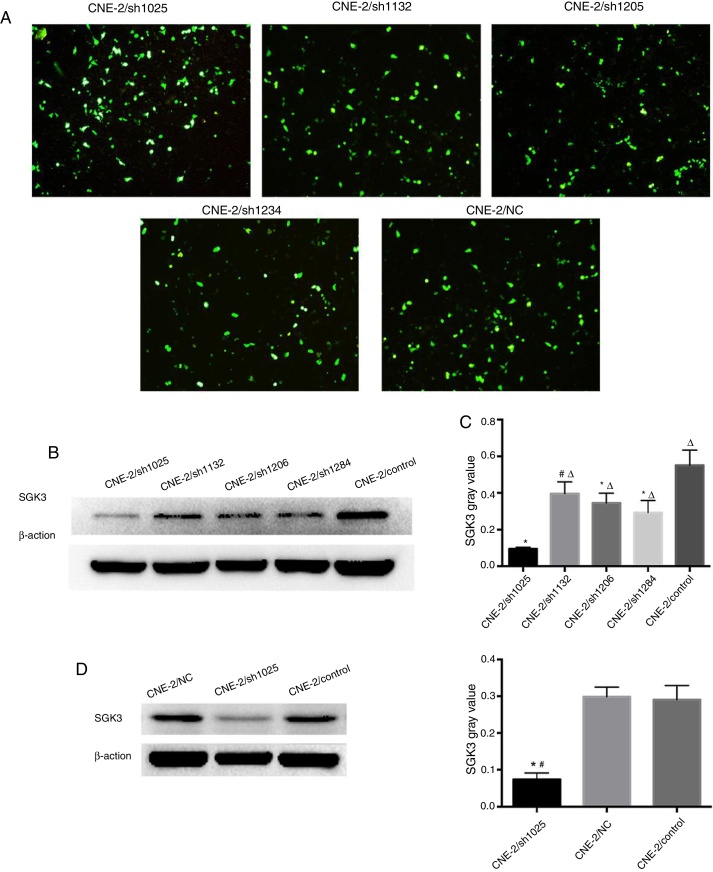
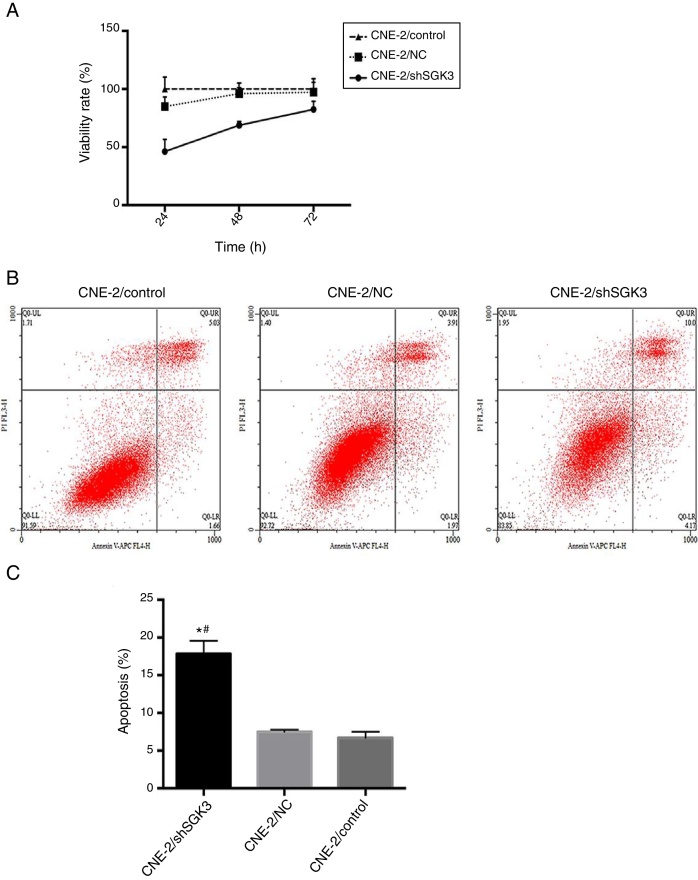
Serum- and glucocorticoid-inducible kinase 3 protein expression in nasopharyngeal carcinoma cell lines (CNE-1, CNE-2, HNE-1, HONE-1, and SUNE-1) and the human immortalized nasopharyngeal epithelium cell line NP69 were assayed by western blotting. Serum- and glucocorticoid-inducible kinase 3 expression in 42 paraffin-embedded nasopharyngeal carcinoma tissues were performed by immunohistochemistry. MTT assay, flow cytometry, and scratch tests were performed after CNE-2 cells were transfected with the best serum- and glucocorticoid-inducible kinase 3 shRNA plasmid selected by western blotting using lipofectamine to study its effect on cell proliferation, apoptosis, and migration.
Serum- and glucocorticoid-inducible kinase 3 was overexpressed in human nasopharyngeal carcinoma tissues and cells. Serum- and glucocorticoid-inducible kinase 3 expression decreased markedly after CNE-2 cells were transfected with the serum- and glucocorticoid-inducible kinase 3 shRNA, leading to strong inhibition of cell proliferation and migration. In addition, the apoptosis rate increased in CNE-2 cells after serum- and glucocorticoid-inducible kinase 3 knockdown.
Serum- and glucocorticoid-inducible kinase 3 expression was more frequently observed as the nasopharyngeal epithelium progresses from normal tissue to carcinoma. This suggests that serum- and glucocorticoid-inducible kinase 3 contributes to the multistep process of NPC carcinogenesis. Serum- and glucocorticoid-inducible kinase 3 represents a target for nasopharyngeal carcinoma therapy, and a basis exists for the further investigation of this adjuvant treatment modality for nasopharyngeal carcinoma.
血清和糖皮质激素诱导激酶 3 是一种丝氨酸/苏氨酸激酶,其功能位于 PI3K 信号通路的下游,在肿瘤发生过程中发挥关键作用。它在各种肿瘤中表达,并促进致癌作用。
本研究旨在探讨血清和糖皮质激素诱导激酶 3 在鼻咽癌中的表达,通过抑制鼻咽癌细胞中血清和糖皮质激素诱导激酶 3 的表达来研究血清和糖皮质激素诱导激酶 3 shRNA 的抗肿瘤作用,并讨论我们研究结果的潜在意义。
采用 Western blot 法检测血清和糖皮质激素诱导激酶 3 蛋白在鼻咽癌细胞系(CNE-1、CNE-2、HNE-1、HONE-1 和 SUNE-1)和人永生化鼻咽上皮细胞系 NP69 中的表达。采用免疫组织化学法检测 42 例石蜡包埋鼻咽癌组织中血清和糖皮质激素诱导激酶 3 的表达。采用脂质体转染法将 Western blot 筛选出的最佳血清和糖皮质激素诱导激酶 3 shRNA 质粒转染 CNE-2 细胞,通过 MTT 检测、流式细胞术和划痕试验研究其对细胞增殖、凋亡和迁移的影响。
血清和糖皮质激素诱导激酶 3 在人鼻咽癌组织和细胞中过表达。CNE-2 细胞转染血清和糖皮质激素诱导激酶 3 shRNA 后,血清和糖皮质激素诱导激酶 3 表达明显下降,导致细胞增殖和迁移明显受到抑制。此外,血清和糖皮质激素诱导激酶 3 敲低后 CNE-2 细胞的凋亡率增加。
血清和糖皮质激素诱导激酶 3 的表达在鼻咽上皮从正常组织向癌组织发展的过程中更为频繁。这表明血清和糖皮质激素诱导激酶 3 参与了 NPC 癌变的多步骤过程。血清和糖皮质激素诱导激酶 3 是鼻咽癌治疗的靶点,为进一步研究鼻咽癌的辅助治疗方法提供了依据。