Charité - Universitätsmedizin Berlin, corporate member of Freie Universität Berlin, Humboldt-Universität zu Berlin, and Berlin Institute of Health, Clinic for Nephrology and Intensive Care Medicine, Campus Virchow-Clinic, Berlin, Germany.
Berlin-Brandenburg School for Regenerative Therapies (BSRT), Berlin, Germany.
Sci Rep. 2018 Aug 14;8(1):12087. doi: 10.1038/s41598-018-30626-z.
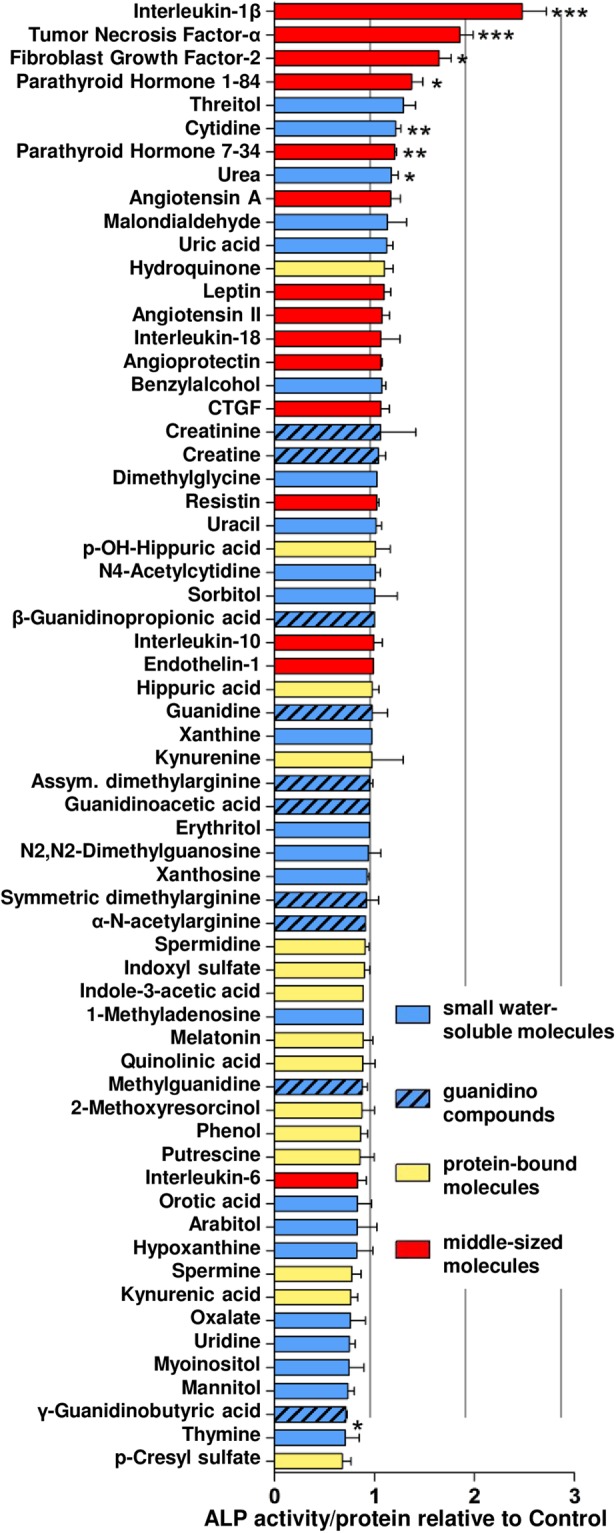
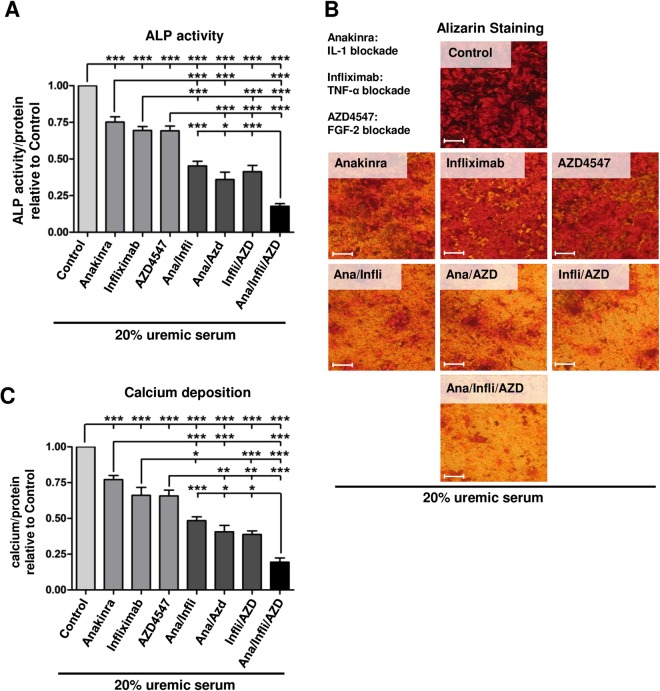
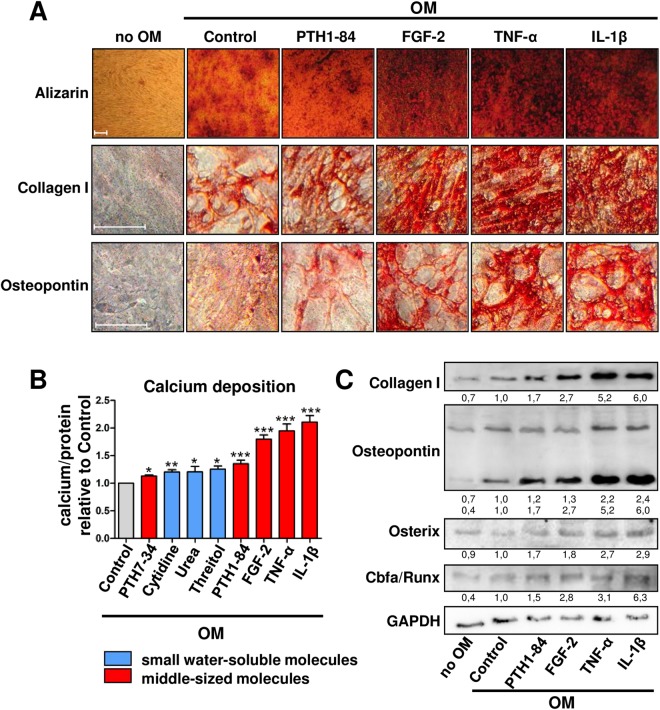
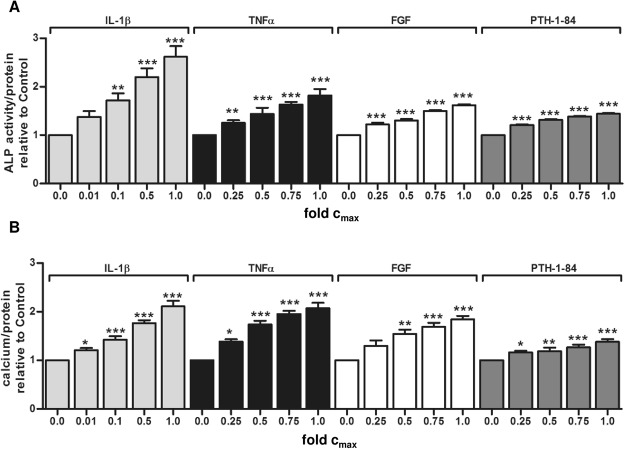
Severe vascular calcification develops almost invariably in chronic kidney patients posing a substantial risk to quality of life and survival. This unmet medical need demands identification of novel therapeutic modalities. We aimed to pinpoint components of the uremic microenvironment triggering differentiation of vascular progenitors to calcifying osteoblast-like cells. In an unbiased approach, assessing the individual potency of 63 uremic retention solutes to enhance calcific phenotype conversion of vascular progenitor cells, the pro-inflammatory cytokines IL-1β and TNF-α were identified as the strongest inducers followed by FGF-2, and PTH. Pharmacologic targeting of these molecules alone or in combination additively antagonized pro-calcifying properties of sera from uremic patients. Our findings stress the importance of pro-inflammatory cytokines above other characteristic components of the uremic microenvironment as key mediators of calcifying osteoblastic differentiation in vascular progenitors. Belonging to the group of "middle-sized molecules", they are neither effectively removed by conventional dialysis nor influenced by established supportive therapies. Specific pharmacologic interventions or novel extracorporeal approaches may help preserve regenerative capacity and control vascular calcification due to uremic environment.
慢性肾病患者几乎无一例外地会发生严重的血管钙化,这对生活质量和生存率构成了重大威胁。这种未满足的医疗需求要求确定新的治疗模式。我们旨在确定触发血管祖细胞向钙化成骨样细胞分化的尿毒症微环境成分。在一种无偏见的方法中,评估 63 种尿毒症潴留溶质单独增强血管祖细胞钙化表型转化的能力,发现促炎细胞因子 IL-1β 和 TNF-α 是最强的诱导剂,其次是 FGF-2 和 PTH。这些分子的单独药物靶向或联合添加拮抗尿毒症患者血清的促钙化特性。我们的研究结果强调了促炎细胞因子的重要性,超过了尿毒症微环境的其他特征成分,它们是血管祖细胞中钙化成骨样分化的关键介质。它们属于“中等大小分子”,既不能被常规透析有效清除,也不受既定支持性治疗的影响。特定的药物干预或新型体外方法可能有助于保持再生能力并控制尿毒症环境引起的血管钙化。