Department of Biomedicine, University of Basel, Mattenstrasse 28, 4058, Basel, Switzerland.
Sci Rep. 2018 Aug 14;8(1):12123. doi: 10.1038/s41598-018-30640-1.
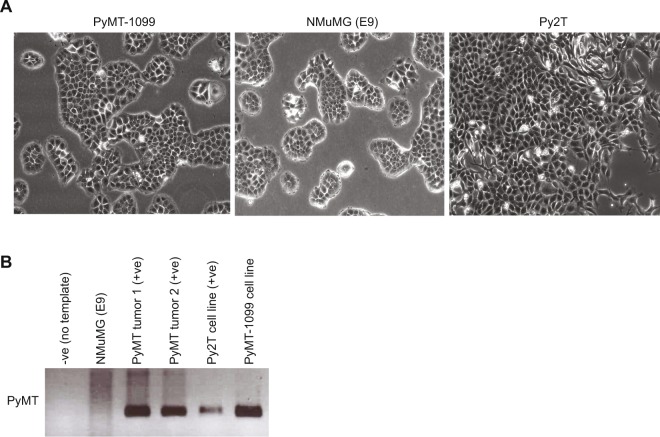
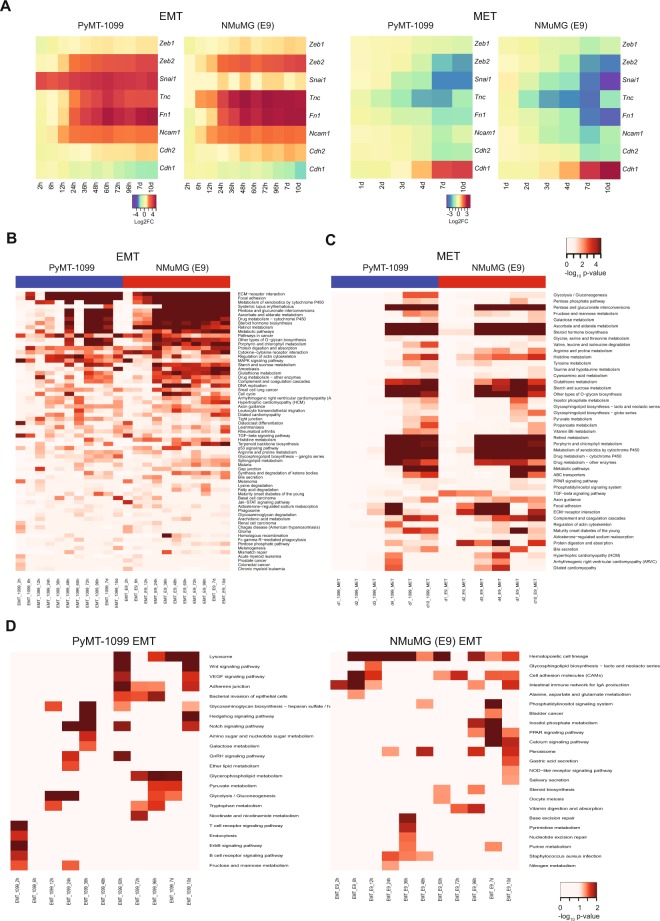
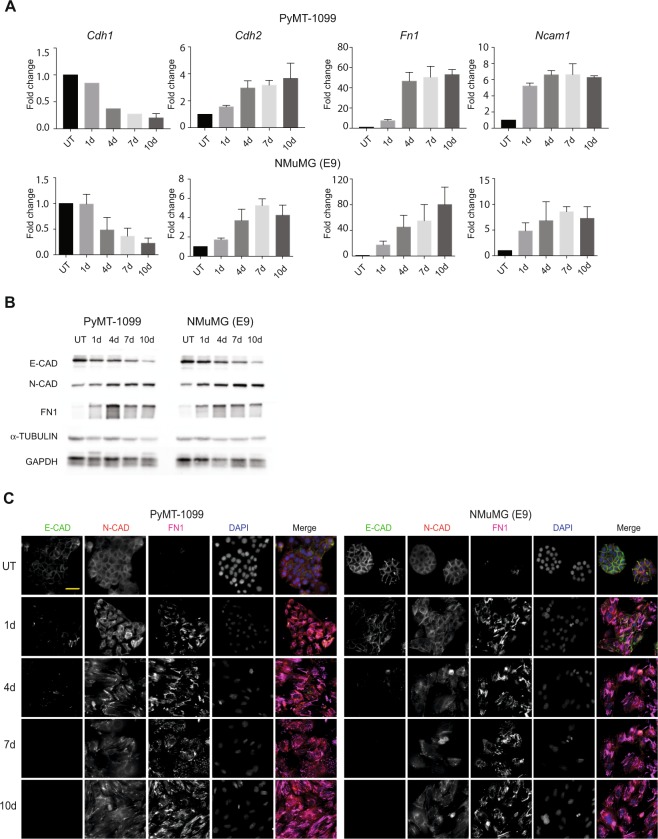
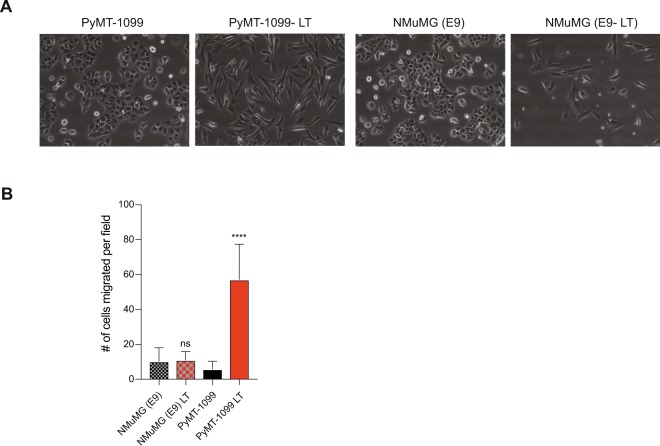
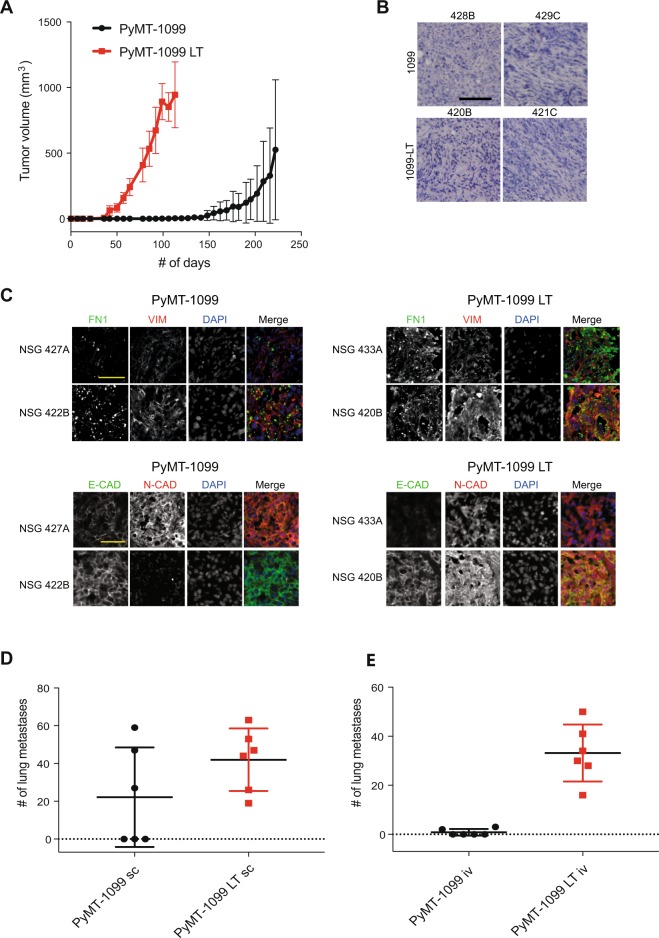
An epithelial-mesenchymal transition (EMT) has been implicated in cancer metastasis, drug resistance, and in conferring stem cell-like traits to cancer cells. Most studies investigating EMT in cancer have either utilized immortalized or cancer cell lines that are already primed to undergo an EMT and do not adequately represent a fully differentiated epithelial state in the absence of an EMT induction. Hence, model systems are required which recapitulate all stages of EMT in cancer cells. Here, we report the derivation and characterization of epithelial PyMT-1099 cancer cells from the MMTV-PyMT mouse model of breast cancer. We demonstrate that PyMT-1099 cells undergo an EMT upon TGFβ treatment, while upon TGFβ withdrawal they go through a mesenchymal-epithelial transition (MET), as assessed by changes in cell morphology and marker expression and comparable to normal murine mammary gland NMuMG cells. However, in contrast to NMuMG cells, PyMT-1099 cells show an increase in cell migration and are highly tumorigenic and metastatic when transplanted into immunocompromised mice. Finally, we report cancer cell-specific changes in gene expression during EMT of PyMT-1099 cells not found in non-transformed NMuMG cells. Thus, PyMT-1099 cells are a versatile tool to study breast cancer-associated EMT and MET in vitro and in vivo.
上皮-间充质转化(EMT)与癌症转移、耐药性以及赋予癌细胞干细胞样特性有关。大多数研究 EMT 与癌症的研究要么利用已经预先处于 EMT 状态的永生化或癌细胞系,要么在没有 EMT 诱导的情况下不能充分代表完全分化的上皮状态。因此,需要模型系统来重现癌细胞 EMT 的所有阶段。在这里,我们报告了从 MMTV-PyMT 乳腺癌小鼠模型中衍生和表征的上皮 PyMT-1099 癌细胞。我们证明 PyMT-1099 细胞在 TGFβ 处理时会发生 EMT,而在 TGFβ 撤出后,它们会经历间质-上皮转化(MET),这可以通过细胞形态和标志物表达的变化来评估,与正常的小鼠乳腺 NMuMG 细胞相当。然而,与 NMuMG 细胞不同的是,PyMT-1099 细胞的迁移能力增加,并且在移植到免疫缺陷小鼠中时具有高度的致瘤性和转移性。最后,我们报告了 PyMT-1099 细胞 EMT 过程中与癌症相关的基因表达变化,这些变化在未转化的 NMuMG 细胞中未发现。因此,PyMT-1099 细胞是研究体外和体内乳腺癌相关 EMT 和 MET 的多功能工具。