
层粘连蛋白-壳聚糖-聚乳酸-羟基乙酸共聚物导管与雪旺细胞和神经干细胞共移植以修复损伤的喉返神经。
Laminin-chitosan-PLGA conduit co-transplanted with Schwann and neural stem cells to repair the injured recurrent laryngeal nerve.
作者信息
Li Yu, Yu Ziwei, Men Yongzhi, Chen Xinwei, Wang Baoxin
机构信息
Department of Otolaryngology, Head and Neck Surgery, Shanghai General Hospital, Shanghai JiaoTong University School of Medicine, Shanghai 200000, P.R. China.
出版信息
Exp Ther Med. 2018 Aug;16(2):1250-1258. doi: 10.3892/etm.2018.6343. Epub 2018 Jun 22.
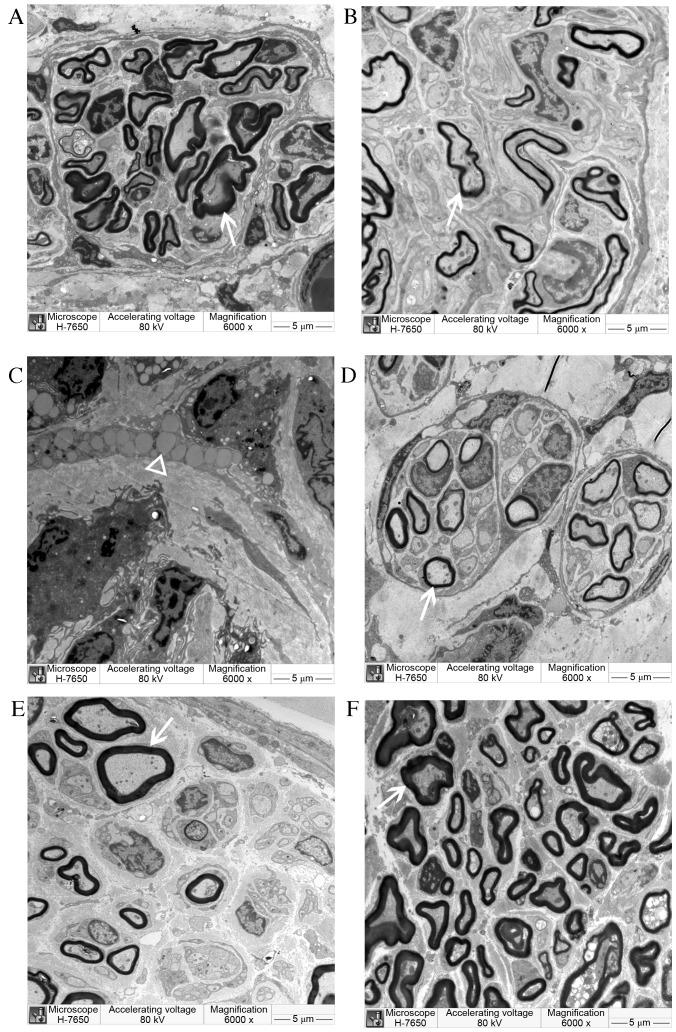
The aim of the present study was to assess the possibility and efficacy of utilizing a laminin-chitosan-poly (lactic-co-glycolic acid), otherwise known as laminin-chitosan-PLGA, nerve conduit with the co-transplantation of Schwann and neural stem cells to repair peripheral nerve defects. Previous experiments have demonstrated that the three-dimensional structure of the built in fiber filament electrospinning of laminin-chitosan-PLGA nerve conduit is beneficial to the migration and regeneration of nerve cells, and has notable mechanical strength and plasticity. It is able to provide support in the neural tissue regeneration process, and has the ability to degrade itself once peripheral nerves complete their regeneration, providing more advantages than other biological and synthetic materials. In the present study, 132 female Sprague Dawley rats were used to establish an animal model of laryngeal nerve injury, and the rats were randomly divided into six groups for experimentation. The nerve conduit was prepared and co-cultured with Schwann and neural stem cells, and micro-surgical techniques were used to repair the 5-mm-long recurrent laryngeal nerve injuries. Functional and histological assessments were performed at 8 and 12 weeks post-surgery, respectively. The results revealed that the laminin-chitosan-PLGA nerve conduit combined with Schwann and neural stem cells was able to promote nerve regeneration (P<0.05), and its effect was superior to those of the autograft (P<0.05). The results of the present study suggest that this is the ideal method for repairing peripheral nerve defects, and cells in the graft may promote nerve regeneration.
本研究的目的是评估利用层粘连蛋白-壳聚糖-聚(乳酸-乙醇酸)共聚物(即层粘连蛋白-壳聚糖-PLGA)神经导管与雪旺细胞和神经干细胞共移植来修复周围神经缺损的可能性和疗效。先前的实验表明,层粘连蛋白-壳聚糖-PLGA神经导管的内置纤维细丝静电纺丝三维结构有利于神经细胞的迁移和再生,具有显著的机械强度和可塑性。它能够在神经组织再生过程中提供支持,并且一旦周围神经完成再生它就具有自我降解的能力,比其他生物和合成材料具有更多优势。在本研究中,132只雌性Sprague Dawley大鼠用于建立喉神经损伤动物模型,并且将大鼠随机分为六组进行实验。制备神经导管并与雪旺细胞和神经干细胞共培养,并且使用显微外科技术修复5毫米长的喉返神经损伤。分别在术后8周和12周进行功能和组织学评估。结果显示,层粘连蛋白-壳聚糖-PLGA神经导管与雪旺细胞和神经干细胞联合能够促进神经再生(P<0.05),并且其效果优于自体移植(P<0.05)。本研究结果表明,这是修复周围神经缺损的理想方法,并且移植物中的细胞可能促进神经再生。


 Zotero 插件