Klimek Katarzyna, Ginalska Grazyna
Chair and Department of Biochemistry and Biotechnology, Medical University of Lublin, Chodzki 1 Street, 20-093 Lublin, Poland.
Polymers (Basel). 2020 Apr 6;12(4):844. doi: 10.3390/polym12040844.
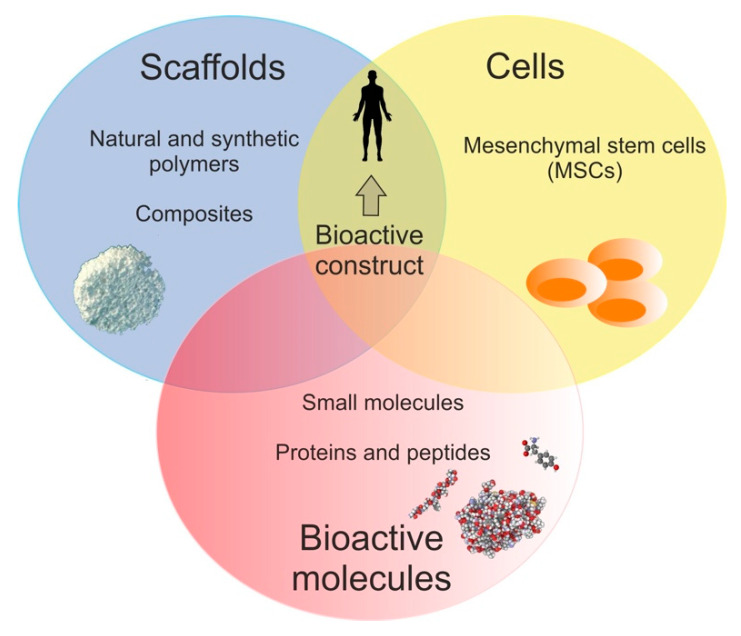
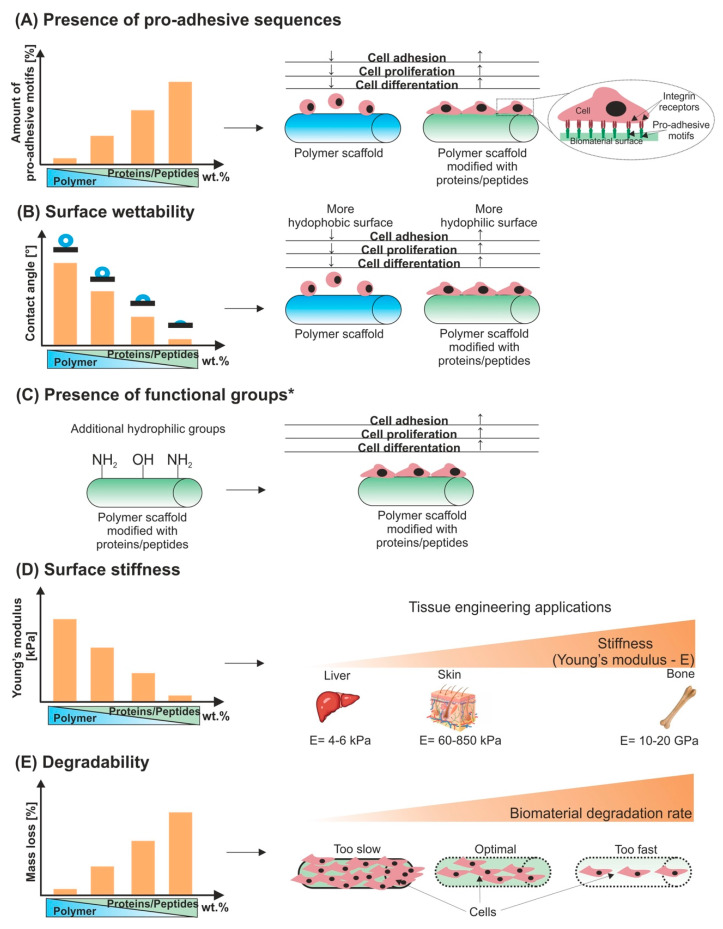
Polymer scaffolds constitute a very interesting strategy for tissue engineering. Even though they are generally non-toxic, in some cases, they may not provide suitable support for cell adhesion, proliferation, and differentiation, which decelerates tissue regeneration. To improve biological properties, scaffolds are frequently enriched with bioactive molecules, inter alia extracellular matrix proteins, adhesive peptides, growth factors, hormones, and cytokines. Although there are many papers describing synthesis and properties of polymer scaffolds enriched with proteins or peptides, few reviews comprehensively summarize these bioactive molecules. Thus, this review presents the current knowledge about the most important proteins and peptides used for modification of polymer scaffolds for tissue engineering. This paper also describes the influence of addition of proteins and peptides on physicochemical, mechanical, and biological properties of polymer scaffolds. Moreover, this article sums up the major applications of some biodegradable natural and synthetic polymer scaffolds modified with proteins and peptides, which have been developed within the past five years.
聚合物支架是组织工程中一种非常有趣的策略。尽管它们通常无毒,但在某些情况下,它们可能无法为细胞粘附、增殖和分化提供合适的支持,从而减缓组织再生。为了改善生物学特性,支架通常富含生物活性分子,尤其是细胞外基质蛋白、粘附肽、生长因子、激素和细胞因子。虽然有许多论文描述了富含蛋白质或肽的聚合物支架的合成和特性,但很少有综述全面总结这些生物活性分子。因此,本综述介绍了用于组织工程聚合物支架改性的最重要蛋白质和肽的当前知识。本文还描述了蛋白质和肽的添加对聚合物支架的物理化学、机械和生物学特性的影响。此外,本文总结了过去五年中开发的一些用蛋白质和肽改性的可生物降解天然和合成聚合物支架的主要应用。