Tumamoc People and Habitat, Department of Ecology and Evolutionary Biology, University of Arizona, Tucson, AZ, United States of America.
Mitrani Department for Desert Ecology, Blaustein Institutes for Desert Research, Ben Gurion University of the Negev, Sde-Boker, Israel.
PLoS One. 2018 Aug 20;13(8):e0200672. doi: 10.1371/journal.pone.0200672. eCollection 2018.
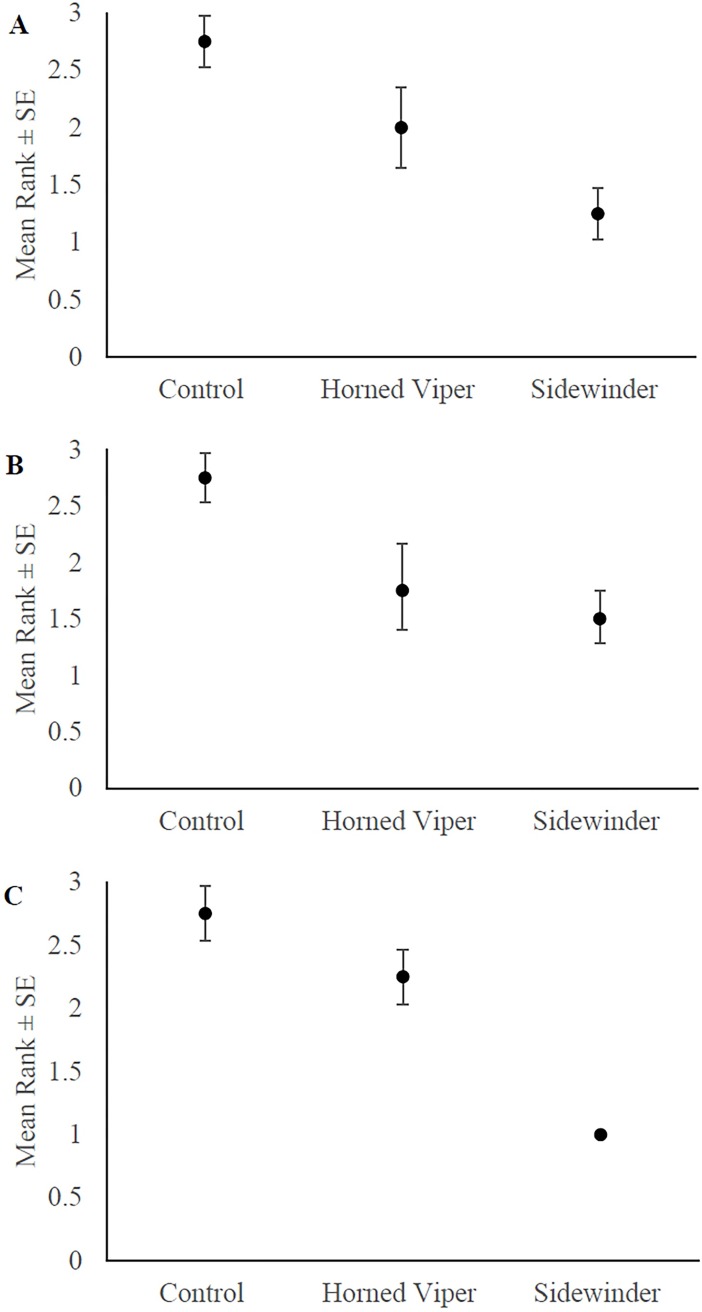
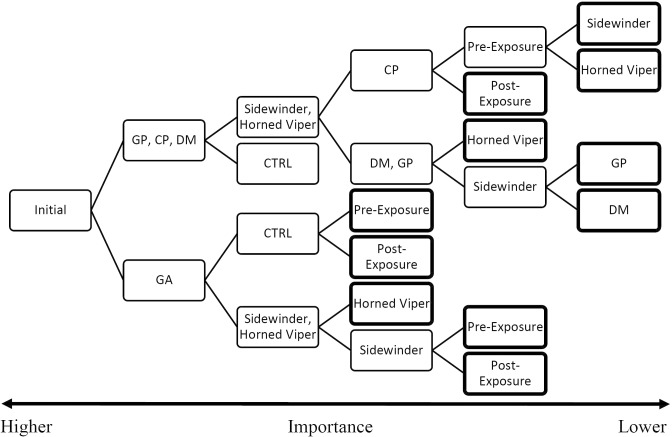
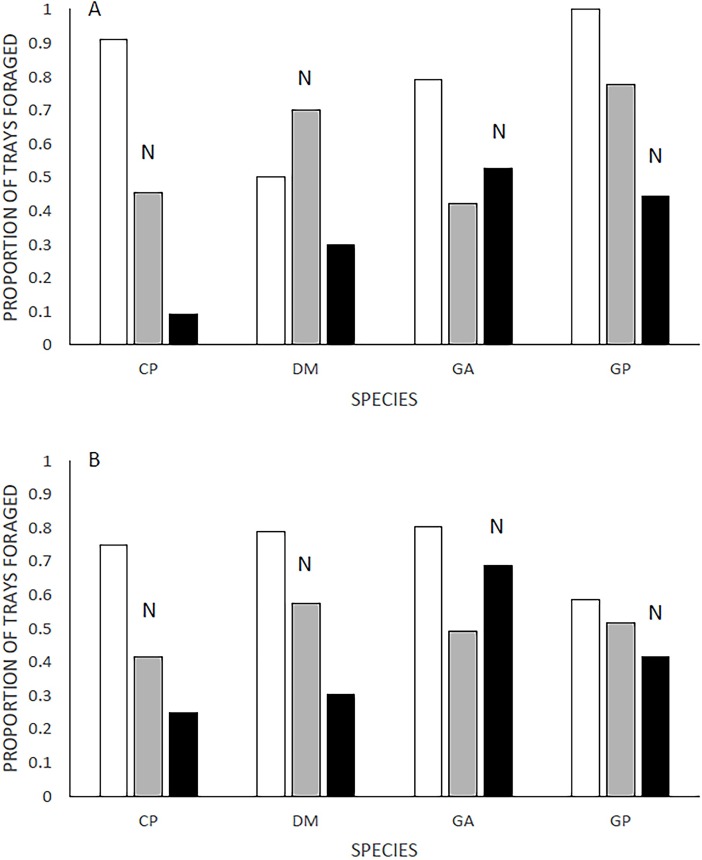
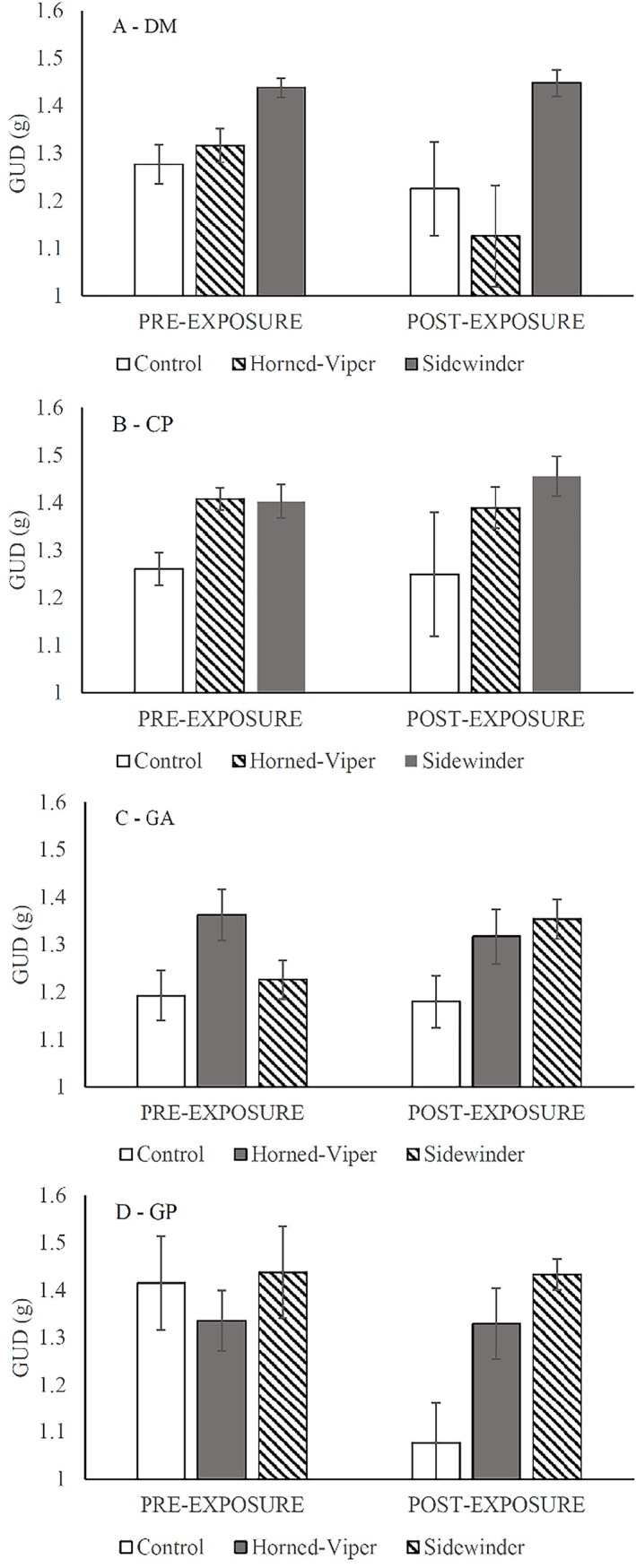
Desert communities world-wide are used as natural laboratories for the study of convergent evolution, yet inferences drawn from such studies are necessarily indirect. Here, we brought desert organisms together (rodents and vipers) from two deserts (Mojave and Negev). Both predators and prey in the Mojave have adaptations that give them competitive advantage compared to their middle-eastern counterparts. Heteromyid rodents of the Mojave, kangaroo rats and pocket mice, have fur-lined cheek pouches that allow them to carry larger loads of seeds under predation risk compared to gerbilline rodents of the Negev Deserts. Sidewinder rattlesnakes have heat-sensing pits, allowing them to hunt better on moonless nights when their Negev sidewinding counterpart, the Saharan horned vipers, are visually impaired. In behavioral-assays, we used giving-up density (GUD) to gauge how each species of rodent perceived risk posed by known and novel snakes. We repeated this for the same set of rodents at first encounter and again two months later following intensive "natural" exposure to both snake species. Pre-exposure, all rodents identified their evolutionarily familiar snake as a greater risk than the novel one. However, post-exposure all identified the heat-sensing sidewinder rattlesnake as a greater risk. The heteromyids were more likely to avoid encounters with, and discern the behavioral difference among, snakes than their gerbilline counterparts.
世界各地的沙漠社区被用作研究趋同进化的天然实验室,但由此得出的推论必然是间接的。在这里,我们将来自两个沙漠(莫哈韦沙漠和内盖夫沙漠)的沙漠生物(啮齿动物和毒蛇)放在一起进行研究。莫哈韦沙漠中的捕食者和猎物都有适应能力,使它们与中东地区的同类相比具有竞争优势。莫哈韦沙漠中的沙鼠和囊鼠有毛衬颊囊,可以在受到捕食者威胁时携带更多的种子,而内盖夫沙漠中的沙鼠则没有这种能力。响尾蛇有热感应坑,可以在没有月光的夜晚更好地捕猎,而内盖夫沙漠的同类撒哈拉角蝰则视力受损。在行为测试中,我们使用放弃密度(GUD)来衡量每种啮齿动物对已知和新蛇类所带来风险的感知。我们对同一组啮齿动物进行了同样的测试,首先是在第一次接触时,然后是在两个月后,对两种蛇进行了密集的“自然”接触。在接触之前,所有的啮齿动物都认为它们进化上熟悉的蛇比新蛇类更危险。然而,接触后,所有啮齿动物都认为热感应响尾蛇更危险。与沙鼠相比,沙鼠更有可能避免与蛇类接触,并辨别出它们之间的行为差异。