Menzies Health Institute Queensland and School of Medical Science, Griffith University, Gold Coast, QLD 4222, Australia.
Department of Biomedical Sciences, Marshall University, Huntington, WV 25701, USA.
Toxins (Basel). 2018 Aug 20;10(8):336. doi: 10.3390/toxins10080336.
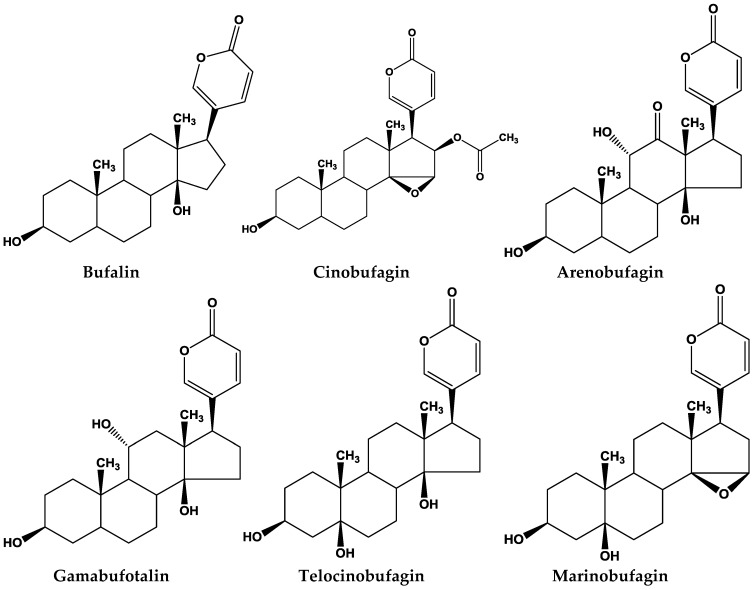
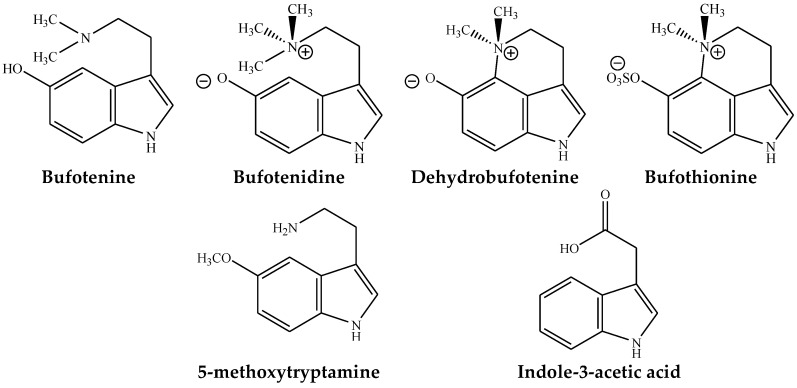
Toxins from toads have long been known to contain rich chemicals with great pharmaceutical potential. Recent studies have shown more than 100 such chemical components, including peptides, steroids, indole alkaloids, bufogargarizanines, organic acids, and others, in the parotoid and skins gland secretions from different species of toads. In traditional Chinese medicine (TCM), processed toad toxins have been used for treating various diseases for hundreds of years. Modern studies, including both experimental and clinical trials, have also revealed the molecular mechanisms that support the development of these components into medicines for the treatment of inflammatory diseases and cancers. More recently, there have been studies that demonstrated the therapeutic potential of toxins from other species of toads, such as Australian cane toads. Previous reviews mostly focused on the pharmaceutical effects of the whole extracts from parotoid glands or skins of toads. However, to fully understand the molecular basis of toad toxins in their use for therapy, a comprehensive understanding of the individual compound contained in toad toxins is necessary; thus, this paper seeks to review the recent studies of some typical compounds frequently identified in toad secretions.
蟾酥中的毒素一直以来都被认为含有丰富的具有巨大药用潜力的化学物质。最近的研究表明,不同种类蟾酥的腮腺和皮肤腺分泌物中含有 100 多种此类化学物质,包括肽、类固醇、吲哚生物碱、蟾毒色胺、有机酸等。在中国传统医学(TCM)中,经过加工的蟾酥毒素已经被用于治疗各种疾病数百年。现代研究,包括实验和临床试验,也揭示了这些成分发展成为治疗炎症性疾病和癌症的药物的分子机制。最近,还有一些研究表明,来自其他种类蟾酥的毒素(如澳大利亚甘蔗蟾)具有治疗潜力。以前的综述主要集中在蟾酥腮腺或皮肤全提取物的药物作用上。然而,为了充分了解蟾酥毒素在治疗中的分子基础,需要全面了解蟾酥毒素中包含的单个化合物;因此,本文旨在综述一些在蟾酥分泌物中经常被发现的典型化合物的最新研究。