Johnson M J, de Lange G, Cavalli-Sforza L L
Am J Hum Genet. 1986 May;38(5):617-40.
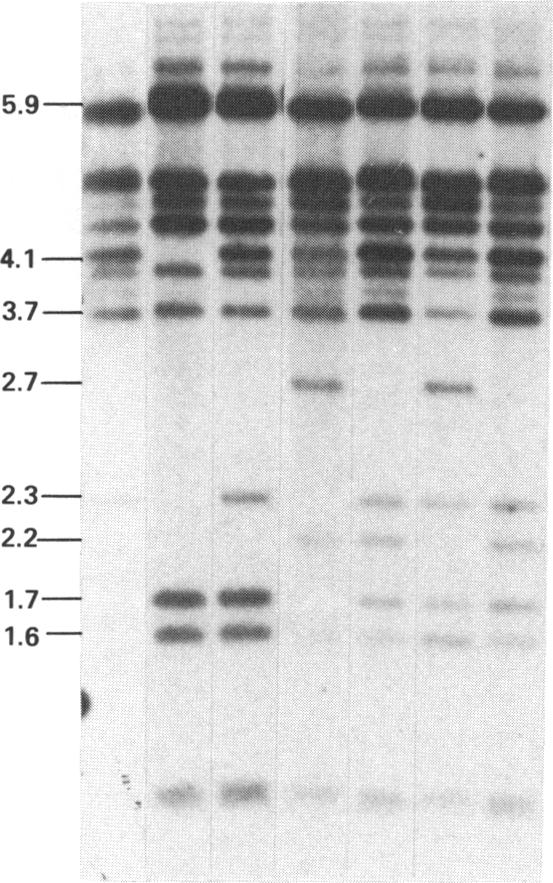
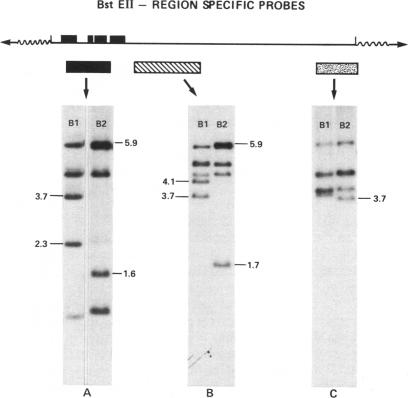
This investigation was undertaken to study genetic variation in the human immunoglobulin gamma heavy-chain (IgG) genes using Southern blot hybridization techniques to identify restriction fragment length polymorphisms (RFLPs). A genomic Ig gamma-1 clone was used as a probe, and variants were identified with two restriction enzymes (R.E.), each of which defined RFLPs at two separate IgG loci. Once alleles and haplotypes were determined, molecular localization of the alleles was made through genetic analysis of recombinant haplotypes and through the use of regional specific subclones. Linkage between the newly defined RFLPs and switch region variants as well as protein allotypic markers (Gm) was complete. This analysis included markers for Ig Mu, Alpha 1, Alpha 2, Gamma 1, Gamma 2, Gamma 3, and Pseudo Gamma. The picture that emerges from the molecular study of two common haplotypes, each with many rare variants resulting from recombination or mutation, confirms and extends the earlier immunological observations. The accumulated differences between the two major Caucasian IgG haplotypes indicate that their separation may be ancient and maintained through heterozygote advantage.
本研究旨在利用Southern印迹杂交技术研究人类免疫球蛋白γ重链(IgG)基因的遗传变异,以鉴定限制性片段长度多态性(RFLP)。一个基因组Igγ-1克隆用作探针,用两种限制性内切酶(R.E.)鉴定变异体,每种酶在两个不同的IgG基因座定义RFLP。确定等位基因和单倍型后,通过重组单倍型的遗传分析以及使用区域特异性亚克隆对等位基因进行分子定位。新定义的RFLP与转换区变异体以及蛋白质同种异型标记(Gm)之间的连锁关系得以完善。该分析包括Ig Mu、Alpha 1、Alpha 2、Gamma 1、Gamma 2、Gamma 3和假Gamma的标记。对两种常见单倍型的分子研究显示,每种单倍型都有许多由重组或突变产生的罕见变异体,这证实并扩展了早期的免疫学观察结果。两种主要的白种人IgG单倍型之间积累的差异表明,它们的分离可能很古老,并且通过杂合子优势得以维持。