Department of Molecular Biology and Biophysics, University of Connecticut Health Center, Farmington, Connecticut 06030, USA; email:
School of Dental Medicine, University of Connecticut Health Center, Farmington, Connecticut 06030, USA.
Annu Rev Nutr. 2018 Aug 21;38:97-125. doi: 10.1146/annurev-nutr-082117-051732.
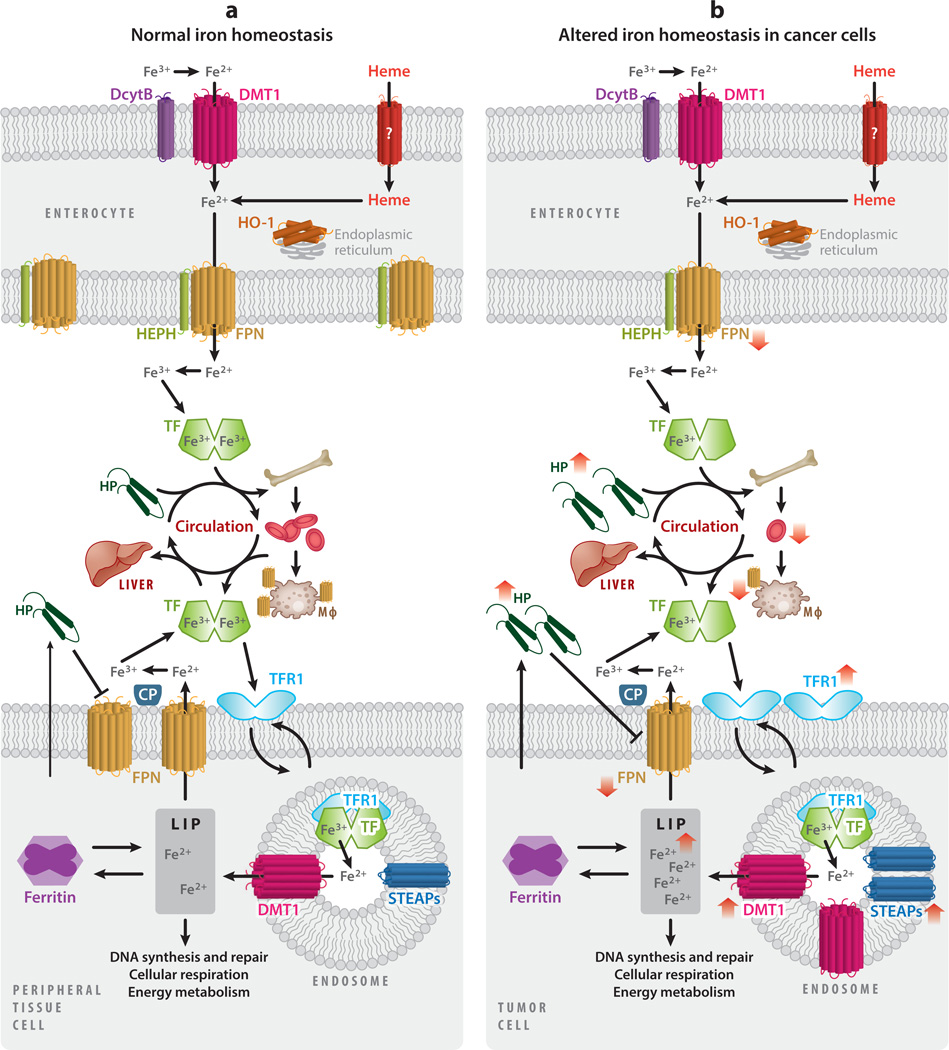
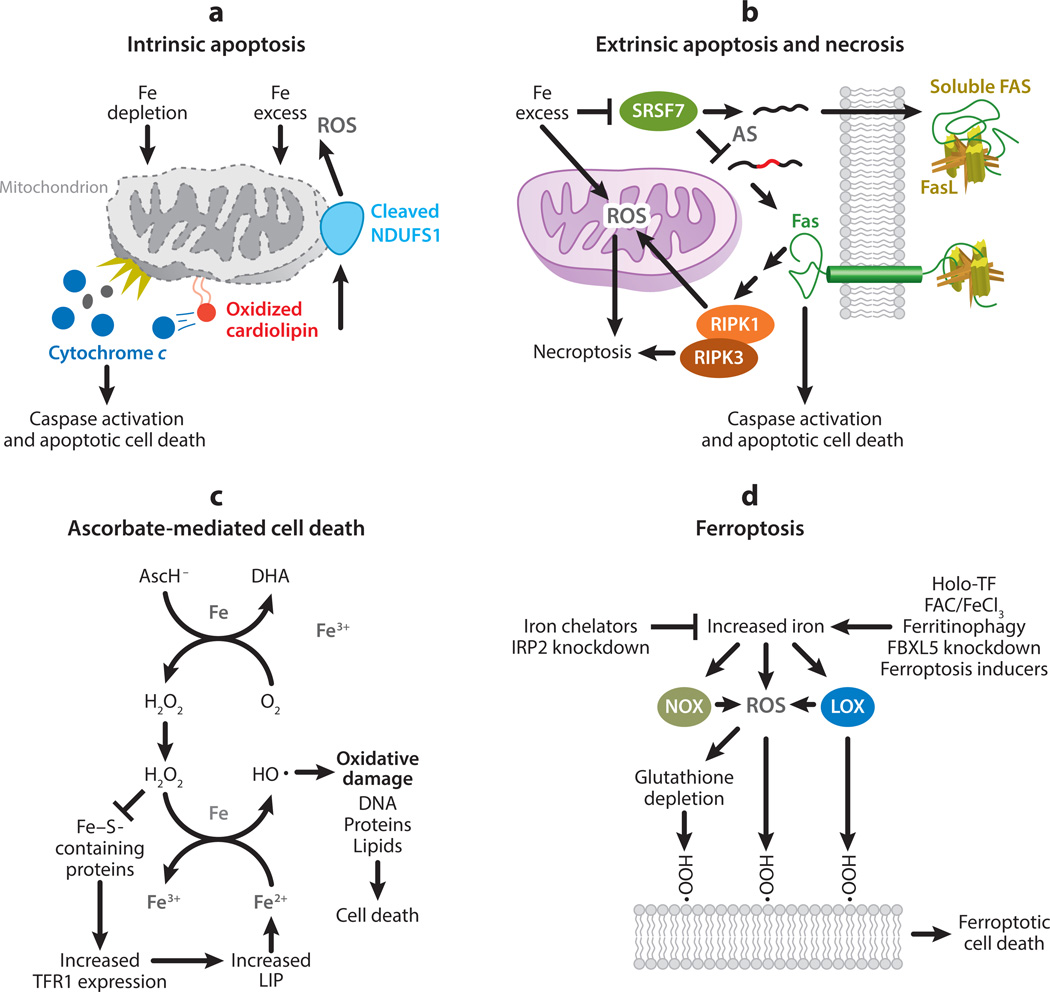
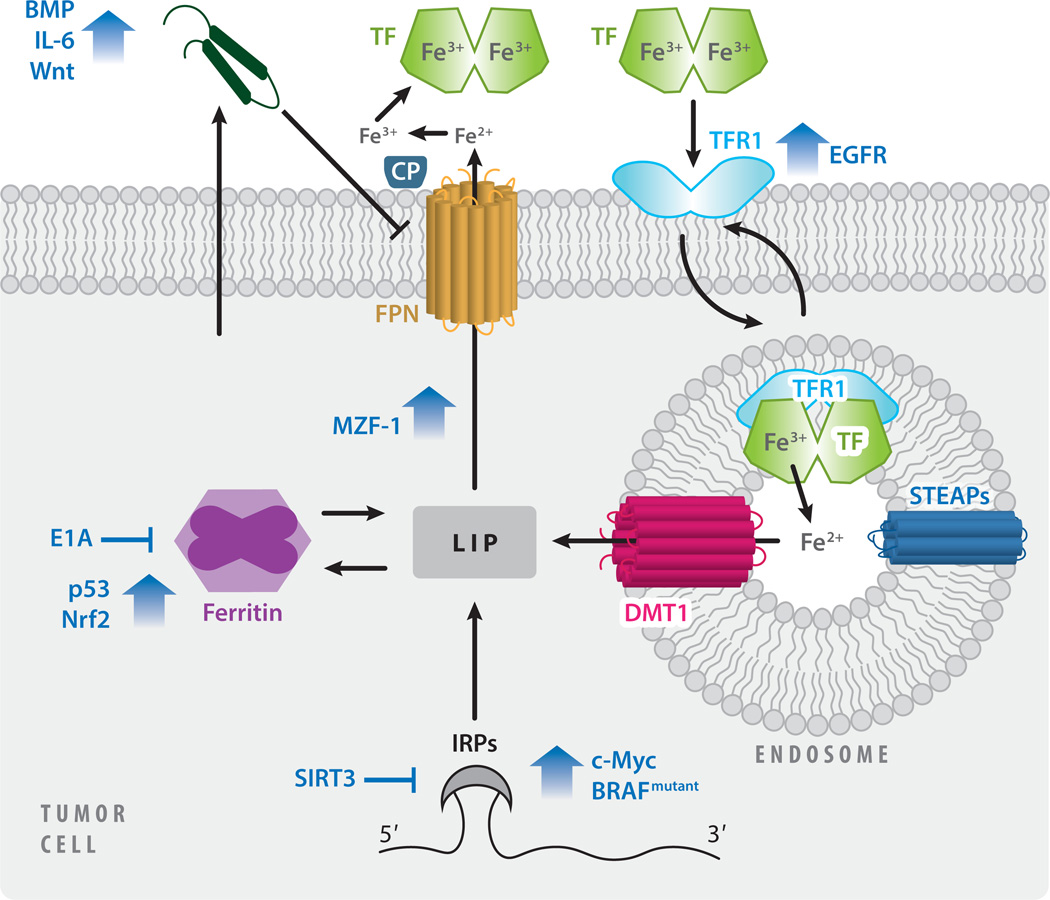
This review explores the multifaceted role that iron has in cancer biology. Epidemiological studies have demonstrated an association between excess iron and increased cancer incidence and risk, while experimental studies have implicated iron in cancer initiation, tumor growth, and metastasis. The roles of iron in proliferation, metabolism, and metastasis underpin the association of iron with tumor growth and progression. Cancer cells exhibit an iron-seeking phenotype achieved through dysregulation of iron metabolic proteins. These changes are mediated, at least in part, by oncogenes and tumor suppressors. The dependence of cancer cells on iron has implications in a number of cell death pathways, including ferroptosis, an iron-dependent form of cell death. Uniquely, both iron excess and iron depletion can be utilized in anticancer therapies. Investigating the efficacy of these therapeutic approaches is an area of active research that promises substantial clinical impact.
这篇综述探讨了铁在癌症生物学中的多方面作用。流行病学研究表明,过量的铁与癌症发病率和风险的增加之间存在关联,而实验研究则表明铁在癌症的发生、肿瘤生长和转移中起作用。铁在增殖、代谢和转移中的作用是铁与肿瘤生长和进展相关的基础。癌细胞表现出一种寻求铁的表型,这是通过铁代谢蛋白的失调来实现的。这些变化至少部分是由癌基因和肿瘤抑制因子介导的。癌细胞对铁的依赖对多种细胞死亡途径有影响,包括铁依赖性细胞死亡形式的 ferroptosis。独特的是,铁过量和铁耗竭都可以用于癌症治疗。研究这些治疗方法的疗效是一个活跃的研究领域,有望产生重大的临床影响。