Division of Pediatric Surgery, Zucker School of Medicine at Hofstra/Northwell, Cohen Children's Medical Center, 269-01 76th Avenue, CH 158, New Hyde Park, New York, NY, 11040, USA.
Feinstein Institute for Medical Research, Manhasset, NY, 11030, USA.
Mol Med. 2018 Mar 15;24(1):4. doi: 10.1186/s10020-018-0002-0.
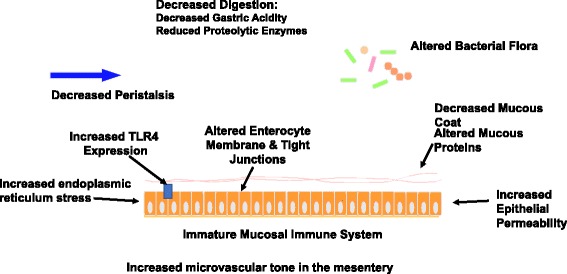
Necrotizing Enterocolitis (NEC) is one of the most devastating gastrointestinal diseases in neonates, particularly among preterm infants in whom surgical NEC is the leading cause of morbidity. NEC pathophysiology occurs in the hyper-reactive milieu of the premature gut after bacterial colonization. The resultant activation of the TLR4 pathway appears to be a strongly contributing factor. Advancements in metagenomics may yield new clarity to the relationship between the neonatal intestinal microbiome and the development of NEC. After a century without effective directed treatments, microbiome manipulation offers a promising therapeutic target for the prevention and treatment of this devastating disease.
新生儿坏死性小肠结肠炎(NEC)是新生儿最严重的胃肠道疾病之一,尤其是在早产儿中,手术 NEC 是发病率的主要原因。NEC 的病理生理学发生在细菌定植后早产儿肠道的高反应环境中。TLR4 途径的激活似乎是一个重要的促成因素。宏基因组学的进步可能为新生儿肠道微生物组与 NEC 发展之间的关系提供新的认识。在没有有效靶向治疗的一个世纪后,微生物组操纵为预防和治疗这种毁灭性疾病提供了一个有前途的治疗靶点。